

A homemade cloth wipes solution is a simple liquid you make at home to use with reusable cloth wipes. Instead of relying on disposable wipes filled with harsh chemicals, many parents choose a DIY cloth wipes solution because it is gentle, affordable, and easy to customize. This type of solution works perfectly with cloth diapers, making cleanup quick while staying kind to sensitive baby skin.
The best part is control. When you make your own natural cloth wipes solution, you know exactly what touches your baby’s skin. You can keep it basic with water or adjust it with mild ingredients for extra moisture. Whether you need a cloth baby wipes solution, a no-rinse wipe solution, or a homemade baby wipes liquid for everyday use, this guide will walk you through safe and practical options. Simple ingredients, clear steps, and real results—nothing complicated.
What Is a Homemade Cloth Wipes Solution
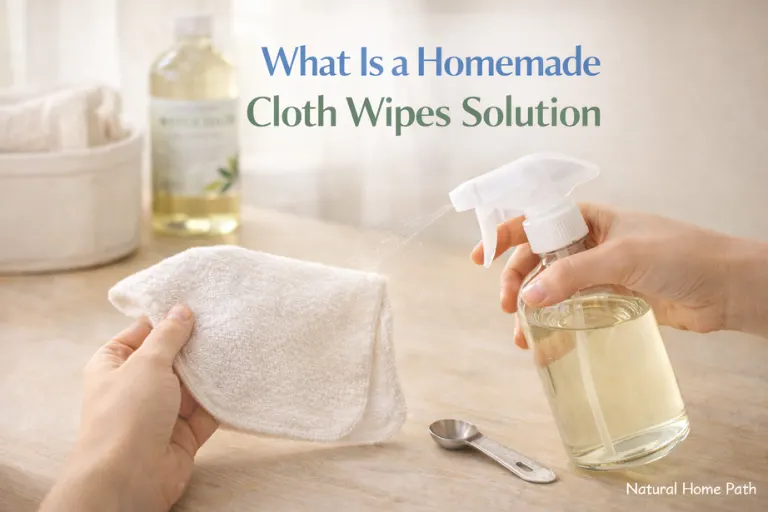
A homemade cloth wipes solution is a gentle liquid made to clean skin using reusable cloth wipes instead of disposable ones. It is most commonly used with cloth diapers, but many families also use it for hands, faces, and quick cleanups. Unlike store-bought wipes, a DIY cloth wipes solution does not contain artificial fragrance, alcohol, or harsh preservatives.
This solution lightly moistens the wipes, helping remove messes without irritating sensitive baby skin. Some versions are water-only, while others include mild oils or natural ingredients. The goal is simple: clean effectively while staying cloth-diaper safe. Whether you call it a cloth baby wipes solution or a homemade wipes liquid, it is designed to be gentle, flexible, and easy to adjust for your family’s needs.
Why Make Your Own Cloth Wipes Solution
Making your own homemade cloth wipes solution gives you full control over what touches your baby’s skin. Many parents switch because commercial wipes can cause irritation, especially for babies with sensitive skin. A DIY cloth wipes solution lets you avoid unnecessary chemicals while keeping things simple.
Another big benefit is cost. Reusable wipes paired with a homemade wipe solution are much cheaper over time than disposable wipes. It is also an eco-friendly wipes solution, reducing waste and supporting a low-waste lifestyle. You can customize the recipe based on your baby’s needs, whether you prefer a no-oil cloth wipes solution or a lightly moisturizing one. Overall, homemade solutions are gentle, affordable, and practical, making them a smart choice for cloth-diapering families.
Basic Homemade Cloth Wipes Solution Recipe
This basic homemade cloth wipes solution is perfect for beginners. It is gentle, effective, and works well for daily diaper changes. You only need a few simple ingredients, and it takes less than five minutes to make.
Basic Recipe:
- 2 cups warm distilled water
- 1 teaspoon mild liquid castile soap (optional)
- 1 teaspoon oil (optional)
Mix everything gently and pour into a spray bottle or container. This cloth wipes solution recipe cleans well without leaving heavy residue. If your baby has very sensitive skin, you can skip the soap and oil completely. This simple homemade cloth wipes solution is no-rinse, easy to store, and safe for everyday use with reusable cloth wipes and cloth diapers.
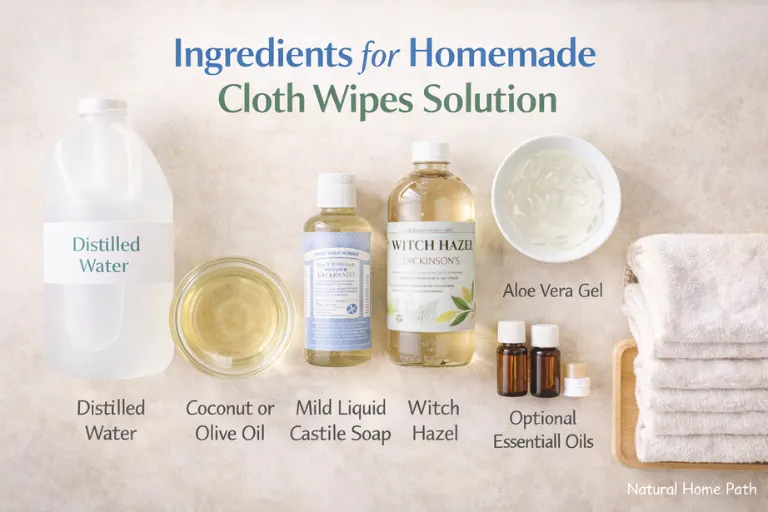
Ingredients for Homemade Cloth Wipes Solution
- Distilled water – Gently cleans and acts as the base of the solution
- Liquid castile soap (optional) – Helps lift messes without harsh chemicals
- Coconut oil or olive oil (optional) – Adds light moisture to protect skin
- Witch hazel (optional) – Soothes skin and helps with mild odor control
- Aloe vera gel (optional) – Provides extra calming support for sensitive skin
- Essential oils (optional) – For light scent only; use baby-safe oils sparingly
Tip: For newborns or sensitive skin, use water only or water with a small amount of witch hazel. Simple recipes are often the safest.
Homemade Cloth Wipes Solution – Step-by-Step Guide
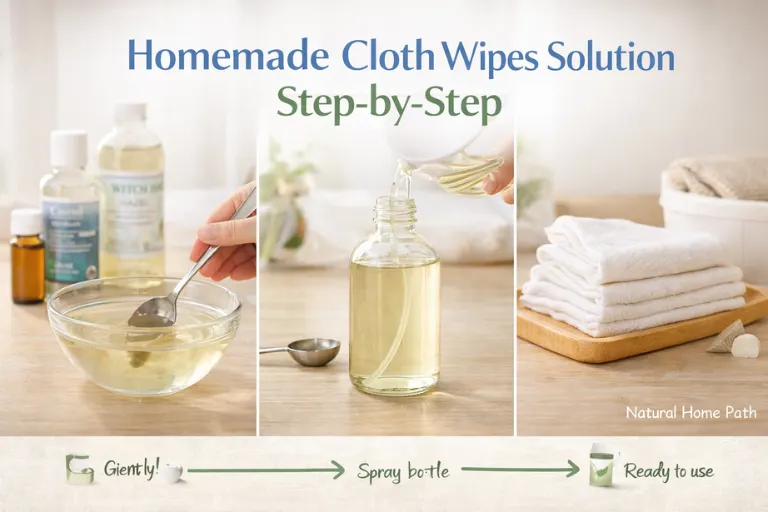
- Gather supplies
Prepare a clean jar or bowl, measuring spoon, spoon or whisk, spray bottle, and reusable cloth wipes. - Add warm distilled water
Pour 2 cups of warm distilled water into the container to help ingredients blend smoothly. - Add optional gentle ingredients
- 1 teaspoon witch hazel for soothing
- 1 teaspoon liquid castile soap for cleaning
- 1 teaspoon coconut oil or olive oil for moisture
(Skip soap and oil for sensitive skin or newborns.)
- 1 teaspoon witch hazel for soothing
- Mix gently
Stir slowly for 20–30 seconds. Avoid shaking to reduce bubbles. - Transfer to a container
Pour the solution into a spray bottle or a sealed container for pre-soaked wipes. - Apply to wipes
Lightly spray the wipe or dampen it before use. Wipes should be moist, not dripping. - Use during diaper changes
Wipe gently. Most solutions are no-rinse and safe for everyday use. - Store properly
Keep in a clean, closed container. Use within 7–14 days. - Adjust if needed
If residue or irritation appears, reduce soap, remove oil, or switch to a water-only mix.
Cloth Wipes Solution Variations
Not every baby needs the same solution. That’s why variations are helpful.
Baby-Safe Solution for Sensitive Skin
Use only water or water with a small amount of witch hazel. This is ideal for newborns.
No-Oil Cloth Wipes Solution
Skip oils completely to prevent diaper buildup. This option is popular for cloth diaper users.
Cleaning Wipes Solution (Non-Baby Use)
Add a bit more soap and optional vinegar for household cleaning.
These cloth wipes solution variations let you adjust based on skin type, diaper routine, and personal preference while keeping everything safe and simple.
Can You Use Essential Oils in Cloth Wipes Solution
Essential oils are optional in a homemade cloth wipes solution and should be used with care. Babies have delicate skin, and some oils may cause irritation. If you choose to add them, always dilute properly and use only baby-safe options like lavender or chamomile.
Many parents prefer an essential-oil-free cloth wipes solution, especially for newborns or eczema-prone skin. This approach reduces risk while still cleaning effectively. If you do use essential oils, use 1–2 drops per batch, never more. Remember, essential oils are for scent and mild benefits, not cleaning power. A natural cloth wipes solution without essential oils is often the safest and simplest choice.
How to Use Homemade Cloth Wipes Properly
Using a homemade cloth wipes solution is simple. You can spray the solution directly onto the wipe or lightly mist the skin before wiping. Both methods work well with reusable cloth wipes.
Only a small amount of solution is needed. The wipe should be damp, not soaked. This helps clean effectively without over-wetting the diaper area. Most cloth baby wipes solutions are no-rinse, meaning you don’t need to wipe again with plain water. If buildup occurs, reduce soap or oil. Proper use keeps your DIY cloth wipes solution gentle, effective, and safe for daily diaper changes.
How to Store Homemade Cloth Wipes Solution
Proper storage keeps your homemade cloth wipes solution fresh and safe. Always store it in a clean container, preferably glass or BPA-free plastic. A spray bottle works well for daily use.
Most homemade wipes solutions last about 1–2 weeks at room temperature. Refrigeration can extend shelf life slightly. If the solution smells off, looks cloudy, or separates strangely, discard it and make a fresh batch. Avoid making large batches to reduce waste. Simple storage habits help prevent bacteria growth and keep your cloth wipes solution safe for baby skin.
Common Mistakes to Avoid
Many issues with a homemade cloth wipes solution come from overcomplicating it. Using too much soap can cause residue on cloth diapers. Too much oil may lead to buildup and reduced absorbency.
Another common mistake is adding strong essential oils. Babies don’t need fragrance, and irritation can occur. Skipping container cleaning can also lead to bacteria growth. Always keep your recipe simple and gentle. Avoid vinegar for baby wipes, as it may irritate skin. Following these tips keeps your DIY cloth wipes solution safe, effective, and easy to maintain.
Is Homemade Cloth Wipes Solution Safe for Newborns
Yes, a homemade cloth wipes solution can be safe for newborns when kept very simple. Many parents use only warm water during the first weeks. This avoids irritation and supports delicate skin.
If you add ingredients, choose mild and minimal options like witch hazel. Avoid essential oils, strong soaps, and fragrances. A baby-safe cloth wipes solution focuses on gentle cleaning, not scent or foam. Always test on a small area first. When made carefully, a homemade baby wipes solution is one of the gentlest choices for newborn care.
Frequently Asked Questions
How long can I keep a homemade cloth wipes solution?
A freshly made homemade cloth wipes solution is best used within 7 to 14 days. Making smaller batches helps keep it fresh and reduces the risk of bacteria growth.
Do cloth wipes need to be rinsed after use?
Most DIY cloth wipes solutions are designed to be no-rinse. As long as the recipe is gentle and low in soap, you can wipe and go without any extra steps.
Will homemade wipes solution affect cloth diapers?
When made correctly, a cloth-diaper-safe wipes solution should not cause buildup or reduce absorbency. Avoid heavy oils and excess soap to protect your diapers.
Can this solution be used for more than diaper changes?
Yes! Many families use their homemade wipes liquid for quick hand, face, and on-the-go cleanups.
Conclusion
Making your own homemade cloth wipes solution is an easy way to keep baby care gentle, affordable, and eco-friendly. With just a few simple ingredients, you can create a solution that works perfectly with reusable cloth wipes and cloth diapers. The key is keeping it simple, mild, and tailored to your baby’s skin needs. Whether you choose a basic water-based mix or a customized blend, homemade wipes give you full control and peace of mind. Start small, observe what works best, and enjoy a cleaner routine that feels natural and stress-free.