

Orange peel vinegar cleaner is a homemade, natural cleaning solution made by soaking orange peels in vinegar. Over time, the vinegar absorbs citrus oils, creating a powerful yet eco-friendly cleaner that cuts grease, removes odors, and leaves a fresh scent behind.
Unlike plain vinegar, this DIY orange peel vinegar cleaner smells better and feels more pleasant to use, making it a popular choice for natural and non-toxic cleaning. Many people use it as a homemade all-purpose cleaner for kitchens, bathrooms, and everyday messes.
This citrus vinegar cleaner is also a smart zero-waste solution. Instead of throwing away orange peels, you reuse them to create a green cleaner that’s affordable, effective, and gentle for daily household cleaning.
Why Orange Peels and Vinegar Work So Well Together
The power of orange peel vinegar cleaner comes from how vinegar and citrus peels work together. Vinegar contains acetic acid, which helps break down grease, grime, soap scum, and mineral buildup. This makes it very effective for everyday cleaning.
Orange peels add natural citrus oils, mainly limonene, which boosts cleaning power and helps dissolve oily messes. These oils also reduce the strong vinegar smell, making the cleaner more pleasant to use.
When you combine the two, you get a DIY citrus vinegar cleaner that is both effective and eco-friendly. This natural reaction creates a strong homemade cleaner without harsh chemicals, making it ideal for people who prefer non-toxic and green cleaning solutions.

Benefits of Orange Peel Vinegar Cleaner
Using orange peel vinegar cleaner offers many simple and practical benefits. First, it is eco-friendly and supports a zero-waste lifestyle by reusing orange peels instead of throwing them away. Second, it is very cost-effective since vinegar and citrus peels are inexpensive and easy to find.
This homemade vinegar cleaner is also non-toxic, making it safer for everyday cleaning compared to chemical-based products. Many people use it as a natural all-purpose cleaner for kitchens, bathrooms, and common household surfaces.
Another benefit is customization. You can control the strength, scent, and dilution based on your needs. Overall, this DIY orange vinegar cleaner is a simple, effective, and sustainable choice for natural home cleaning.
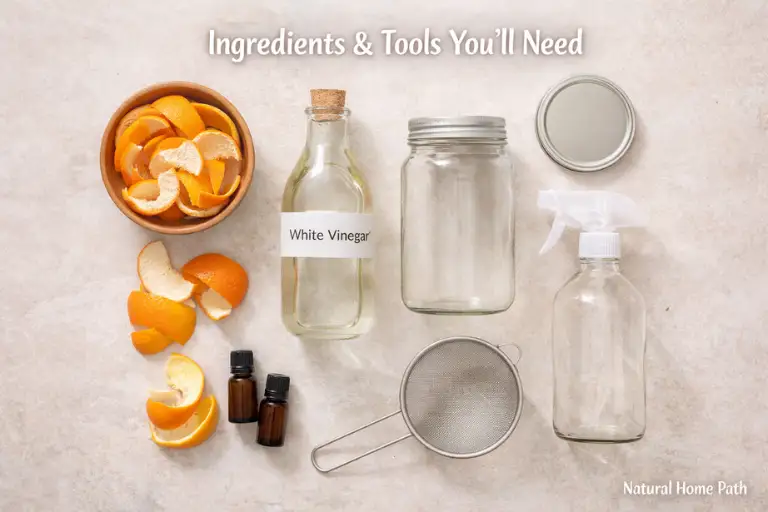
Ingredients & Tools You’ll Need
You don’t need anything complicated to make orange peel vinegar cleaner. Most items are already available at home.
Main Ingredients
- Orange peels – Fresh peels work best, but dried peels are also fine. Avoid peels with mold.
- White vinegar – This is the best choice because it has strong cleaning power and leaves less residue than apple cider vinegar.
Essential Tools
- Glass jar with a lid – Glass is important because vinegar can break down plastic over time.
- Fine strainer – Used to remove orange peels after the infusion process.
- Spray bottle – Makes the cleaner easy to apply on surfaces.
Optional Add-Ons
- Essential oils (lemon or lavender) for extra scent
- Labels or markers to note the preparation date
With these simple items, you can create a safe, affordable, and eco-friendly homemade cleaner.
How to Make Orange Peel Vinegar Cleaner (Step-by-Step)
Step 1: Prepare the Orange Peels: Collect fresh orange peels and make sure they are clean and dry. Avoid using peels with mold or moisture. Lightly tear or cut the peels into smaller pieces so the vinegar can absorb the natural citrus oils more easily.
Step 2: Fill the Jar Properly: Place the orange peels into a clean glass jar, filling it loosely. Do not press the peels down too tightly, as this can trap air and slow the infusion process.
Step 3: Add the Vinegar: Pour white vinegar over the peels until they are completely submerged. This prevents mold and allows the vinegar to pull out the citrus oils.
Step 4: Let It Infuse: Seal the jar and store it in a cool, dark place for 2 to 4 weeks. Gently shake the jar every few days to help blend the ingredients.
Step 5: Strain and Dilute: Once infused, strain out the peels and mix the citrus vinegar with equal parts water. Transfer it to a spray bottle, and your DIY orange peel vinegar cleaner is ready to use.

Infusion Time Explained
Infusion time plays an important role in making an effective orange vinegar cleaner. The minimum infusion time is two weeks, which allows the vinegar to absorb citrus oils from the peels. However, three to four weeks creates a stronger and better-smelling cleaner.
Longer infusion does not always mean stronger cleaning power. Once the vinegar has fully absorbed the citrus oils, extending the time will not add much benefit. A good sign that your infusion is ready is a strong citrus scent and slightly darker vinegar color.
For best results, avoid letting the peels sit too long if mold appears. Proper infusion ensures your homemade citrus vinegar cleaner is effective, safe, and pleasant to use.
How to Use Orange Vinegar Cleaner
Orange peel vinegar cleaner is easy to use for many everyday cleaning tasks. For general cleaning, spray the diluted solution directly onto the surface and wipe with a cloth. It works well for greasy countertops, sinks, and stovetops.
For tougher messes, let the cleaner sit for a few minutes before wiping. This allows the vinegar to break down dirt and grime. You can also use it to clean trash cans, microwaves, and bathroom fixtures.
Always test the cleaner on a small area first. This DIY natural cleaner is best for routine cleaning and deodorizing. With proper dilution, it becomes a safe and effective all-purpose cleaner for daily use.
Surfaces You Can Safely Clean With Orange Vinegar
Orange vinegar cleaner works well on many household surfaces. It is safe for ceramic tiles, stainless steel, glass, sealed countertops, and bathroom fixtures. Many people use it to clean windows, mirrors, sinks, and shower doors.
In the kitchen, it helps remove grease and odors from countertops and appliances. On floors, it can be used on sealed tile or vinyl flooring when diluted properly with water.
This homemade citrus cleaner is ideal for areas that need regular cleaning without harsh chemicals. Always wipe surfaces dry after cleaning to avoid streaks. Using it correctly ensures effective results while keeping your home fresh and chemical-free.
What NOT to Clean With Vinegar
Although orange peel vinegar cleaner is effective, it is not safe for all surfaces. Avoid using it on natural stone such as granite, marble, and limestone. Vinegar can damage and dull these materials over time.
Do not use vinegar on hardwood floors, as the acid can strip the finish. It should also be avoided on cast iron, aluminum, and waxed surfaces. These materials can react poorly to acidic cleaners.
Always check manufacturer instructions before cleaning delicate surfaces. Knowing what not to clean with vinegar helps prevent damage. Using this DIY vinegar cleaner safely ensures long-term protection of your home surfaces.
Is Orange Peel Vinegar Cleaner Safe
Orange peel vinegar cleaner is generally safe when used properly. It is a non-toxic cleaner and does not contain harsh chemicals found in commercial products. When diluted, it is suitable for routine household cleaning.
For homes with pets and children, proper ventilation is recommended while cleaning. Avoid spraying directly on food-prep surfaces without rinsing afterward. This helps maintain hygiene and safety.
Never mix vinegar with bleach or other chemical cleaners, as this can create harmful fumes. When used correctly, this homemade citrus vinegar cleaner is a safer and more natural option for maintaining a clean and healthy home.
Storage, Shelf Life, and Spoilage Signs
Proper storage helps your orange vinegar cleaner last longer. Store it in a glass container with a tight lid and keep it in a cool, dark place. When diluted, the cleaner usually lasts up to six months.
If stored as a concentrate, it can last even longer. Signs of spoilage include mold growth, unusual odors, or cloudy liquid. If you notice these signs, discard the cleaner and make a fresh batch.
Labeling your container with the date helps track freshness. With correct storage, your homemade vinegar cleaner remains effective and safe for regular use.
How to Reduce or Customize the Vinegar Smell
Some people worry about the smell of vinegar cleaners, but there are easy ways to improve it. Orange peels naturally reduce the sharp vinegar scent by adding fresh citrus notes. Proper dilution with water also helps soften the smell.
You can add a few drops of essential oils like lemon or lavender for a lighter scent. Avoid adding too much, as oils are concentrated. Letting the cleaner air-dry also reduces lingering odors.
With these simple tips, your DIY orange peel vinegar cleaner can smell fresh and clean while remaining effective and natural.
Environmental Impact
Orange peel vinegar cleaner is an excellent choice for eco-conscious homes. It reduces food waste by reusing orange peels that would normally be thrown away. This supports a zero-waste cleaning routine.
Using a homemade citrus vinegar cleaner also reduces the need for plastic bottles and chemical-based products. Over time, this lowers household waste and environmental impact.
It is affordable, reusable, and sustainable. Choosing this eco-friendly cleaner helps protect the environment while keeping your home clean. Small changes like this can make a big difference in creating a more sustainable lifestyle.
Common Mistakes to Avoid When Making Citrus Vinegar
One common mistake when making orange vinegar cleaner is using moldy or dirty peels. Always use clean, fresh peels to prevent spoilage. Another mistake is not fully covering the peels with vinegar, which can lead to mold growth.
Some people skip dilution and use the cleaner at full strength, which may damage surfaces. Proper dilution is important for safe cleaning. Using plastic containers is also a mistake, as vinegar can weaken plastic over time.
Avoid these issues to ensure your DIY citrus vinegar cleaner is safe, effective, and long-lasting.
Frequently Asked Questions
Does orange peel vinegar cleaner kill germs?
This cleaner is great for removing dirt, grease, and odors, but it is not a hospital-level disinfectant. It works best for everyday surface cleaning, not for sanitizing high-risk areas.
Can I mix different citrus peels together?
Yes, you can combine orange, lemon, lime, or grapefruit peels. Mixing citrus peels creates a pleasant scent, but orange peels provide the strongest balance of cleaning power and smell.
Is apple cider vinegar a good substitute?
Apple cider vinegar can be used, but white vinegar is more effective for cleaning and leaves less residue.
How often should I make a new batch?
For best results, make a fresh batch every 3 to 6 months, especially if the scent weakens.
Conclusion
If you’re looking for a natural, eco-friendly cleaning solution, orange peel vinegar cleaner is a great choice. It’s easy to make, affordable, and helps reduce household waste.
This DIY citrus vinegar cleaner works well for daily cleaning tasks and gives you control over what you use in your home. While it doesn’t replace disinfectants, it is perfect for regular, chemical-free cleaning.
With proper use, storage, and dilution, this cleaner can become a simple and reliable part of your green cleaning routine.