

A fiddle fig fungal problem is one of the most common issues plant owners face, often showing up as brown or black spots on fiddle leaf fig leaves, yellowing edges, or drooping growth. These symptoms usually indicate a fungal infection on a fiddle leaf fig, caused by overwatering, poor soil drainage, high humidity, or limited airflow. When moisture stays trapped in the soil or on the leaves, fungus can quickly develop and spread.
The good news is that a fiddle leaf fig fungus can be fixed with the right care. Early action helps treat the fungal infection, protect healthy leaves, and restore normal growth. This guide focuses on clear diagnosis, effective treatment, and long-term prevention using simple, easy-to-follow steps, so your fiddle leaf fig can recover and stay healthy over time.
Fungal vs Bacterial vs Care Problems
Many fiddle leaf fig issues look similar, but the cause matters. A fungal infection usually shows as brown or black spots with yellow edges, slow spread, and soft or damp soil. Bacterial infections often create dark, water-soaked spots that spread quickly and may smell bad. Care problems like overwatering or sunburn cause damage but do not spread like disease.
A fiddle fig fungal problem fix requires moisture control, while bacterial issues need faster removal of infected leaves. Checking the soil moisture, leaf texture, and how fast spots spread helps with correct diagnosis. Understanding the difference between fungal vs bacterial infection prevents wrong treatment and protects the plant from further stress or damage.
What Causes Fungal Problems in Fiddle Leaf Figs
A fungal disease on fiddle leaf fig plants almost always starts with excess moisture. Overwatering, poor drainage, and compacted soil create the perfect environment for fungus to grow. When roots sit in wet soil for too long, they weaken and become vulnerable to root rot and fungal spores.
High indoor humidity, low airflow, and wet leaves also increase risk. Using pots without drainage holes or placing the plant in dark corners slows soil drying. Reusing contaminated soil or unclean pots can reintroduce fungus even after treatment. These conditions allow a fiddle leaf fig fungus to spread slowly but steadily. Fixing the root cause is just as important as treating visible leaf damage.

Step-by-Step Diagnostic Protocol
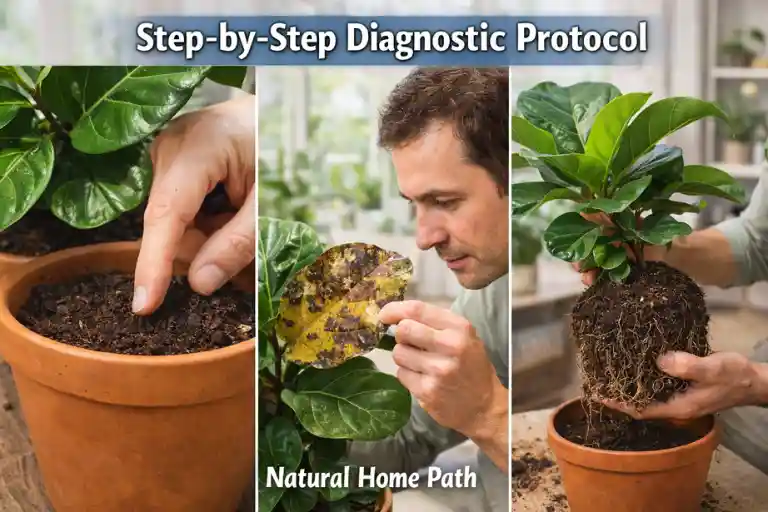
A precise diagnosis is crucial for addressing fungal issues in fiddle leaf figs. Follow these steps to identify and confirm the presence of a fungal infection:
Step1: Check the Soil Condition: Begin by examining the soil’s moisture level. Stick your finger several inches into the soil. If it feels damp or has a musty odor, it’s a strong indicator that fungus could be present. Fungus thrives in moist, poorly-draining soil, so this is an important first clue.
Step2: Inspect the Leaves: Next, take a close look at the leaves. Fungal infections often cause distinctive symptoms like brown spots with yellow halos around them. The spots may have irregular or uneven edges, or the damage could be spreading slowly. Pay attention to the overall pattern of leaf damage, as this can help distinguish fungal issues from other plant problems.
Step3: Examine the Roots: Carefully remove the plant from its pot to inspect the root system. Healthy roots should appear firm and light-colored, while fungal damage typically causes roots to look dark, mushy, and rotting. Be sure to use clean tools to handle the plant, and disinfect them afterward to prevent cross-contamination.
By following these steps, you can confidently identify a fungal infection in your fiddle leaf fig and differentiate it from other issues like nutrient deficiencies or improper watering practices. This methodical approach ensures you’re addressing the root cause of the problem, leading to more effective treatment.
Treatment Options
Treating a fiddle leaf fig fungal infection works best when steps are taken in order. First, correct watering habits and improve drainage. Repot the plant using well-draining soil and remove damaged roots. This alone often stops fungal spread.
Next, apply organic treatments like neem oil or baking soda spray for mild infections. These are gentle and safe for indoor use. For severe cases, use a fungicide designed for houseplants. Always follow label instructions and avoid overuse. Combining proper care with the right treatment ensures the fungal infection is controlled without harming healthy growth.
Preventative Maintenance Plan
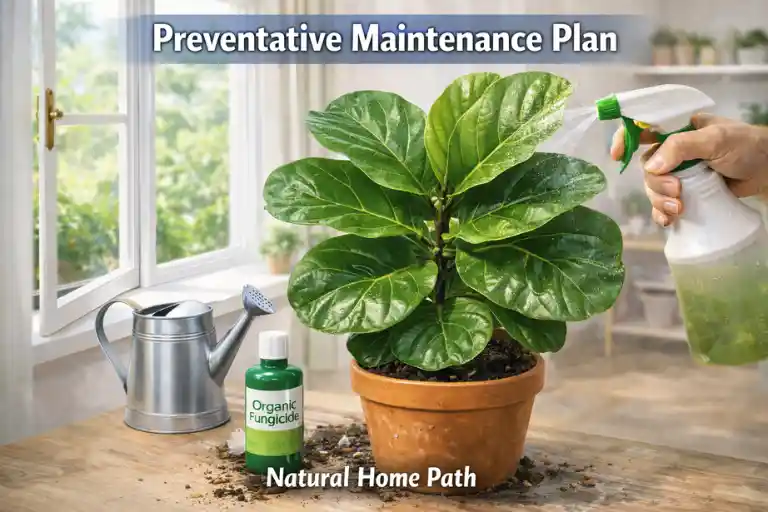
Prevention keeps a fiddle leaf fig fungus from returning. Water only when the top few inches of soil are dry. Always empty saucers to avoid standing water. Use pots with drainage holes and a light, airy soil mix.
Improve airflow by spacing plants and opening windows when possible. Wipe leaves regularly to remove dust and moisture buildup. Avoid misting leaves in humid environments. Monitor the plant weekly for new spots or color changes. A simple routine reduces stress and strengthens resistance, making fungal problems less likely in the future.
Long-Term Plant Health
Long-term success goes beyond basic care. Healthy soil supports beneficial microbes that help fight disease. Adding materials like perlite or bark improves oxygen flow to roots. Disinfect pots and tools using diluted alcohol before reuse.
Avoid placing the plant near vents or damp areas where temperature changes cause condensation. Quarantine new plants before bringing them indoors to prevent fungal spread. These advanced steps improve resilience and protect your fiddle leaf fig from repeated fungal infections, keeping growth strong and stable over time.
Real Recovery Scenarios
In mild cases, plants with early brown spots often recover within weeks after watering changes and leaf removal. Moderate infections improve after repotting and organic fungicide use. Severe cases with root rot require aggressive pruning but can still recover with patience.
Most successful recoveries follow the same pattern: moisture control, clean soil, and consistent care. New leaves appear healthy when the fungus is under control. These examples show that a fiddle fig fungal problem fix is realistic when steps are followed carefully and consistently.
Monitoring Progress and Signs of Recovery
Healthy recovery signs include new leaf growth, firmer stems, and no new spots forming. Older damaged leaves may not heal, but healthy growth means treatment is working. Soil should dry evenly and smell clean.
If spots continue spreading after several weeks, reassess watering, light, and airflow. Fungal recovery takes time, but steady improvement confirms success. Regular monitoring ensures your fiddle leaf fig fungal infection stays under control and does not return.
Frequently Asked Questions
How can I tell if my fiddle leaf fig has a fungal infection?
Look for brown or black spots on fiddle leaf fig leaves, yellow halos, soft stems, or mushy roots. Excess moisture and poor drainage often trigger fiddle leaf fig fungal problems.
Can a fiddle leaf fig recover from fungal infection?
Yes. With proper care like repotting in well-draining soil, removing damaged leaves, and using organic or chemical fungicides, a fiddle leaf fig fungus can be treated, and healthy growth will return.
Should I use fungicide immediately?
Only after fixing watering, soil, and airflow issues. Applying fungicide too early can stress the plant. Organic options like neem oil often work well for mild infections.
Can fungus spread to other plants?
Fungal spores can spread if leaves touch or if tools and soil are contaminated. Isolate infected plants and sanitize tools to prevent spread.
Do old leaves heal after fungal infection?
No. Damaged leaves usually don’t recover. Focus on new leaf growth, which indicates the plant is responding well to treatment.
Conclusion
A successful fiddle fig fungal problem fix depends on early detection, proper treatment, and consistent prevention. Focus on soil health, controlled watering, and clean growing conditions. Avoid quick fixes that ignore the root cause.
With patience and simple care habits, your fiddle leaf fig can regain strength and beauty. Healthy plants resist disease naturally and grow better long-term.