
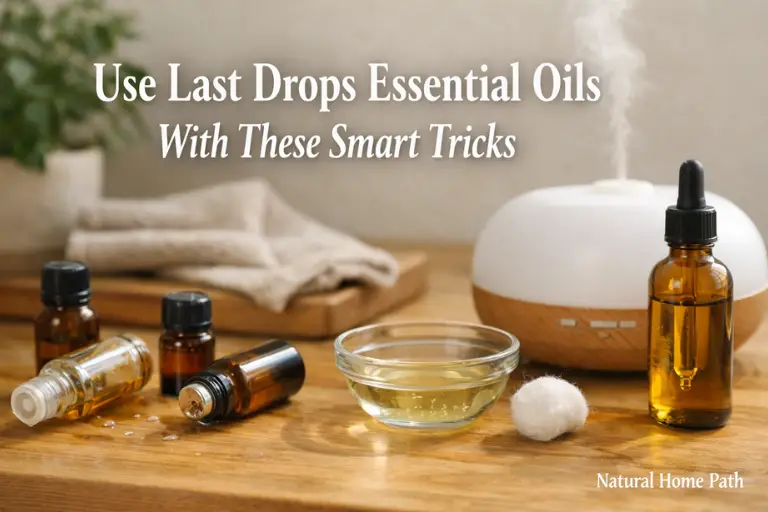
Many people throw away bottles when only a few drops are left, but those last drops of essential oils are still powerful and useful. Essential oils are concentrated, which means even a small amount can deliver strong scent and benefits. When you waste leftover oils, you’re also wasting money, since quality essential oils are not cheap.
Learning how to use last drops essential oils wisely helps you get full value from every bottle. It also supports a more eco-friendly and waste-free lifestyle, which many natural-living users care about. Instead of buying more oils too soon, you can reuse what you already have for cleaning, freshening, or simple DIY blends.
By choosing to use every last drop of essential oils, you reduce waste, save money, and make smarter use of natural products you already trust.
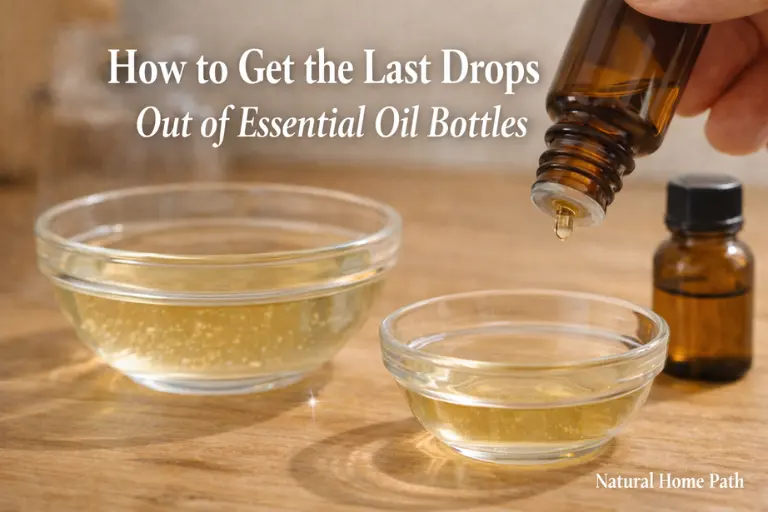
How to Get the Last Drops Out of Essential Oil Bottles
Getting the last drops of essential oils out of the bottle is easier than most people think. One simple trick is to turn the bottle upside down and let gravity do the work. Leave it like this for a few minutes and gently tap the bottom. Another effective method is adding a small amount of carrier oil like jojoba or coconut oil directly into the bottle. This helps pull out the remaining oil while creating a ready-to-use blend.
Some people also place the bottle in warm (not hot) water for a minute. This slightly thins the oil and makes it flow better. Knowing how to get last drops out of essential oil bottles helps you avoid waste and get full value from every bottle.
Simple Ways to Use Last Drops of Essential Oils at Home
There are many easy and practical ways to use leftover essential oils around your home. Add the last drops to your diffuser water for a light refresh, especially when blending with another oil. You can also place a few drops on a cotton ball and tuck it inside drawers, closets, or shoes to keep them smelling fresh.
Another quick idea is adding leftover oils to trash cans or sinks to control odors. These small actions help you use last drops essential oils without effort. Even a few drops can make a noticeable difference. Using leftover essential oils at home is perfect for beginners who want simple results without complex DIY projects.
Cleaning Uses for Leftover Essential Oils
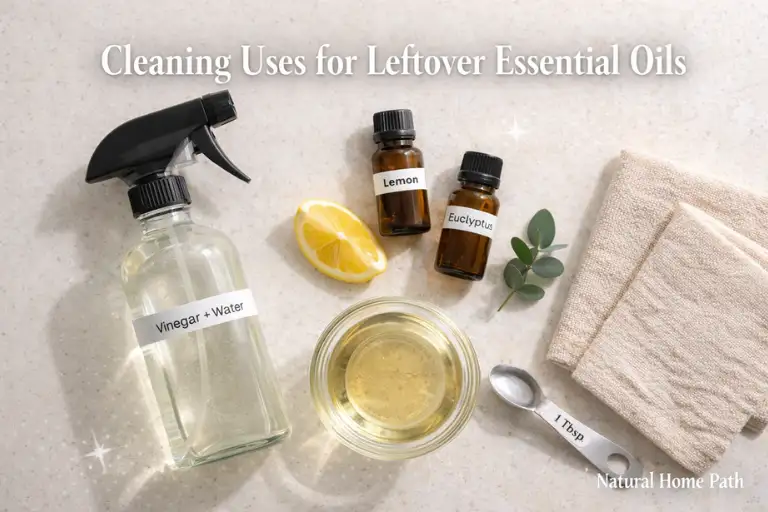
Using leftover essential oils for cleaning is one of the smartest ways to avoid waste. Add the last drops to a DIY all-purpose cleaner made with vinegar and water. Oils like lemon, tea tree, or eucalyptus work especially well. You can also freshen toilet bowls or drains by adding a few drops followed by warm water.
These oils help reduce odors while adding a clean scent to your space. When you use every last drop of essential oils for cleaning, you stretch your supplies and cut down on chemical cleaners. It’s an eco-friendly solution that fits naturally into a waste-free lifestyle. Just remember to mix oils properly and avoid using them on delicate surfaces.
Skincare & Personal Use Ideas
The last drops of essential oils are perfect for gentle personal use when diluted correctly. Add them to a roller bottle with a carrier oil for quick blends you can apply to wrists or temples. You can also add leftover oils to a warm bath or foot soak for relaxation.
Always remember that essential oils are strong, even in small amounts. That’s why essential oil dilution using last drops is so important. These ideas work well for people who want to enjoy oils without wasting them. When used safely, leftover essential oils can support simple self-care routines while helping you avoid wasting essential oils you already own.
How to Safely Dilute Essential Oils When Only Drops Are Left
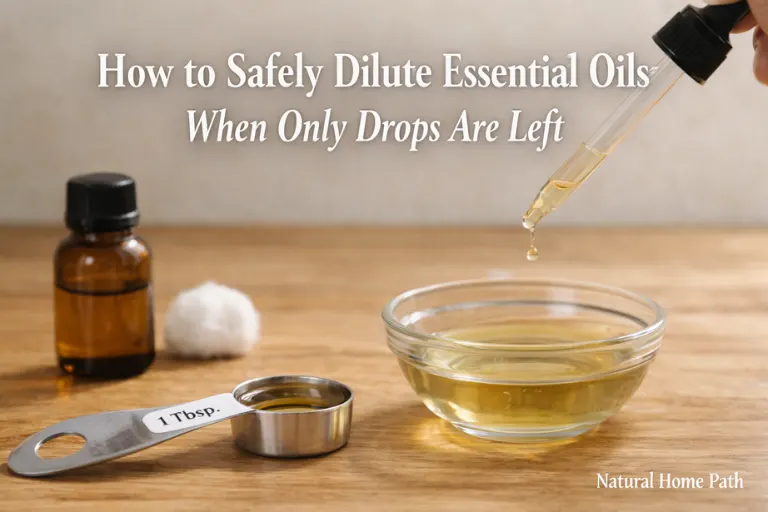
Safety matters, especially when you use last drops essential oils on skin. Even one or two drops should always be mixed with a carrier oil. A simple rule for beginners is to use 1–2 drops per tablespoon of carrier oil. This keeps the blend gentle and effective.
Some oils, like cinnamon or oregano, should not be used on skin at all. Always check skin safety before using leftover oils. Learning how to dilute essential oils using last drops protects your skin and helps prevent irritation. This step is often skipped by competitors, but it’s essential for responsible use. Safe dilution allows you to enjoy your oils confidently while reducing waste.
Can You Mix Different Essential Oil Leftovers Together
Yes, you can mix leftover essential oils but only when done carefully. If the oils have similar uses or scents, blending small amounts can work well. For example, citrus oils blend nicely together and are great for cleaning or diffusing.
However, avoid mixing oils with very different strengths or safety levels. Always smell the blend first and test it in small amounts. This is a smart way to use last drops essential oils instead of throwing them away. Mixing thoughtfully helps you create new blends while avoiding waste. When done correctly, blending leftover essential oils can be both fun and practical.
Reusing Essential Oil Bottles After the Last Drop
Once you’ve used the final drops, don’t throw the bottle away right away. Reuse essential oil bottles for travel blends, sample oils, or small DIY mixes. After cleaning the bottle with warm soapy water or alcohol, it’s ready for reuse.
Many people also store diluted blends or cleaning solutions in these small bottles. Reusing bottles supports essential oil waste reduction and fits perfectly into eco-friendly living. It’s a simple habit that helps you get more value from your supplies. Reusing bottles is just as important as using the oil itself.
Common Mistakes to Avoid When Using Leftover Essential Oils
One common mistake is applying leftover essential oils directly to skin without dilution. Another is using oils that are too old or smell off. Oils can expire, so always check quality before use.
Some people also ignore pet safety or mix oils without understanding their effects. These mistakes can reduce the benefits of your oils or cause irritation. Learning safe ways to use leftover essential oils helps you avoid problems and enjoy better results. When you understand what not to do, you’ll feel more confident using every drop wisely and safely.
Frequently Asked Questions
Are the last drops of essential oils still effective?
Yes, the last drops of essential oils are just as effective as the first ones. Essential oils do not lose strength simply because the bottle is almost empty. As long as the oil smells fresh and hasn’t changed color or texture, it can still be used safely and effectively.
Can I use leftover essential oils in a diffuser?
Absolutely. Adding leftover essential oils to diffuser water is one of the easiest ways to avoid waste. You can also combine the last drops with another oil to create a gentle blend for short diffuser sessions.
Is it safe to apply the last drops directly to skin?
No. Even small amounts should never be applied directly. Always practice essential oil dilution, even when only a few drops are left. Mix them with a carrier oil to prevent irritation or sensitivity.
Do essential oils expire if only a few drops remain?
Essential oils can expire over time. If the oil smells sour, cloudy, or unusual, it’s best not to use it. Learning how to use last drops essential oils safely includes checking quality before use.
What should I do if I don’t want to use the oil anymore?
If the oil is still good, use it for cleaning or deodorizing. If not, properly clean and reuse the essential oil bottle instead of throwing it away.
Conclusion
The last drops of essential oils may seem small, but they still hold real value. When you learn how to use last drops essential oils properly, you save money, reduce waste, and make smarter use of products you already own. From simple home freshening to gentle cleaning and safe personal use, even a few drops can go a long way.
By using thoughtful methods like proper dilution, careful mixing, and bottle reuse, you avoid common mistakes and get more out of every purchase. These small habits support a more eco-friendly and waste-free lifestyle without extra effort. Instead of throwing bottles away too soon, you turn leftover essential oils into useful, everyday solutions naturally and responsibly.