
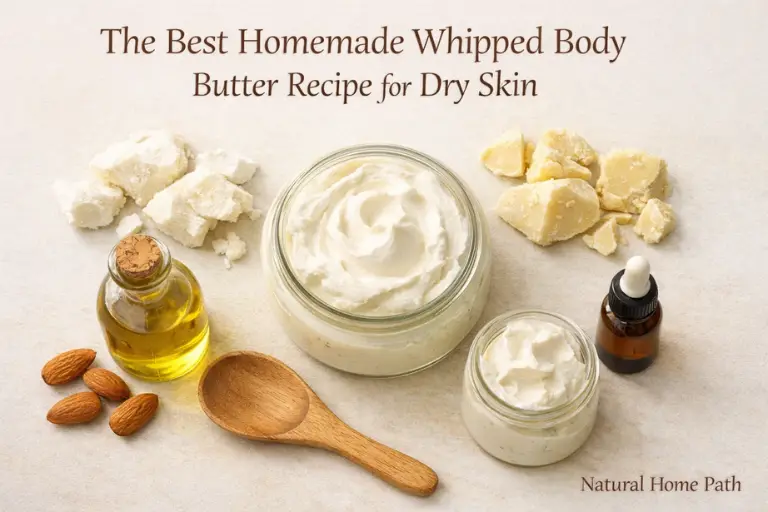
Homemade whipped body butter is a rich, natural skincare product made by whipping plant-based butters and oils until they turn light and fluffy. Unlike regular body butter, this version has air whipped into it, giving it a soft, creamy texture that feels smooth on the skin and spreads easily.
It is usually made with ingredients like shea butter, cocoa butter, and nourishing carrier oils, without water, fillers, or harsh chemicals. Because it is oil-based, whipped body butter deeply moisturizes dry skin and helps lock in hydration for longer than most lotions.
People love making DIY whipped body butter at home because it is customizable, gentle, and budget-friendly. You can control the ingredients, adjust the scent, and create a non-greasy whipped body butter that suits your skin perfectly.
Why People Love Homemade Whipped Body Butter
People choose homemade whipped body butter because it offers deep moisture without harsh ingredients. Unlike store-bought lotions, it contains no water, preservatives, or synthetic fragrances, making it ideal for dry and sensitive skin. The whipped texture feels light, airy, and smooth, yet it locks in moisture for hours.
Many users love that DIY whipped body butter is customizable. You can adjust oils for your skin type, create a non-greasy body butter, or keep it unscented for sensitive skin. It’s also budget-friendly, as a single batch lasts a long time.
Most importantly, natural whipped body butter gives you full control over what touches your skin, making it a favorite for clean, simple skincare routines.
Whipped Body Butter vs Lotion
The biggest difference between whipped body butter vs lotion is water content. Lotions contain water, which makes them lightweight but less moisturizing. Homemade whipped body butter, on the other hand, is oil-based, meaning it delivers long-lasting hydration.
Whipped body butter feels richer and is best for very dry skin, winter skin, cracked hands, and feet. Lotion absorbs faster but often needs reapplication. Because body butter has no water, it does not need preservatives, making it more natural and skin-friendly.
If your skin feels tight or flaky, whipped body butter is the better choice. For hot weather or oily skin, lotion may feel lighter. Many people use both, depending on their skin’s needs.
Ingredients for Homemade Whipped Body Butter
- Shea Butter (½ cup)
Provides deep moisture and helps soften dry, rough skin. - Cocoa Butter (¼ cup)
Adds firmness and helps the body butter hold its shape. - Sweet Almond Oil (¼ cup)
A lightweight carrier oil that helps create a non-greasy texture. - Vitamin E Oil (1 teaspoon)
Helps extend shelf life and supports healthy-looking skin. - Essential Oils (10–15 drops, optional)
Used for natural scent. Lavender, vanilla, or citrus oils work well. (Skip if you have sensitive skin.)
Step-by-Step Homemade Whipped Body Butter Recipe
To make DIY whipped body butter, start by gently melting your shea butter or cocoa butter using a double boiler. Once melted, remove from heat and let it cool until slightly firm but not solid. This cooling step is very important for texture.
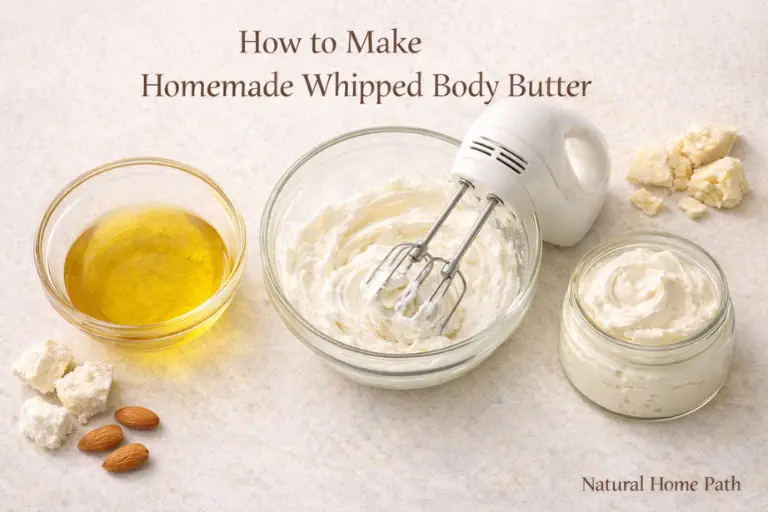
Next, add your chosen carrier oils and vitamin E oil. Using a hand mixer, whip the mixture for several minutes until it turns light, fluffy, and creamy. The color will lighten as air is added.
If desired, mix in essential oils at the end. Spoon the whipped body butter into clean jars and store with lids on. This homemade whipped body butter recipe creates a smooth, nourishing product perfect for daily use.
How to Make Whipped Body Butter Non-Greasy
A common concern is making whipped body butter non-greasy. The key is choosing the right oil-to-butter ratio. Too much oil can make the butter feel heavy on the skin. Using lightweight oils like jojoba or almond oil helps improve absorption.
Whipping the mixture properly also matters. The more air you whip in, the lighter the texture becomes. Letting the butter cool before whipping prevents separation and graininess.
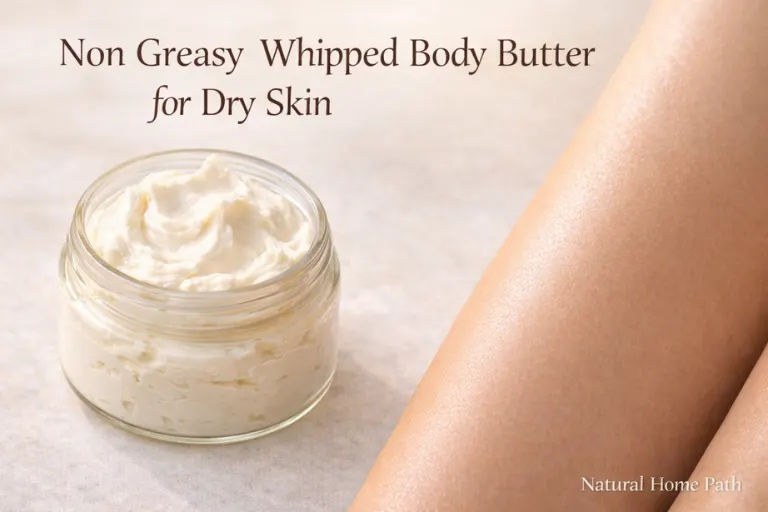
Apply homemade whipped body butter in small amounts, especially after a shower when skin is slightly damp. This helps it absorb faster and leaves skin soft, not oily. With the right balance, you’ll get a fast-absorbing body butter that feels comfortable all day.
Best Oils for Different Skin Types
Choosing the right oils makes a big difference in homemade whipped body butter. For dry skin, rich oils like olive oil or avocado oil provide deep nourishment. They help repair flaky, tight skin.
If you have sensitive skin, jojoba oil is a great option because it closely mimics the skin’s natural oils. It absorbs well and feels gentle. For oily or combination skin, lighter oils such as sweet almond oil work best and help avoid a greasy feel.
In cold weather, adding a small amount of coconut oil can help protect winter-damaged skin. Matching oils to your skin type ensures your DIY whipped body butter feels comfortable and effective.
How to Customize Homemade Whipped Body Butter
One of the best things about homemade whipped body butter is how easy it is to customize. You can keep it unscented for sensitive skin or add a few drops of essential oils for fragrance. Popular options include lavender for relaxation and citrus for a fresh feel.
You can also adjust the texture by changing the oil ratio. Less oil creates a firmer butter, while more oil makes it softer. For seasonal use, lighter blends work well in summer, while richer blends are perfect for winter.
Customizing your DIY whipped body butter allows you to create a product that fits your lifestyle, skin needs, and personal preferences—without unnecessary additives.
Storage, Shelf Life, and Melting Prevention
Proper storage helps homemade whipped body butter last longer. Because it contains no water, it usually lasts 6–12 months when stored correctly. Keep it in a cool, dry place, away from direct sunlight and heat.
During hot weather, whipped body butter can soften or melt. Using heat-resistant oils and storing jars in a cooler area helps prevent this. If it does melt, you can re-whip it once cooled.
Always use clean, dry hands or a spoon to avoid contamination. Knowing how to store homemade body butter properly keeps it fresh, safe, and effective for everyday use.
Common Problems and Easy Fixes
Sometimes DIY whipped body butter doesn’t turn out perfect on the first try. If your butter feels grainy, it likely cooled too slowly. Re-melt it gently, cool faster, and whip again.
If the texture is too soft, add a bit more shea or cocoa butter. If it’s too hard, whip in a small amount of carrier oil. Loss of fluffiness usually means the mixture warmed up too much—simply chill and re-whip.
These issues are common and easy to fix. With a little practice, you’ll consistently create smooth, fluffy, homemade whipped body butter that feels great on the skin.
Is Homemade Whipped Body Butter Safe for All Skin Types
Homemade whipped body butter is generally safe for most skin types, especially when made with simple, natural ingredients. However, it’s always smart to do a patch test before full use, especially if you have sensitive skin.
Essential oils should be used carefully and avoided entirely if your skin reacts easily. Unscented versions work best for children and very sensitive skin. Because body butter is rich, some people prefer using it mainly on the body rather than the face.
When made correctly, natural whipped body butter is a gentle, nourishing option that supports healthy skin without unnecessary chemicals.
Frequently Asked Questions
Does homemade whipped body butter really moisturize better than lotion?
Yes. Because it contains no water, it seals moisture into the skin and provides long-lasting hydration, especially for very dry areas.
Can whipped body butter feel heavy on the skin?
Not if it’s made correctly. Using light carrier oils and whipping enough air into the mixture helps create a non-greasy, fast-absorbing texture.
Is homemade whipped body butter suitable for sensitive skin?
Yes, especially when kept unscented. Always do a small patch test before regular use.
Can I use whipped body butter daily?
Absolutely. Many people apply it once daily, especially after showers, for soft and nourished skin.
Conclusion
Making homemade whipped body butter is a simple and rewarding way to care for your skin naturally. With just a few high-quality ingredients, you can create a product that feels luxurious, deeply moisturizes, and avoids unnecessary chemicals found in many store-bought options.
What makes it truly special is the flexibility. You can adjust the texture, choose oils that suit your skin type, and keep it scented or fragrance-free. Whether you’re dealing with dry winter skin or simply want a cleaner skincare routine, DIY whipped body butter fits easily into everyday life.