

DIY natural hand soap is a homemade hand soap you make using simple, natural ingredients instead of harsh chemicals. Unlike many store-bought options, this type of natural hand soap focuses on being gentle on skin, eco-friendly, and easy to customize at home. Most recipes use a liquid Castile soap base, water, and essential oils, making it a safe and beginner-friendly option.
When people search for DIY natural hand soap, they usually want a natural hand soap recipe that is easy, affordable, and effective for daily use. This method is different from traditional soap making because it does not require lye handling, which makes it perfect for beginners. Learning how to make natural hand soap at home also gives you control over ingredients, scent, and skin benefits while avoiding unnecessary additives.
Why Make Your Own Natural Hand Soap?
Making your own DIY natural hand soap gives you full control over what touches your skin every day. Many commercial hand soaps contain synthetic fragrances, sulfates, and preservatives that can dry out or irritate hands. A homemade hand soap made with natural ingredients is much gentler, especially for people with sensitive skin.
Another big reason is cost. Once you buy a bottle of liquid Castile soap, you can make multiple batches of natural hand soap at home, saving money over time. It is also an eco-friendly choice because you reduce plastic waste and avoid harmful chemicals going down the drain. Learning how to make natural hand soap also allows you to customize scent, thickness, and moisture level, making it perfect for daily family use.

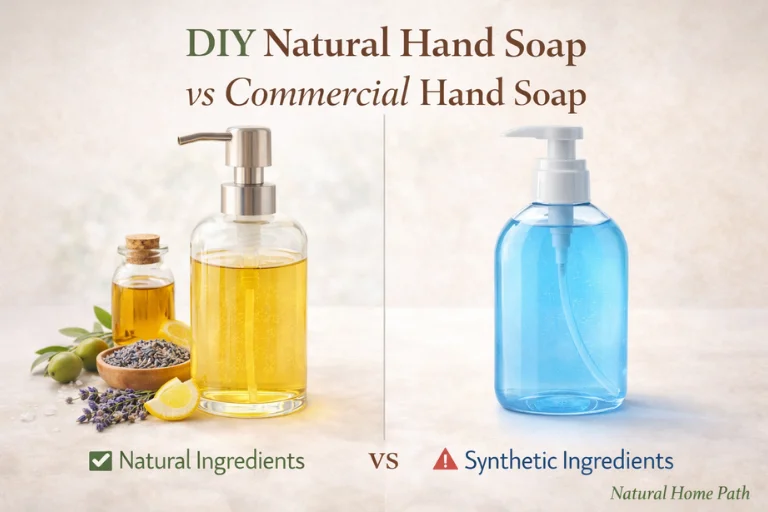
DIY Natural Hand Soap vs Commercial Hand Soap
There is a clear difference between DIY natural hand soap and most commercial hand soaps. Store-bought soaps often rely on harsh detergents that remove natural oils from your skin. This can lead to dryness, irritation, and frequent cracking. In contrast, a natural hand soap recipe uses gentle cleansers that clean without stripping moisture.
Another difference is transparency. When you make homemade hand soap, you know exactly what goes inside—no hidden chemicals or artificial colors. Many commercial soaps also claim to be “natural,” but still include synthetic additives. Making DIY hand soap at home allows you to choose safer ingredients and avoid unnecessary fillers. For anyone focused on skin health, sustainability, and long-term savings, natural hand soap is the better option.
Ingredients List for DIY Natural Hand Soap
- Liquid Castile soap (main natural cleanser)
- Distilled water (to dilute and smooth the soap)
- Essential oil (lavender, tea tree, lemon, or your choice)
- Carrier oil (olive oil, sweet almond oil, or jojoba oil – optional, for moisture)
How to Make DIY Natural Hand Soap (Step-by-Step)
Step 1: Prepare your container
Start with a clean bowl or soap dispenser. Clean tools are important because they help your homemade hand soap last longer and stay safe to use.
Step 2: Add distilled water first
Pour distilled water into the container before adding soap. This order matters. It helps prevent excess bubbles and keeps the texture of your natural hand soap smooth and balanced.
Step 3: Slowly mix in liquid Castile soap
Gently pour in liquid Castile soap and stir slowly. Avoid shaking or stirring too fast, as bubbles can make the soap watery or separate later.
Step 4: Add essential oils and moisture boosters
Add a few drops of skin-safe essential oils for scent. If your hands get dry, mix in a small amount of carrier oil for extra moisture.
Step 5: Bottle and use
Transfer the mixture into a reusable bottle. Your DIY natural hand soap is ready to use. Gently shake before each use.

DIY Natural Hand Soap Without Lye
Many beginners worry about lye, but DIY natural hand soap without lye is completely safe when made correctly. While traditional soap making uses lye, this method does not require handling it at all. The key is using liquid Castile soap, which is already fully processed and safe for skin.
Although lye was used during the original soap-making process, it is no longer present in the final product. That is why this natural hand soap recipe is perfect for beginners. You get all the benefits of homemade hand soap without the risk. This approach makes DIY hand soap accessible, simple, and stress-free while still delivering effective, gentle cleansing for daily hand washing.
Variations of DIY Natural Hand Soap
One of the best things about DIY natural hand soap is how easy it is to customize. For a lighter texture, you can turn it into DIY foaming hand soap by using a foaming dispenser and more water. If you have sensitive skin, skip fragrance and create a natural hand soap for sensitive skin using only Castile soap and water.
For dry hands, add a small amount of olive oil or glycerin to make a moisturizing blend. Parents can also make kid-friendly natural hand soap by choosing mild essential oils or leaving them out completely. These variations allow you to create a homemade hand soap that fits your lifestyle, skin type, and daily needs without changing the basic recipe.
Common Problems with DIY Natural Hand Soap and How to Fix Them
- Soap feels too watery: Reduce the amount of distilled water in your next batch to achieve a thicker, smoother consistency.
- Soap separates in the bottle: This is normal for homemade liquid hand soap. Simply gently shake before each use to mix it back together.
- Weak or faint scent: Not enough essential oil was added. Increase the amount gradually to stay skin-safe while boosting fragrance.
- Hands feel dry after use: Add a small amount of carrier oil like olive or almond oil to improve moisture and make your soap gentler.
- Bubbles or frothiness issues: Stir slowly and avoid shaking too hard when mixing; this prevents excessive foaming.
With these simple fixes, your DIY natural hand soap will turn out smooth, effective, and perfect for everyday use.
How Long Does Homemade Natural Hand Soap Last
Homemade natural hand soap typically lasts about two to three months when stored properly. Because it does not contain strong preservatives, freshness depends on cleanliness and storage. Always use clean bottles and distilled water to avoid contamination.
Store your DIY natural hand soap in a cool, dry place away from direct sunlight. If the smell changes or the texture becomes unusual, it is best to discard it and make a fresh batch. Keeping batches small ensures your natural hand soap at home stays effective and safe. Proper storage helps maintain quality while allowing you to enjoy a gentle, non-toxic soap for daily hand washing.
Safety Tips for Making and Using DIY Natural Hand Soap
- Choose skin-safe essential oils and use them in small amounts to prevent irritation.
- Perform a patch test on a small area of skin before regular use, especially for sensitive skin.
- Keep soap bottles out of reach of children when essential oils are included to avoid accidental exposure.
- Clearly label each soap bottle with ingredients and date made so everyone knows what’s inside.
- Use clean tools and containers during preparation to prevent contamination and extend shelf life.
- Avoid direct contact with eyes when using or making your DIY natural hand soap.
- Store soap in a cool, dry place to maintain its quality and prevent spoilage.
- Educate family members about proper use and any special precautions.
These simple precautions make your homemade natural hand soap safe, effective, and gentle for everyone.
Frequently Asked Questions
Does DIY natural hand soap clean as well as store-bought soap?
Yes! When used properly, homemade natural hand soap removes dirt, oils, and germs effectively. The liquid Castile soap base ensures gentle yet thorough cleansing without harsh chemicals.
Is DIY natural hand soap antibacterial?
While it doesn’t contain synthetic antibacterial agents, proper hand washing with your DIY hand soap still helps reduce germs. Adding essential oils like tea tree or lavender can offer mild natural antibacterial properties.
Can I customize the scent of my soap?
Absolutely! You can add essential oils or a combination of oils to create your favorite fragrance. Just make sure to use skin-safe oils and avoid overusing them.
Is homemade hand soap cheaper than store-bought?
Yes, over time, making DIY natural hand soap at home can save money. Buying ingredients in bulk lets you create multiple batches at a lower cost than commercial brands.
How often should I make a fresh batch?
Because homemade soaps have minimal preservatives, it’s best to make smaller batches every 2–3 months to ensure freshness, safety, and optimal cleansing power.
Conclusion
Choosing DIY natural hand soap is a simple step toward healthier skin and a cleaner home. It is easy to make, affordable, and free from harsh chemicals. With a basic natural hand soap recipe, you can create a gentle cleanser that suits your needs.
Making homemade hand soap also supports eco-friendly living and reduces waste. Whether you want a fragrance-free option or a customized scent, learning how to make natural hand soap at home gives you freedom and confidence. For daily hand washing, it is a practical, safe, and rewarding choice.