


These peanut butter chocolate chip cookies are everything you want in a homemade treat thick, soft, and chewy with slightly crisp edges and a rich peanut butter flavor in every bite. This is the best peanut butter chocolate chip cookie recipe if you love a bakery-style cookie that stays soft for days.
Made with creamy peanut butter, brown sugar, and plenty of semi-sweet chocolate chips, these cookies bake up with a tender center and gooey pockets of chocolate. You can make them as a no chill peanut butter chocolate chip cookie option, or chill the dough for even thicker results.
If you’ve ever wondered how to make thick peanut butter cookies that don’t spread too much, this foolproof recipe will guide you step by step.
Why This Recipe Works
Great cookies are not luck, they are about balance and ratios. This peanut butter chocolate chip cookie recipe works because each ingredient has a clear job.
Perfect Fat-to-Flour Ratio: The right balance of butter, creamy peanut butter, and flour controls spread and thickness. Too much fat makes cookies flat. Too much flour makes them dry. This recipe keeps the dough sturdy enough to create thick peanut butter chocolate chip cookies with soft centers.
Brown Sugar for Moisture Retention: Using more brown sugar than white sugar adds moisture. Brown sugar contains molasses, which helps create soft and chewy peanut butter chocolate chip cookie that stay tender for days.
Peanut Butter Structure Impact: Processed creamy peanut butter gives stable structure. Natural peanut butter can cause excess spreading, which is why many bakery-style peanut butter chocolate chip cookie use regular creamy peanut butter for better results.
Why Slight Underbaking Matters: Removing cookies when the centers look slightly soft prevents dryness. As they cool, they finish baking, giving you that perfect chewy center with crisp edges, exactly how the best peanut butter chocolate chip cookie should be.
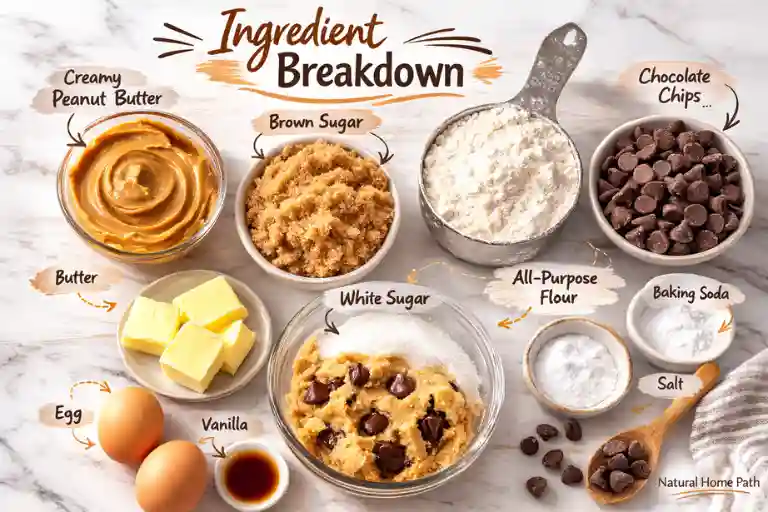
Ingredient Breakdown
Every ingredient in this peanut butter chocolate chip cookie recipe plays an important role. When you understand how each one works, it becomes much easier to make thick, soft, and chewy peanut butter chocolate chip cookie every time.
Why Use Creamy Peanut Butter: For the best results, use creamy processed peanut butter (like regular shelf-stable brands). It has a smooth texture and balanced fat content, which helps create stable, bakery-style peanut butter chocolate chip cookie.
Creamy peanut butter blends evenly into the dough, giving strong peanut butter flavor without making the cookies crumbly. It also helps control spread, which is important if you want thick peanut butter cookies instead of flat ones.
Natural vs Processed Peanut Butter: Natural peanut butter contains more oil and can separate easily. This extra oil often causes cookies to spread too much, leading to thin or greasy results.
If you use natural peanut butter, stir it very well and consider chilling the dough. For reliable soft peanut butter chocolate chip cookies, processed peanut butter is usually the safer choice.
Why Brown Sugar Is Critical: Brown sugar contains molasses, which adds moisture. This is the key to making chewy peanut butter chocolate chip cookie that stay soft for days.
It also helps with browning and gives a deeper flavor. Using more brown sugar than white sugar improves texture and prevents dry cookies.
Baking Soda vs Baking Powder: Baking soda helps cookies spread slightly and creates a tender texture. It reacts with the acidity in brown sugar to lift the dough.
Baking powder adds more rise and can make cookies cakier. For classic peanut butter chocolate chip cookie, baking soda alone keeps them dense, chewy, and rich instead of fluffy.
Chocolate Type Impact (Chips vs Chunks): Semi-sweet chocolate chips hold their shape and give even chocolate in every bite. They’re perfect for traditional cookies.
Chocolate chunks melt more and create gooey pockets, which is ideal if you love a stronger chocolate contrast in your soft and chewy peanut butter chocolate chip cookie.
Both work, it simply depends on whether you prefer neat chocolate bites or melted pools.
Step-by-Step Instructions
Follow these simple steps for thick, soft, and chewy peanut butter chocolate chip cookie that bake up bakery-style every time.
(1) Mixing Method
- Cream butter and brown sugar until smooth.
- Mix in creamy peanut butter, then add the egg and vanilla.
- Stir in the dry ingredients (flour, baking soda, salt) just until combined.
- Fold in semi-sweet chocolate chips (or chocolate chunks).
Tip: Overmixing can make cookies tough. Mix until you just stop seeing dry flour.
(2) Dough Texture Cues
Your dough should be:
- Thick and scoopable (not runny)
- Slightly sticky, but it should hold its shape
- Packed with chocolate throughout
If it feels too soft or oily, chill it for 20–30 minutes. This helps if you’re wondering how to make thick peanut butter cookies that don’t spread.
(3) Scoop Size Recommendation
For classic cookies: use a 1.5 tablespoon cookie scoop.
For bakery-style thick cookies: use 2 tablespoons.
Keep dough balls tall (don’t flatten). Taller dough bakes into thick peanut butter chocolate chip cookies.
(4) Bake Time Precision
Bake at 350°F (175°C) for:
- 9–11 minutes (regular size)
- 11–13 minutes (larger bakery size)
Look for:
- edges set and lightly golden
- centers still slightly soft
This is the secret to soft and chewy peanut butter chocolate chip cookies. They finish setting as they cool.
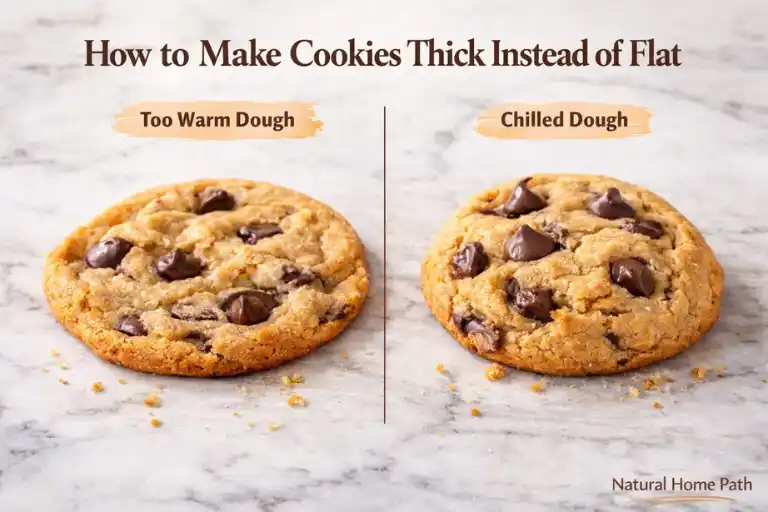
How to Make Cookies Thick Instead of Flat
If you’ve ever wondered why peanut butter chocolate chip cookies spread too much, the answer usually comes down to temperature, measurement, and baking method. Here’s how to keep your cookies thick, soft, and bakery-style.
Chill vs No Chill: You can make no chill peanut butter chocolate chip cookie, but chilling the dough for 30–60 minutes helps control spread. Cold dough melts more slowly in the oven, which creates thick peanut butter chocolate chip cookie with chewy centers.
If your kitchen is warm, chilling is highly recommended.
Flour Measurement Technique: Too little flour causes flat cookies. Always use the spoon and level method:
- Spoon flour into the measuring cup
- Level it off with a knife
- Don’t scoop directly from the bag
Proper measuring helps you achieve soft peanut butter chocolate chip cookies that hold their shape.
Dough Temperature: Room temperature dough spreads more. Slightly cool dough keeps cookies taller. If your dough feels greasy or very soft, refrigerate it briefly before baking.
Pan Type Effect: Use a light-colored metal baking sheet for even baking. Dark pans can cause faster spreading and over-browning. Avoid greasing the pan use parchment paper instead for better control.
These small adjustments make a big difference when learning how to make thick peanut butter cookies instead of flat ones.
Troubleshooting Guide
Even the best peanut butter chocolate chip cookie can have small issues if the balance is off. The good news is that most problems are easy to fix once you understand what causes them.
If your cookies turned out dry, the most common reason is too much flour or overbaking. Always measure flour using the spoon and level method, and remove the cookies when the centers still look slightly soft. This simple step keeps your soft peanut butter chocolate chip cookie moist and chewy instead of dry and crumbly.
If your cookies spread too much and became flat, the dough was likely too warm, or there wasn’t enough flour. Using creamy processed peanut butter instead of natural peanut butter helps control spread. Chilling the dough for 30 minutes also helps create thick peanut butter chocolate chip cookies.
Crumbly cookies often happen when there is too much flour or not enough fat. The right fat-to-flour balance is key for chewy peanut butter chocolate chip cookies. Greasy cookies, on the other hand, usually come from overly soft butter or natural peanut butter with excess oil.
Small cracks on top are normal and give that classic look. Deep cracks may mean the oven was too hot or the dough was slightly dry. Paying attention to measurements and bake time ensures perfectly balanced, bakery-style peanut butter chocolate chip cookie every time.
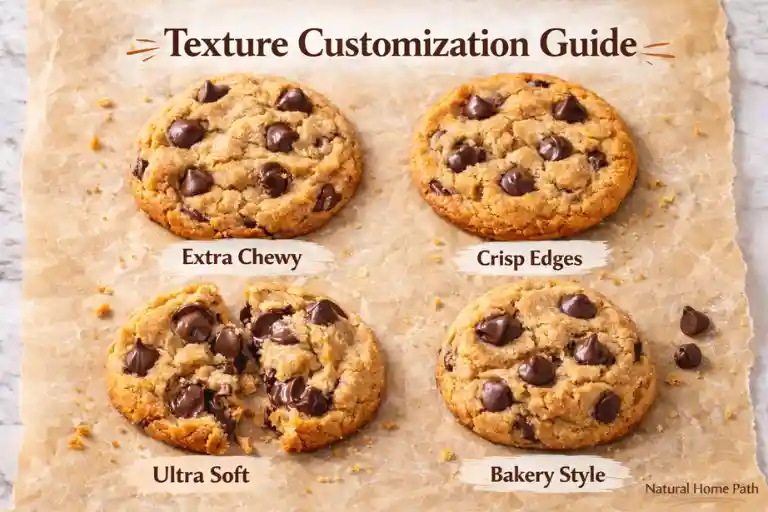
Texture Customization Guide
One of the best things about this peanut butter chocolate chip cookie recipe is that you can adjust it to get the exact texture you love. Whether you want extra chewy, crisp edges, or tall bakery-style domes, small changes make a big difference.
If you prefer extra chewy peanut butter chocolate chip cookies, increase the brown sugar slightly and reduce white sugar. Brown sugar holds moisture, which keeps the centers soft and tender. Slightly underbaking also helps lock in chewiness.
For cookies with crisp edges, bake them 1–2 minutes longer until the outer edges turn golden brown. Using a metal baking sheet (not silicone) also encourages a light crisp finish while keeping the center soft.
If you love ultra-soft centers, remove the cookies when the middle still looks slightly underdone. The residual heat will finish baking them as they cool. This is key for achieving truly soft peanut butter chocolate chip cookies.
To create thicker bakery-style peanut butter chocolate chip cookie, chill the dough for at least 30–60 minutes and keep the dough balls tall instead of flattening them. A slightly larger scoop size also helps form those thick, impressive domes.
Flavor Variations
Once you master this peanut butter chocolate chip cookie recipe, you can easily customize it to fit your taste or dietary needs. These variations keep the base soft, thick, and bakery-style while adding new flavor twists.
For double peanut butter chocolate chip cookie, stir in ½ cup of peanut butter chips along with the chocolate chips. This boosts the nutty flavor and creates richer, more intense cookies.
If you prefer bigger pools of chocolate, try a peanut butter chocolate chunk version. Replace standard chips with chopped chocolate. The melted chunks create gooey pockets inside your soft and chewy peanut butter chocolate chip cookies.
For a heartier texture, make a peanut butter oatmeal version by replacing ½ cup of flour with rolled oats. This adds chew and structure while keeping the cookies thick.
A small batch peanut butter chocolate chip cookies version can be made by cutting all ingredients in half perfect for fresh cookies without leftovers.
To make gluten free peanut butter chocolate chip cookie, substitute a 1:1 gluten-free flour blend. The texture stays soft if measured properly.
For a no egg peanut butter chocolate chip cookie option, replace the egg with ¼ cup unsweetened applesauce or a flax egg. The cookies will still bake up tender and chewy.
Storage & Freezing Guide
Proper storage keeps your peanut butter chocolate chip cookies soft, fresh, and full of flavor. Whether you want to bake later or save leftovers, these simple tips help maintain that soft and chewy bakery-style texture.
To freeze dough balls, scoop the cookie dough onto a tray and freeze until solid. Then transfer them to a freezer-safe bag. When ready to bake, place the frozen dough directly on a baking sheet and add 1–2 extra minutes to the bake time. This is perfect if you love fresh, warm peanut butter chocolate chip cookie anytime.
You can also freeze baked cookies. Let them cool completely, then store them in an airtight container or freezer bag for up to 3 months. Thaw at room temperature for soft results.
At room temperature, cookies stay fresh in an airtight container for about 4–5 days. Adding a slice of bread inside the container helps keep them soft.
For a make-ahead method, refrigerate the dough for up to 48 hours before baking. This can even improve flavor and help create thick peanut butter chocolate chip cookies.
High-Altitude Baking Adjustments
Baking at high altitude (usually above 3,000 feet) can change how your peanut butter chocolate chip cookies turn out. Lower air pressure causes cookies to rise faster, spread more, and sometimes dry out. But with a few small adjustments, you can still get thick, soft, and chewy peanut butter chocolate chip cookie.
First, slightly increase the flour by 1–2 tablespoons. This helps strengthen the dough and prevents excess spreading. You can also reduce the sugar by 1 tablespoon to keep the cookies from becoming too fragile.
Next, lower the baking soda just a little (about 1/8 teaspoon less). Too much leavening at high altitude can cause cookies to rise quickly and then collapse.
Finally, bake at the same temperature but check them 1–2 minutes earlier. This helps maintain soft centers and prevents dryness. With these small changes, you can still achieve perfect bakery-style peanut butter chocolate chip cookies at any elevation.
Nutritional Modifications
If you love peanut butter chocolate chip cookies but want a slightly healthier twist, you can adjust the recipe without losing that soft and chewy texture.
For a high protein peanut butter chocolate chip cookies version, replace ¼ cup of flour with vanilla protein powder. You can also add 1–2 tablespoons of peanut butter powder to boost protein while keeping strong peanut butter flavor.
To make a lower sugar version, reduce the sugar by ¼ cup total and use dark chocolate instead of semi-sweet chips. Dark chocolate has less sugar and adds a rich taste while still keeping your bakery-style peanut butter chocolate chip cookies satisfying.
For a dairy free option, swap the butter with plant-based butter or refined coconut oil. This keeps the cookies tender while maintaining structure.
If you want healthier swaps, try using whole wheat flour for half the flour amount or replacing part of the butter with Greek yogurt. Small changes can make your soft peanut butter chocolate chip cookies feel lighter without sacrificing flavor.
Frequently Asked Questions
Why do my peanut butter chocolate chip cookies turn out flat?
Flat cookies usually happen when the dough is too warm or there isn’t enough flour. Using creamy processed peanut butter and chilling the dough helps create thick peanut butter chocolate chip cookies that hold their shape.
Should I chill peanut butter chocolate chip cookie dough?
Chilling is optional, but it helps control spread and improves flavor. If you want bakery-style peanut butter chocolate chip cookies with tall centers, chilling for 30–60 minutes is recommended.
Can I use natural peanut butter in this recipe?
You can, but natural peanut butter may cause more spreading because of the extra oil. For more reliable soft and chewy peanut butter chocolate chip cookies, processed creamy peanut butter works best.
How do I keep peanut butter chocolate chip cookies soft for days?
Store them in an airtight container at room temperature. Adding a slice of bread inside helps retain moisture and keeps your soft peanut butter chocolate chip cookies fresh longer.
Can I freeze peanut butter chocolate chip cookie dough?
Yes. Scoop the dough into balls and freeze them. Bake directly from frozen, adding 1–2 extra minutes. This makes it easy to enjoy fresh, warm peanut butter chocolate chip cookies anytime.
Conclusion
Making perfect peanut butter chocolate chip cookies doesn’t have to feel complicated. With the right balance of ingredients, proper measuring, and a few simple techniques, you can bake thick, soft, and chewy peanut butter chocolate chip cookies every single time.
This recipe is designed to give you bakery-style results at home — rich peanut butter flavor, gooey chocolate pockets, crisp edges, and tender centers. Whether you choose the no chill option, customize the texture, or try one of the healthier swaps, you now understand the science behind what makes cookies truly great.
If you’ve ever struggled with flat, dry, or crumbly cookies, you now have the tools to fix it. Follow the steps, trust the ratios, and enjoy what might just become your best peanut butter chocolate chip cookie recipe yet.
Recipe Card Summary
Recipe Name: Thick, Soft & Chewy Peanut Butter Chocolate Chip Cookies
Texture: Soft centers, slightly crisp edges, bakery-style thickness
Prep Time: 15 minutes
Chill Time (Optional): 30–60 minutes
Bake Time: 9–13 minutes
Total Time: About 25 minutes (without chilling)
Yield: 18–24 cookies
Key Ingredients
- Creamy peanut butter
- Unsalted butter
- Brown sugar (for moisture)
- White sugar
- Egg
- All-purpose flour
- Baking soda
- Salt
- Semi-sweet chocolate chips or chocolate chunks
Baking Highlights
- Use the spoon and level method for flour.
- Keep dough balls tall for thick peanut butter chocolate chip cookies.
- Slightly underbake for soft and chewy centers.
- Chill dough if you prefer extra thick, bakery-style cookies.
This simple formula gives you the best peanut butter chocolate chip cookies with reliable, foolproof results every time.


