

There’s something incredibly comforting about warm, homemade buttermilk biscuits, but many people skip making them from scratch because they think biscuits are tricky or time-consuming. This recipe proves the opposite. These easy homemade buttermilk biscuits are reliable, beginner-friendly, and made with simple pantry staples, no special tools, no complicated steps, and no stress.
This recipe is perfect for first-time biscuit bakers, busy mornings when you need something quick, or those last-minute meals where store-bought just won’t do. Whether you’re serving breakfast, dinner, or something in between, these biscuits come together fast and deliver soft, flaky results every time.
By the end of this recipe, you’ll not only know how to make buttermilk biscuits from scratch, but you’ll also understand the simple techniques that make them tall, fluffy, and tender. With a few easy tips and clear steps, you’ll gain the confidence to make perfect biscuits whenever the craving hits.
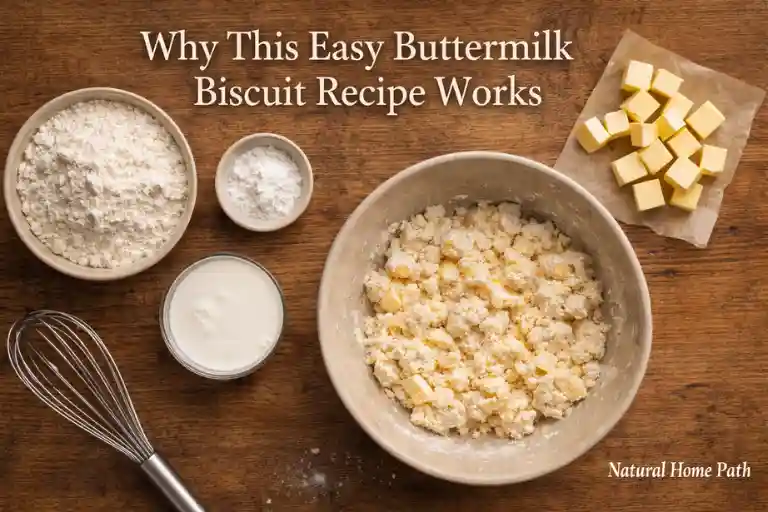
Why This Easy Buttermilk Biscuit Recipe Works
This easy buttermilk biscuit recipe works because it focuses on simple ratios and smart technique, not complicated steps. The ingredients are balanced so the biscuits rise well without becoming dense or dry. When the basics are right, you get reliable, homemade buttermilk biscuits every time.
One key reason these biscuits turn out fluffy and flaky is the use of cold butter. As the biscuits bake, the cold butter melts and creates steam, forming light layers inside the dough. This is what gives southern buttermilk biscuits their tall, tender texture.
Another important factor is minimal dough handling. Overworking biscuit dough makes it tough. By gently mixing and shaping, you keep the biscuits soft, tender, and buttery. These small but powerful techniques make this a foolproof buttermilk biscuit recipe, even for beginners.
Quick Recipe – Easy Homemade Buttermilk Biscuits
Prep Time: 10 minutes
Bake Time: 12–15 minutes
Total Time: 25 minutes
Yield: 8–10 biscuits
Main Ingredients:
- 2 cups all-purpose flour
- 1 tablespoon baking powder
- ½ teaspoon salt
- 6 tablespoons cold unsalted butter
- ¾ cup cold buttermilk
Highlights & Tips:
- Uses simple pantry staples for beginner-friendly baking
- Cold butter ensures flaky, layered biscuits
- Minimal dough handling keeps biscuits soft and tender
- Can be customized with cheddar, herbs, or sweet variations
- Freezing & reheating friendly for make-ahead convenience
Step-by-Step Instructions
Follow these simple steps to make fluffy, homemade buttermilk biscuits that are tall, tender, and flaky.
- Preheat your oven to 450°F (230°C) and line a baking sheet with parchment paper.
- Mix dry ingredients: In a large bowl, whisk together flour, baking powder, and salt until evenly combined.
- Cut in the butter: Add the cold, cubed butter to the flour. Use a pastry cutter or your fingers to cut the butter into pea-sized pieces. The mixture should look crumbly with small butter chunks.
- Add buttermilk: Pour in the cold buttermilk and gently stir until the dough just comes together. It should be slightly sticky but not wet.
- Knead lightly: Turn the dough onto a lightly floured surface. Fold the dough 2–3 times to create layers. Avoid over-kneading — the dough should remain soft and tender.
- Cut biscuits: Pat the dough to about 1-inch thickness. Use a round cutter and press straight down — don’t twist. Place biscuits on the baking sheet close but not touching.
- Bake: Bake for 12–15 minutes, or until the tops are golden brown and the edges are slightly crisp.
- Serve warm: Remove from the oven and serve immediately for the best texture.
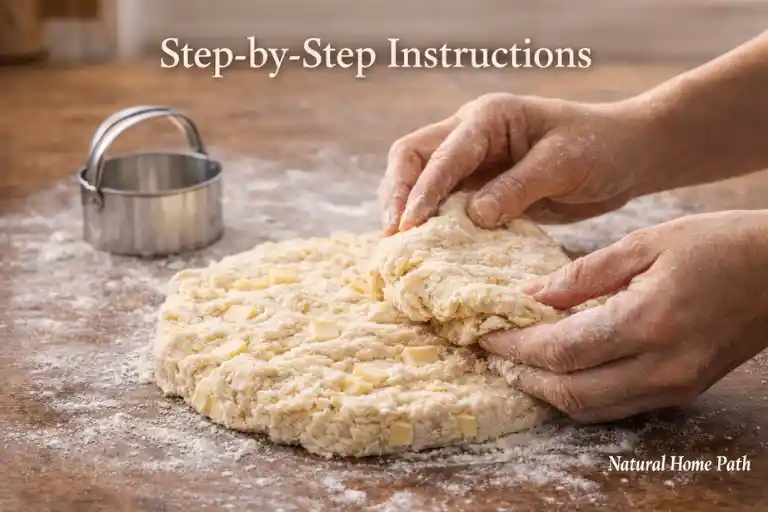
What the Dough Should Look Like
Understanding how the biscuit dough should look and feel is key to getting fluffy, tender buttermilk biscuits.
- Texture: The dough should be slightly sticky but firm enough to handle without falling apart. It should hold together when gently pressed.
- Appearance: You should still see small pieces of butter throughout the dough, these create the flaky layers as the biscuits bake.
- Thickness: Pat the dough to about 1 inch thick before cutting. This ensures the biscuits rise properly and stay soft inside.
Common beginner mistakes to avoid:
- Overmixing: Leads to dense, tough biscuits. Mix just until the dough comes together.
- Butter too warm: If the butter melts into the flour, the biscuits will lose their flakiness.
- Too thin or thick: Too thin = flat biscuits; too thick = undercooked centers.
Pro Tips for Tall, Flaky Buttermilk Biscuits
Even an easy homemade buttermilk biscuit recipe benefits from a few simple baking tricks. These tips will help your biscuits turn out tall, flaky, and perfectly golden every time.
- Keep the butter cold: Cold butter creates steam pockets as it melts, forming layers that make biscuits flaky. Avoid softening it before cutting into the flour.
- Don’t twist the cutter: Press the biscuit cutter straight down and lift. Twisting seals the edges and prevents proper rising.
- Use the folding technique: Gently fold the dough 2–3 times before cutting. This builds layers inside the biscuit for a soft, tender texture.
- Oven temperature accuracy: Preheat your oven fully to 450°F (230°C). Hot ovens help biscuits rise quickly and form a golden crust.

Common Mistakes And How to Fix Them
Even with an easy homemade buttermilk biscuit recipe, beginners sometimes run into issues that affect the texture and rise of their biscuits. One common problem is flat biscuits, which usually happens when the dough is overmixed or the butter is too soft. The solution is to mix the dough gently until it just comes together and always use cold butter straight from the fridge.
Another frequent issue is dense or dry biscuits. This often occurs if too much flour is used or the dough is handled too much. To fix this, measure flour carefully using the spoon-and-level method and be gentle when working the dough.
Sometimes biscuits don’t rise at all. This can happen if the baking powder is old or if the cutter is twisted when shaping. Use fresh baking powder and press the cutter straight down without twisting.
Finally, butter leaking during baking is usually caused by butter that’s too warm or unevenly distributed. Keeping the butter cold and cubed, and cutting it evenly into the flour, ensures tender, flaky layers every time.
Easy Biscuit Variations
Once you’ve mastered the classic easy homemade buttermilk biscuits, it’s fun to experiment with different flavors and textures. One popular twist is cheddar biscuits, where shredded sharp cheddar is folded into the dough for a savory, cheesy bite. Another option is herb biscuits, adding fresh or dried herbs like rosemary, thyme, or chives to give a fragrant, flavorful touch that pairs beautifully with soups or breakfast dishes.
If you prefer a slightly sweeter option, try honey or sweet biscuits. A little honey or sugar in the dough creates golden, tender biscuits perfect for breakfast with butter or jam. For an even quicker approach, you can make drop biscuits, where the dough is spooned onto the baking sheet instead of rolled and cut. This method is fast, forgiving, and still yields soft, flaky results.
Serving Ideas & Meal Pairings
Easy homemade buttermilk biscuits are incredibly versatile and can be enjoyed in many ways throughout the day. A classic favorite is biscuits and gravy, where warm, flaky biscuits are topped with savory sausage gravy for a comforting breakfast or brunch. They also make the perfect base for breakfast sandwiches, layered with eggs, cheese, and bacon or sausage for a quick and satisfying meal.
These biscuits shine as a dinner side too. Serve them alongside soups, stews, or roasted meats to soak up sauces and add a soft, buttery touch to your plate. For a sweet treat, try honey, jam, or preserves on freshly baked biscuits, or serve them with fresh fruit and cream for a simple dessert.
Storage, Freezing & Make-Ahead Tips
One of the best things about easy homemade buttermilk biscuits is that you can make them ahead of time and still enjoy fresh, tender results. To store baked biscuits, place them in an airtight container at room temperature for up to 2 days. For longer storage, wrap them tightly in foil or plastic wrap and keep them in the refrigerator for up to 5 days.
If you want to freeze unbaked dough, shape the biscuits and place them on a parchment-lined baking sheet. Freeze until firm, then transfer to a freezer-safe bag. When ready to bake, you can place them directly in a preheated oven, adding a few extra minutes to the bake time.
To reheat baked biscuits without drying them out, wrap them in foil and warm in the oven at 300°F (150°C) for 10–15 minutes. This keeps the biscuits soft, fluffy, and just-baked fresh.
Frequently Asked Questions
Can I make these biscuits without buttermilk?
Yes! If you don’t have buttermilk, you can easily make a substitute by mixing ¾ cup milk with 1 tablespoon vinegar or lemon juice. Let it sit for 5 minutes before adding it to the dough. This gives your biscuits the same tender, slightly tangy flavor as traditional buttermilk.
Why didn’t my biscuits rise?
Flat biscuits usually happen when the baking powder is old, the dough is overworked, or the cutter was twisted when shaping. Always use fresh leavening, handle the dough gently, and press the cutter straight down.
Can I freeze buttermilk biscuits?
Yes! You can freeze unbaked biscuits on a tray, then transfer them to a freezer bag. Bake them straight from frozen, adding a few extra minutes. Baked biscuits can also be wrapped tightly and frozen, then reheated to enjoy freshly baked flavor.
How do I keep biscuits soft?
Keep biscuits covered at room temperature or wrapped in foil to retain moisture. Reheat gently in a warm oven instead of the microwave to prevent drying out.
What’s the best way to make biscuits extra flaky?
Use cold, cubed butter and fold the dough gently a few times before cutting. Avoid overmixing, and bake in a hot oven so the biscuits rise quickly and form light, layered flakes.
Conclusion
Making easy homemade buttermilk biscuits doesn’t have to be intimidating. With the right technique and a few simple tips, you can confidently bake fluffy, tender, and flaky biscuits right in your own kitchen. Each batch is a chance to build your skills and feel proud of what you create.
Once you’ve mastered the basic recipe, don’t be afraid to experiment with flavors and variations from cheddar or herb biscuits to sweet honey-topped treats to make the recipe your own.
Finally, explore other recipes on our site for more breakfast ideas, savory sides, or easy baking guides. These links not only give you inspiration but also help you build a versatile, homemade meal repertoire that will impress family and friends every time.