
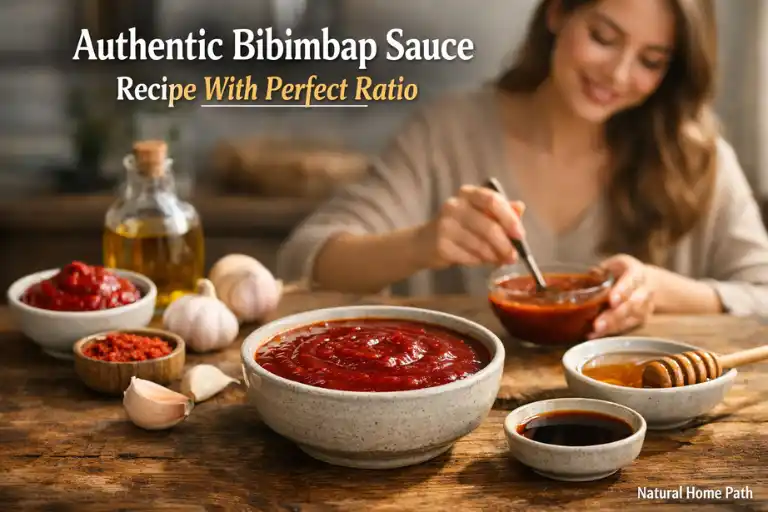
Bibimbap sauce is a bold, flavorful Korean sauce for rice bowls made mainly with gochujang (Korean chili paste), sesame oil, sugar, garlic, and a splash of vinegar. It creates the perfect balance of spicy, sweet, savory, and umami flavors that make bibimbap so addictive.
In a typical bibimbap sauce recipe, the ingredients are mixed into a smooth, slightly thick, and glossy sauce that coats rice and vegetables beautifully. This korean bibimbap sauce is quick to prepare and usually takes just a few minutes at home.
Whether you want an easy bibimbap sauce, a milder version, or a more spicy bibimbap sauce, it can be adjusted easily to match your taste preferences.
Why This Bibimbap Sauce Works
This bibimbap sauce recipe works because it creates a perfect balance of spicy, sweet, savory, and tangy flavors in every bite. The gochujang bibimbaps sauce brings heat and deep umami, while sugar or honey softens the spice. A touch of vinegar adds brightness, making the sauce taste fresh instead of heavy.
The texture science is just as important. A good korean bibimbaps sauce should be thick but pourable not too runny and not too sticky. This allows it to coat rice evenly without clumping. If it’s too thick, a little water or vinegar helps loosen it.
What makes this homemade bibimbap sauces truly special is ingredient synergy. Each element works together, creating a smooth, balanced flavor that tastes far better than any store-bought version.
Ingredients
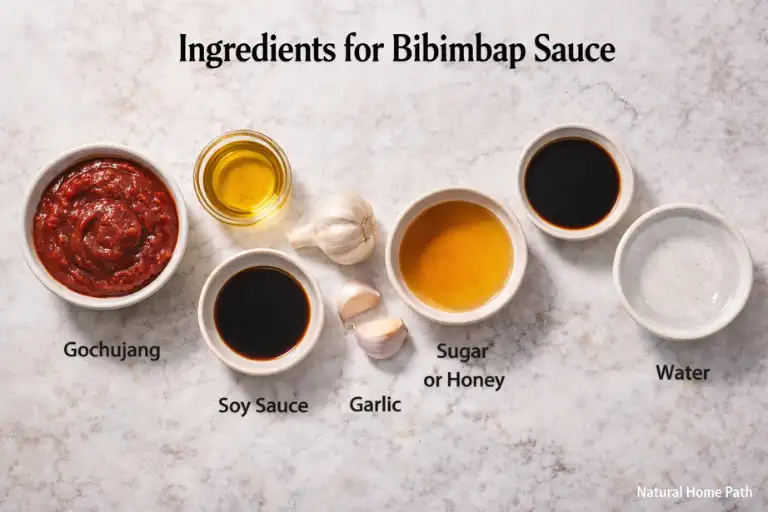
To make an authentic bibimbap sauce recipe, you only need a few simple ingredients but each one plays an important role in building flavor.
Core Ingredients for Bibimbap Sauce
- Gochujang (Korean chili paste)
- Sesame oil
- Sugar or honey
- Garlic (minced)
- Rice vinegar
- Soy sauce (or tamari for gluten-free)
- Water (for consistency)
Why Each Ingredient Matters
- Gochujang → Heat + Depth
This is the heart of any gochujang bibimbap sauces. It gives the sauce its signature spicy, rich, and slightly fermented umami flavor. - Sesame oil → Aroma
Adds a nutty fragrance that instantly makes the korean bibimbaps sauce smell and taste authentic. - Sugar or honey → Balance
Helps balance the heat and saltiness, creating that perfect sweet-spicy harmony found in the best bibimbaps sauce recipe. - Garlic → Flavor boost
Brings bold, savory depth to the homemade bibimbaps sauce. - Rice vinegar → Brightness
Cuts through richness and adds a light tang. - Soy sauce → Umami + salt
Enhances overall flavor and rounds everything out. - Water → Texture control
Helps achieve the ideal bibimbap sauces consistency smooth and pourable.
The Perfect Bibimbap Sauce Ratio
The ideal bibimbap sauce ratio is 1:1:1:1/2:1/2
(gochujang : sesame oil : sugar/honey : vinegar : soy sauce) + a little water for texture.
Exact Ratio Formula
- 1 tbsp gochujang
- 1 tbsp sesame oil
- 1 tbsp sugar or honey
- ½ tbsp rice vinegar
- ½ tbsp soy sauce
- 1–2 tbsp water (adjust as needed)
This perfect bibimbap sauce ratio creates a balanced spicy, sweet, and savory flavor that works for any easy bibimbap sauce recipe.
How to Scale Up or Down: This korean bibimbap sauce recipe is easy to adjust:
- For 2 servings → double everything
- For meal prep → triple or more
- Always keep the same ratio for consistent flavor
Tip: Mix in small batches first, then scale once you like the taste.
Visual Consistency Cues: A well-made homemade bibimbap sauces should be:
- Thick but pourable (not runny)
- Smooth and glossy
- Deep red in color
- Easily coats rice without clumping
If your bibimbap sauce consistency feels off:
- Too thick → add water
- Too thin → add a little more gochujang
This simple formula ensures your sauce turns out perfect every time.
How to Make Bibimbap Sauce (Step-by-Step)
Making this easy bibimbap sauce recipe takes just a few minutes, but following the right steps ensures perfect flavor and texture every time.
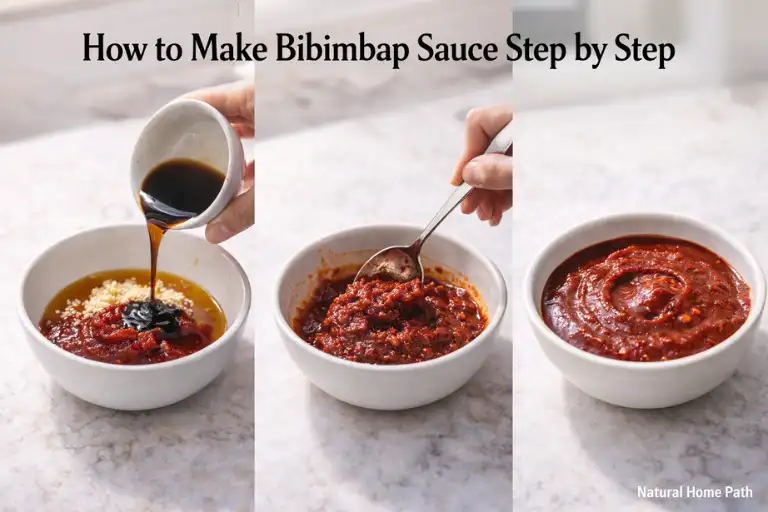
Step 1: Combine Base Ingredients: In a small bowl, add gochujang, sesame oil, sugar (or honey), garlic, soy sauce, and rice vinegar. Mix everything well until the sauce becomes smooth and evenly blended.
At this stage, your gochujang bibimbap sauces should look thick, rich, and deep red in color.
Step 2: Adjust Thickness: Slowly add 1–2 tablespoons of water, stirring as you go. This helps achieve the ideal bibimbap sauce consistency.
You’re aiming for a texture that is thick but pourable, not too stiff or watery. It should coat a spoon easily and flow smoothly.
Step 3: Taste and Balance: Taste your homemade bibimbaps sauce and adjust if needed:
- Add a little sugar for more sweetness
- Add vinegar for brightness
- Add more gochujang for extra heat
The final korean bibimbap sauce should taste balanced, bold, and slightly addictive with a glossy finish.
Customize Your Sauce (Spice, Sweetness & Diet)
One of the best things about this easy bibimbap sauce recipe is how easy it is to adjust. You can tweak the flavor to match your taste perfectly.
Spice Levels (Mild to Extra Spicy)
- Mild: Use less gochujang and add a little extra sugar or honey
- Medium: Follow the perfect bibimbap sauces ratio
- Spicy: Add more gochujang or a pinch of chili flakes
This lets you control how bold your spicy bibimbap sauce becomes.
Sweeter Version: If you prefer a softer flavor, increase the sugar or honey slightly. This helps balance the heat and creates a more sweet-savory bibimbaps sauce that’s great for beginners.
Vegan & Gluten-Free Options
- Vegan: Most homemade bibimbap sauce how to make bibimbap sauces
recipes are naturally vegan just use plant-based sweeteners - Gluten-free: Swap regular soy sauce with tamari or coconut aminos
These small changes make your korean bibimbaps sauce suitable for different diets without losing flavor.
Common Mistakes to Avoid
Even a simple bibimbap sauces recipe can go wrong if a few key details are missed. Avoid these common mistakes to get the best flavor and texture every time.
Using Too Much Gochujang: It’s easy to overdo gochujang, but too much can make your spicy bibimbap sauce overly intense and overpowering.
Fix: Always follow a balanced bibimbap sauces ratio and adjust slowly.
Skipping Balance Ingredients: A great korean bibimbaps sauce isn’t just spicy, it needs sweetness and acidity too. Skipping sugar, honey, or vinegar can make the sauce taste flat or too salty.
Tip: Always include ingredients that balance heat + sweet + tangy flavors.
Getting the Wrong Consistency: The right bibimbaps sauce consistency is key. Too thick and it won’t mix well with rice; too thin and it loses flavor impact.
Aim for a thick but pourable texture that looks smooth and glossy. By avoiding these simple mistakes, your homemade bibimbaps sauce will turn out perfectly balanced and delicious every time.
Troubleshooting Guide
If your bibimbap sauce doesn’t taste right, you can fix it easily by adjusting balance, texture, and seasoning.
Too Spicy → Fix: If your spicy bibimbap sauce is overpowering
- Add sugar or honey to balance heat
- Mix in a little more sesame oil
- Add a splash of water to dilute
This helps tone down the intensity of your gochujang bibimbap sauce.
Too Salty → Fix: If your korean bibimbap sauce tastes too salty
- Add a bit more water
- Increase sweetness (sugar or honey)
- Add a touch of vinegar to balance
Thick → Fix: If the bibimbap sauce consistency feels too heavy
- Add 1 teaspoon water at a time
- Stir until it becomes smooth and pourable
Too Bland → Fix: If your homemade bibimbaps sauce lacks flavor
- Add more gochujang for depth
- Add a little soy sauce for umami
- Adjust sweetness and acidity
These quick fixes ensure your easy bibimbap sauces recipe turns out perfectly balanced every time.
How to Use Bibimbap Sauce Properly
Using the right amount of bibimbap sauce can make or break your bowl. A good korean bibimbap sauce should enhance the dish not overpower it.
Sauce-to-Rice Ratio: Start with 1 tablespoon of bibimbaps sauce per bowl of rice. Then adjust based on your taste.
For stronger flavor, add a little more but avoid over-saucing, or it can become too salty or spicy.
Mixing Technique: Add the homemade bibimbap sauces on top of your rice and toppings, then mix everything thoroughly.
The goal is to evenly coat every bite so the flavors blend perfectly. The sauce should cling lightly, not pool at the bottom.
When to Add Sauce: Always add your easy bibimbap sauces just before eating. This keeps vegetables fresh, rice fluffy, and the spicy bibimbaps sauce tasting vibrant and balanced.
Using the sauce correctly ensures your bibimbaps tastes authentic, balanced, and delicious every time.
7 Creative Ways to Use Bibimbap Sauce
This bibimbap sauce recipe isn’t just for rice bowls, you can use this bold, flavorful sauces in many delicious ways.
1. Marinade for Meat or Tofu: Use homemade bibimbaps sauce as a marinade for chicken, beef, or tofu. It adds deep spicy, sweet, and umami flavor before cooking.
2. Stir-Fry Sauce: Add a spoonful of gochujang bibimbap sauces to your stir-fried vegetables or noodles for an instant flavor boost.
3. Noodles Upgrade: Toss warm noodles with this korean bibimbaps sauce for a quick and satisfying meal.
4. Dipping Sauce: Serve it as a dipping sauce for dumplings, spring rolls, or fries. Its bold taste makes everything better.
5. Wraps & Tacos: Drizzle over wraps or tacos to create a unique fusion flavor with a spicy kick.
6. Burger or Sandwich Spread: Use it as a spread instead of mayo to add a rich, flavorful twist to burgers or sandwiches.
7. Roasted Vegetable Glaze: Toss roasted veggies with a little easy bibimbaps sauce for a caramelized, savory finish.

Storage, Shelf Life & Make-Ahead Tips
Proper storage helps your homemade bibimbaps sauce stay fresh, flavorful, and ready to use anytime.
Fridge Duration: Store your bibimbap sauce in an airtight container in the refrigerator. It will stay fresh for up to 1 week.
The flavors often get even better after a day as the ingredients blend together.
Freezing Tips: Yes, you can freeze this easy bibimbaps sauce recipe
- Store in small portions (ice cube trays work great)
- Freeze for up to 2–3 months
- Thaw in the fridge before using
Stir well after thawing to restore the smooth bibimbaps sauce consistency.
Flavor Changes Over Time: As your korean bibimbaps sauce sits
- The flavor becomes deeper and more balanced
- Garlic may become slightly stronger
- Texture may thicken slightly
If needed, add a little water to refresh the sauce before serving.
Bibimbap Sauce vs Gochujang Sauce
Many people confuse bibimbaps sauce with gochujang, but they are not the same. Understanding the difference helps you use each one correctly.
Key Differences
- Bibimbap Sauce:
A ready-to-use, mixed sauce made from gochujang, sesame oil, sugar, vinegar, and more. It has a balanced flavor—spicy, sweet, and savory—perfect for immediate use. - Gochujang Sauce (Paste):
A thick Korean chili paste used as a base ingredient. It’s strong, salty, and intensely spicy on its own.
In short: gochujang is an ingredient, while bibimbaps sauce is the finished version.
When to Use Each
- Use bibimbaps sauce recipe when you want a complete, ready-to-eat sauce for rice bowls, vegetables, or noodles.
- Use gochujang when cooking dishes that need a deep, fermented chili flavor and will be balanced with other ingredients.
Frequently Asked Questions
Can I make bibimbaps sauce without gochujang?
Yes, but it won’t be fully authentic. You can try mixing chili paste with a little miso or soy sauce to mimic the depth. However, gochujang bibimbaps sauce gives the best flavor.
Is bibimbap sauce very spicy?
It can be, but you can easily adjust it. Reduce gochujang and add more sugar or honey for a milder spicy bibimbap sauce.
How long does bibimbap sauce last?
A homemade bibimbap sauce stays fresh in the fridge for about 1 week when stored properly in an airtight container.
Can I freeze bibimbap sauce?
Yes, this easy bibimbaps sauce recipe freezes well for up to 2–3 months. Just thaw and stir before using.
What does bibimbap sauce taste like?
It has a bold flavor that is spicy, slightly sweet, savory, and rich in umami, making it perfect for rice bowls and more.
Conclusion
This bibimbap sauce recipe is simple, quick, and packed with bold flavor. With the perfect balance of spicy, sweet, and savory, this korean bibimbaps sauce can turn any basic meal into something truly delicious.
Now that you know the perfect bibimbap sauce ratio, how to adjust flavors, and creative ways to use it, you can easily make your own homemade bibimbaps sauce anytime.
Try this easy bibimbaps sauce recipe today and bring authentic Korean flavor to your kitchen. Don’t forget to experiment, customize, and make it your own!
Recipe Card Summary
Recipe Name: Best Bibimbap Sauce Recipe
Cuisine: Korean
Prep Time: 5 minutes
Cook Time: 0 minutes
Total Time: 5 minutes
Servings: 2–3 servings
Ingredients
- 1 tbsp gochujang (Korean chili paste)
- 1 tbsp sesame oil
- 1 tbsp sugar or honey
- ½ tbsp rice vinegar
- ½ tbsp soy sauce (or tamari for gluten-free)
- 1–2 tbsp water (adjust for consistency)
- 1 clove garlic (minced)
Instructions
- In a bowl, combine gochujang, sesame oil, sugar/honey, garlic, soy sauce, and rice vinegar.
- Mix until smooth and fully blended.
- Add water gradually to reach a thick but pourable consistency.
- Taste and adjust sweetness, spice, or acidity as needed.
Notes
- Follow the perfect bibimbap sauce ratio for best results
- Adjust spice level by changing the amount of gochujang
- Add more water if the bibimbap sauce consistency becomes too thick
Storage
- Store in an airtight container in the fridge for up to 1 week
- Freeze for 2–3 months in small portions
Serving Suggestions
- Use as a sauce for rice bowls, noodles, vegetables, or marinades
- Mix into bibimbap just before serving for best flavor