

This gingerbread cake recipe is soft, moist, and full of warm spice flavor. Unlike many dry versions, this moist gingerbread cake stays tender thanks to rich molasses and the perfect balance of ginger, cinnamon, and cloves. It’s a true holiday gingerbread dessert that feels cozy and comforting.
What makes it extra special is the choice of sauce. You can serve this gingerbread cake with lemon sauce for a bright, tangy finish, or enjoy it with smooth vanilla creme sauce for a creamy touch. Both options turn a simple cake into something unforgettable.
If you’re looking for the best gingerbread cake with vanilla creme or lemon sauce, this easy recipe gives you flavor, flexibility, and foolproof results every time.
What Is Gingerbread Cake
Gingerbread cake is a soft, spiced dessert made with molasses, ginger, cinnamon, and cloves. Unlike crisp gingerbread cookies, this cake is moist and tender, with a deep, warm flavor that feels perfect for fall and winter. It is often served as a comforting holiday gingerbread dessert.
Gingerbread Cake vs Loaf vs Cookies: The main difference is texture.
- Gingerbread cake is light, fluffy, and baked in a square or round pan.
- A gingerbread loaf is denser and sliced like quick bread.
- Gingerbread cookies are firm, crisp, or chewy and shaped before baking.
Role of Molasses and Warm Spices: Molasses gives gingerbread its dark color, rich sweetness, and moisture. The blend of ginger, cinnamon, and cloves creates the classic warm flavor people love.
Traditional Serving Styles: Traditionally, gingerbread cake is served warm with lemon sauce, vanilla creme sauce, whipped cream, or a light glaze for extra flavor and softness.
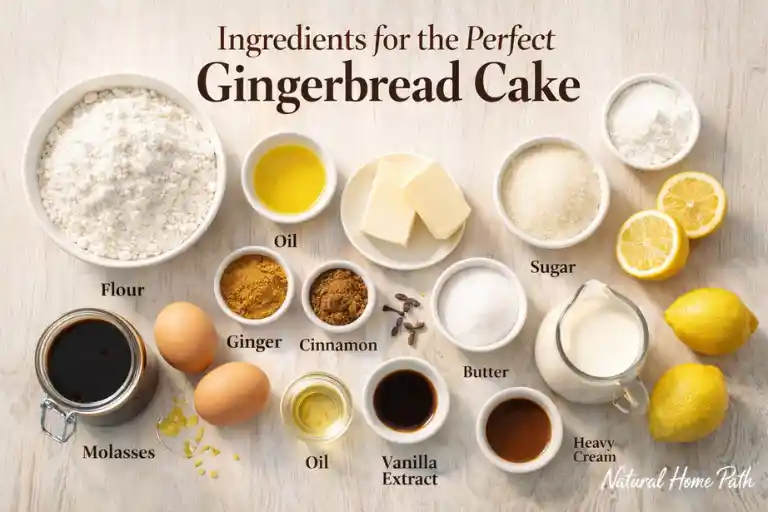
Ingredients Breakdown
Understanding your ingredients helps you make the best gingerbread cake recipe every time. Each component plays an important role in flavor, texture, and moisture.
For the Gingerbread Cake
Why Molasses Matters: Molasses is the heart of any classic gingerbread cake. It gives the cake its deep brown color, rich sweetness, and soft texture. More importantly, molasses keeps your moist gingerbread cake from drying out. It also adds that slightly bold, caramel-like flavor that makes this dessert taste warm and traditional.
If you want a true homemade gingerbread cake, don’t skip or replace molasses lightly, it defines the recipe.
Spice Balance Science (Ginger, Cinnamon, Cloves): The magic of gingerbread comes from its warm spices.
- Ginger gives the cake its signature heat and bold flavor.
- Cinnamon adds sweetness and warmth.
- Cloves bring depth and a slight earthy tone.
When balanced correctly, these spices create a soft, cozy flavor without overpowering the cake. Too much clove can taste bitter, while too little ginger makes it bland. A good balance gives you that perfect holiday gingerbread taste.
Butter vs Oil Comparison: Both butter and oil can be used in an easy gingerbread cake, but they create slightly different results.
- Butter adds rich flavor and a slightly firmer texture.
- Oil makes the cake extra soft and moist.
If your goal is a super soft gingerbread cake, oil is often more forgiving. Butter, however, gives a more traditional bakery-style taste.
For the Lemon Sauce
Why Lemon Balances Sweetness: A bright lemon sauce for gingerbread cake cuts through the sweetness of molasses. The tangy citrus flavor balances the deep spice and prevents the dessert from feeling too heavy. That contrast is why many people love serving gingerbread cake with lemon sauce. The sweet and tart mix makes every bite more exciting.
Fresh Juice vs Bottled: For the best flavor, always use fresh lemon juice. It tastes brighter and cleaner. Bottled juice can work in a pinch, but it may taste slightly flat. If you’re making a homemade lemon glaze for gingerbread cake, fresh juice makes a big difference.
For the Vanilla Crème Sauce
Cream-Based vs Custard-Based Sauce: There are two ways to make vanilla creme sauce:
- A cream-based sauce is simple. It uses heavy cream, sugar, and vanilla. It’s quick and smooth.
- A custard-based sauce includes egg yolks. It is thicker, richer, and feels more like a dessert topping from a restaurant.
Both pair beautifully with gingerbread cake with vanilla creme sauce, so you can choose based on how rich you want the final dessert to be.
Step-by-Step Gingerbread Cake Instructions
Follow these simple steps to make a soft and moist gingerbread cake every time.
1. Prepare Your Pan and Oven: Preheat your oven to 350°F (175°C). Grease and lightly flour your baking pan. This helps your gingerbread cake recipe release easily after baking.
2. Mix Dry Ingredients Separately: In one bowl, whisk together flour, baking soda, salt, and warm spices (ginger, cinnamon, cloves). Mixing dry ingredients first ensures even spice flavor in your homemade gingerbread cake.
3. Combine Wet Ingredients: In another bowl, mix molasses, sugar, eggs, and melted butter or oil. Stir gently until smooth.
4. Mixing Method to Avoid Dense Cake: When combining wet and dry ingredients, do not overmix. Stir just until no flour streaks remain. Overmixing develops too much gluten, which makes your moist gingerbread cake heavy instead of soft.
5. How to Prevent Overbaking: Bake only until done. Gingerbread continues cooking slightly after you remove it from the oven. Overbaking is the main reason cakes turn dry.
How to Test Doneness Properly: Insert a toothpick into the center. If it comes out with a few moist crumbs (not wet batter), your cake is ready. The top should spring back lightly when touched.
Common Mistakes to Avoid
- Using too much flour
- Overmixing the batter
- Baking too long
- Using old spices
Avoiding these mistakes will give you the best gingerbread cake with lemon sauce or vanilla crème every time.
How to Make Lemon Sauce for Gingerbread Cake
A smooth, bright lemon sauce for gingerbread cake adds the perfect contrast to the deep molasses flavor. It turns a simple cake into a beautiful gingerbread cake with lemon sauce that feels fresh and balanced.
Basic Method: In a small saucepan, combine sugar, fresh lemon juice, lemon zest, water, and a little cornstarch. Heat gently over medium heat while stirring constantly. As the mixture warms, it will slowly thicken into a glossy sauce.
Thick vs Thin Consistency: For a thin lemon sauce, use less cornstarch and remove it from heat once slightly thickened. This is perfect if you want a light drizzle over your moist gingerbread cake.
For a thicker sauce, add a bit more cornstarch and cook slightly longer. A thicker sauce works well if you want the sauce to sit on top without running off the slice.
Remember, the sauce will thicken more as it cools.
How to Prevent Curdling: To avoid curdling, always cook the sauce over gentle heat and stir continuously. If your recipe includes butter, add it after removing the sauce from heat. Sudden high heat can cause separation. Slow cooking keeps your homemade lemon glaze for gingerbread cake smooth and silky.
Make-Ahead Instructions: You can prepare lemon sauce 2–3 days in advance. Let it cool completely, then store it in an airtight container in the refrigerator. Reheat gently on the stove before serving over your warm gingerbread cake dessert.

How to Make Vanilla Crème Sauce (Restaurant Style)
A smooth vanilla crème sauce adds rich flavor to your gingerbread cake with vanilla creme or lemon sauce. It feels elegant but is simple to make at home.
Heat the Cream: In a saucepan, warm heavy cream with sugar over medium heat. Do not let it boil. Stir gently until the sugar dissolves. Add pure vanilla extract for a soft, sweet aroma.
Tempering Eggs (If Custard-Based): If you are making a custard-style sauce, whisk egg yolks in a separate bowl. Slowly pour a small amount of the warm cream into the yolks while whisking constantly. This step is called tempering. It prevents the eggs from scrambling.
After mixing, pour everything back into the saucepan and cook on low heat until slightly thickened.
Making It Silky Smooth: Keep the heat low and stir constantly. Do not rush. If needed, strain the sauce through a fine sieve. This gives your vanilla cream sauce a smooth, restaurant-style finish.
Storage Tips: Let the sauce cool completely. Store it in the refrigerator in an airtight container for up to 3 days. Reheat gently before serving over your moist gingerbread cake recipe.
Lemon Sauce vs Vanilla Creme
Both options turn a simple gingerbread cake recipe into something special. The choice depends on the flavor you love most and the occasion.
Flavor Comparison: Lemon sauce for gingerbread cake is bright, fresh, and slightly tangy. It cuts through the deep molasses flavor and makes each bite feel lighter. If you enjoy contrast and citrus notes, gingerbread cake with lemon sauce is a beautiful match.
On the other hand, vanilla crème sauce is smooth, creamy, and comforting. It blends gently with the warm spices and enhances the sweetness. A slice of gingerbread cake with vanilla creme or lemon sauce feels rich and cozy.
Sweetness Balance: Lemon sauce balances sweetness by adding acidity. It prevents the cake from tasting too heavy. Vanilla crème, however, increases richness and creates a dessert that feels more indulgent.
If your moist gingerbread cake is already sweet, lemon may balance it better. If you prefer a dessert-style finish, vanilla crème wins.
When to Use Each
- Holiday dinners or special occasions: Vanilla crème
- Brunch or lighter gatherings: Lemon sauce
- Kids often prefer: Vanilla
- Adults who enjoy tart flavors: Lemon

Expert Tips for a Soft & Moist Gingerbread Cake
If you want the best gingerbread cake recipe with a tender crumb and deep flavor, these small details make a big difference.
Use Room Temperature Ingredients: Always bring eggs, butter, and milk to room temperature before mixing. Cold ingredients do not blend smoothly, which can affect texture. When everything mixes evenly, your moist gingerbread cake will bake lighter and softer.
Choose High-Quality Molasses: Since molasses is the heart of a classic gingerbread cake, quality matters. Use regular (not blackstrap) molasses for a balanced, sweet flavor. Good molasses keeps your homemade gingerbread cake rich and moist instead of bitter.
Avoiding Dryness: Dry gingerbread usually comes from:
- Overbaking
- Too much flour
- Overmixing
Measure flour correctly by spooning and leveling. Remove the cake when a toothpick shows moist crumbs. This ensures a soft gingerbread cake with lemon sauce or vanilla creme.
Let the Cake Rest After Baking: After baking, allow the cake to rest in the pan for 10–15 minutes. This helps moisture settle evenly. Serving slightly warm makes it perfect for pouring lemon sauce for gingerbread cake or smooth vanilla crème sauce over the top.
Variations You Can Try
One of the best things about this gingerbread cake recipe is how flexible it is. You can easily adjust flavors and textures while keeping that classic moist gingerbread cake base.
Cream Cheese Glaze: For a rich twist, drizzle a simple cream cheese glaze over your cake. Mix softened cream cheese, powdered sugar, vanilla, and a splash of milk until smooth. This topping adds a slightly tangy sweetness that pairs beautifully with warm spices. It’s a great alternative if you don’t want lemon sauce for gingerbread cake or vanilla crème sauce.
Orange Citrus Sauce: If you enjoy citrus but want something softer than lemon, try an orange citrus sauce. Fresh orange juice and zest create a bright, sweet finish that complements molasses without overpowering it. It’s perfect for a festive holiday gingerbread dessert.
Gluten-Free Version: To make a gluten-free gingerbread cake, substitute a 1:1 gluten-free flour blend. Make sure it contains xanthan gum for structure. The texture remains soft, and you can still serve it with gingerbread cake with lemon sauce or creamy toppings.
Dairy-Free Version: Use oil instead of butter and choose a plant-based milk. For the topping, prepare a dairy-free lemon glaze or coconut-based vanilla sauce. You’ll still enjoy a tender homemade gingerbread cake.
Mini Gingerbread Cupcakes: Turn this batter into mini cupcakes for easy serving. Bake for 15–18 minutes and top each one with a spoonful of vanilla cream sauce or citrus glaze. They’re perfect for parties.
Bundt Pan Version: For a beautiful presentation, bake your gingerbread cake with vanilla crème or lemon sauce in a Bundt pan. Reduce oven temperature slightly and extend baking time as needed. A Bundt shape makes it look elegant and special for holidays.
Storage, Freezing & Make-Ahead Guide
Proper storage keeps your gingerbread cake recipe soft and flavorful for days. Whether you’re preparing ahead for a holiday dinner or saving leftovers, these tips will help.
Can You Freeze Gingerbread Cake: Yes, you can freeze a moist gingerbread cake very easily. Let the cake cool completely first. Wrap it tightly in plastic wrap, then add a layer of foil to prevent freezer burn. It can be frozen for up to 3 months.
For best results, freeze the cake without lemon sauce or vanilla crème sauce. Add the sauce fresh after thawing. Thaw overnight in the refrigerator, then bring to room temperature before serving your gingerbread cake with lemon sauce or vanilla crème.
How Long Lemon Sauce Lasts: Homemade lemon sauce for gingerbread cake stays fresh in an airtight container in the refrigerator for about 3–4 days. If it thickens too much, gently reheat it and stir until smooth.
Best Reheating Method: To keep your homemade gingerbread cake soft, warm individual slices in the microwave for 10–15 seconds. For larger portions, cover with foil and heat in a low oven (300°F) until just warm. Add warm sauce right before serving for the best texture and flavor.
Serving Ideas for Holidays & Special Occasions
This gingerbread cake with lemon sauce or vanilla crème is more than just a dessert. It’s a warm, comforting treat that fits beautifully into special moments and celebrations.
Thanksgiving: For Thanksgiving, serve your moist gingerbread cake slightly warm with rich vanilla crème sauce poured generously over each slice. The deep molasses flavor pairs perfectly with classic fall spices already on the table. It’s a wonderful alternative to pumpkin pie and adds variety to your holiday gingerbread dessert spread.
You can also add a small dollop of whipped cream for an elegant finish.
Christmas Dessert Table: On a Christmas dessert table, presentation matters. Bake the cake in a Bundt pan and drizzle either lemon sauce for gingerbread cake or a light glaze over the top. The citrus brightness balances heavy holiday meals and adds freshness to the dessert lineup.
Sprinkle a little powdered sugar on top for a festive look.
Cozy Winter Gatherings: For small winter gatherings, keep it simple. Serve slices of homemade gingerbread cake warm with a spoonful of lemon sauce for a bright contrast, or choose creamy vanilla for a richer touch. Pair it with coffee or hot tea for a comforting winter treat everyone will enjoy.
Nutrition Information & Calorie Estimate
While this gingerbread cake recipe is a comforting dessert, it’s helpful to know the basic nutrition details before serving.
A standard slice of moist gingerbread cake (without sauce) contains approximately:
- 220–280 calories
- 8–12g fat
- 35–40g carbohydrates
- 18–22g sugar
- 3–4g protein
When you add lemon sauce for gingerbread cake, expect an additional 40–70 calories per serving, depending on thickness and sugar content.
If you choose vanilla crème sauce, the calories may increase by 80–120 calories per serving, since it contains cream and sometimes egg yolks.
Keep in mind that these numbers are estimates and can vary based on portion size and ingredient brands. To reduce calories, you can use less sauce or choose a lighter lemon glaze instead of a cream-based topping.
No matter how you serve it, this gingerbread cake with vanilla crème or lemon sauce is meant to be enjoyed in moderation as a special holiday treat.
Frequently Asked Questions
Why Is My Gingerbread Cake Dense?
A dense gingerbread cake usually happens because of overmixing, too much flour, or expired baking soda. Mix the batter gently and only until combined. Also, measure flour by spooning it into the cup and leveling it off. Proper mixing keeps your moist gingerbread cake soft and fluffy.
Can I Substitute Molasses?
Molasses gives gingerbread its deep flavor and color. If needed, you can substitute dark corn syrup or honey, but the taste will be lighter and less rich. For an authentic homemade gingerbread cake, regular molasses is strongly recommended.
Can I Make This Without Eggs?
Yes. You can replace each egg with ¼ cup unsweetened applesauce or a flax egg (1 tablespoon ground flaxseed + 3 tablespoons water). The texture may be slightly softer, but your easy gingerbread cake will still taste delicious.
What’s the Best Sauce for Gingerbread Cake?
It depends on your taste. Lemon sauce for gingerbread cake adds a bright, tangy contrast that balances sweetness. Vanilla crème sauce creates a rich and creamy finish. Both pair beautifully with warm spices.
Can I Use Lemon Glaze Instead of Sauce?
Yes. A simple homemade lemon glaze for gingerbread cake works well if you prefer a lighter topping. A glaze is thinner and sweeter, while lemon sauce is thicker and more flavorful. Both options complement a classic gingerbread cake recipe.
Conclusion
This gingerbread cake recipe brings together warm spices, rich molasses, and a soft, tender crumb that feels perfect for any season especially the holidays. Whether you choose a bright lemon sauce for gingerbread cake or a smooth, creamy vanilla crème sauce, both options turn a simple dessert into something truly special.
The beauty of this moist gingerbread cake is its flexibility. You can dress it up for a festive dinner, keep it simple for a cozy winter night, or prepare it ahead for gatherings. With the right balance of spices and careful baking, you’ll get consistent, foolproof results every time.
No matter how you serve it, this gingerbread cake with vanilla crème or lemon sauce is a comforting classic that’s meant to be shared, enjoyed, and made again and again.
Recipe Card Summary
Recipe Name
Ultimate Gingerbread Cake Recipe (With Lemon Sauce or Vanilla Crème)
Description
A soft, moist gingerbread cake made with rich molasses and warm spices. Serve it with bright lemon sauce for gingerbread cake or smooth vanilla crème sauce for the perfect holiday dessert.
Prep Time: 15 minutes
Bake Time: 30–35 minutes
Total Time: About 50 minutes
Servings: 8–10 slices
Main Ingredients
For the Gingerbread Cake
- All-purpose flour
- Baking soda
- Salt
- Ground ginger, cinnamon, cloves
- Molasses
- Sugar
- Eggs
- Butter or oil
- Milk
Lemon Sauce
- Fresh lemon juice
- Lemon zest
- Sugar
- Water
- Cornstarch
- Butter (optional)
For the Vanilla Crème Sauce
- Heavy cream
- Sugar
- Vanilla extract
- Egg yolks (for custard-style, optional)
Quick Instructions
- Preheat oven to 350°F (175°C).
- Mix dry ingredients in one bowl.
- Combine wet ingredients in another bowl.
- Gently mix together without overmixing.
- Bake 30–35 minutes until a toothpick comes out with moist crumbs.
- Prepare either lemon sauce or vanilla crème sauce.
- Serve warm for best flavor.
Flavor Profile
Warm, spiced, lightly sweet, with optional bright citrus or creamy vanilla finish.
Best For
Holiday dinners, Thanksgiving dessert, Christmas dessert table, cozy winter gatherings.
This gingerbread cake recipe is easy to follow, flexible, and perfect for anyone who loves a classic holiday gingerbread dessert with a flavorful sauce option.