

A French baguette is a long, thin loaf of bread known for its crispy crust and chewy interior. A true authentic French baguette is made using only four simple ingredients: flour, water, yeast, and salt. In France, traditional rules even protect this recipe to keep the bread pure and natural.
Unlike regular “French bread,” a traditional French baguette has a light, airy crumb with an open texture inside. The outside should crackle when you press it, while the inside stays soft and flavorful. Many people love making a homemade French baguette because it uses basic pantry ingredients and natural fermentation.
If you’re learning how to make French baguettes, understanding what makes them authentic is the first step toward baking a perfect loaf at home.
The History & Cultural Significance of the Baguette
The story of the French baguettes are full of charm and debate. No one knows the exact origin of the traditional French baguette, but many believe it became popular in the early 1900s when bakers began shaping dough into long, thin loaves for faster baking. Over time, this simple artisan bread became a daily staple across France.
The authentic French baguette soon turned into a symbol of French culture. Today, it represents tradition, quality, and craftsmanship. In France, it is common to see people carrying a fresh baguette home for dinner, it’s truly part of daily life.
Paris even hosts yearly baguette competitions, where bakers compete for the title of best baguette. This shows how deeply this classic baguette recipe is connected to French identity and pride.
Ingredients Breakdown
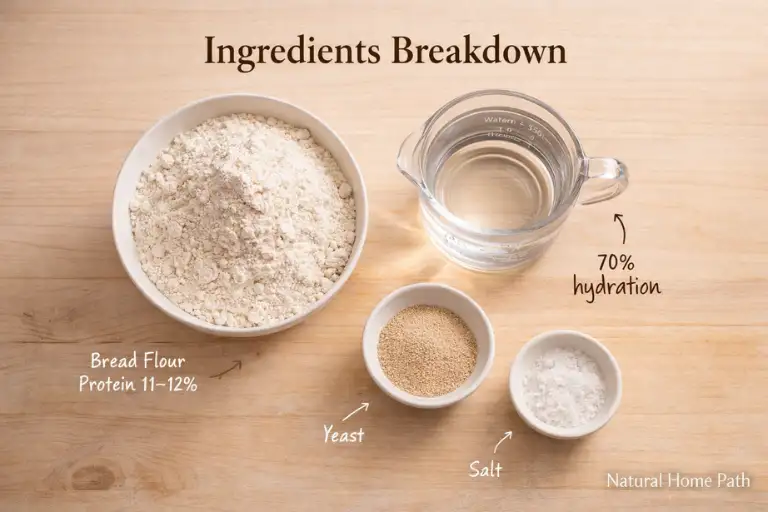
A true authentic French baguettes may use only four ingredients, but each one plays a powerful role in creating that crispy crust and open crumb structure.
Flour Protein Level: The protein in flour controls gluten strength. For a proper baguette recipe, use flour with moderate protein (around 11–12%). This helps build a strong gluten network while keeping the crumb light and airy. Too much protein makes the bread dense, while too little weakens structure.
Hydration Percentage: Hydration refers to the amount of water in the baguette dough. A higher hydration (65–75%) creates a more open crumb and better fermentation. This is key for a traditional French baguette with large air pockets.
Yeast vs Natural Levain: Commercial yeast gives predictable rise. A natural levain (sourdough starter) adds deeper flavor through slow bread fermentation.
Salt’s Role in Gluten Development: Salt strengthens gluten, improves flavor, and controls yeast activity. Without it, your homemade French baguette would taste flat and lack structure.
The Science Behind a Perfect Baguette
Baking a perfect French baguette is not just art, it is also science. When you understand what happens inside the dough, your homemade French baguette becomes more consistent and beautiful.
Gluten Network Formation: When flour and water mix, proteins join to form gluten. This gluten network traps gas during bread fermentation, giving the baguette its open crumb structure and chewy interior. Gentle stretch and fold methods strengthen this network without making the dough tough.
Fermentation Chemistry: During fermentation, yeast feeds on sugars and produces carbon dioxide. This creates air pockets in the baguette dough and builds flavor. Slow fermentation improves taste and texture in a traditional French baguette.
Why Steam Creates a Crispy Crust: Steam keeps the surface moist at first, allowing the bread to expand. Once the moisture evaporates, it forms a thin, crispy crust.
Maillard Reaction Explained: High heat causes sugars and proteins to brown. This reaction creates the rich color and deep flavor of an authentic French baguette.
Step-by-Step Authentic French Baguette Recipe
This authentic French baguette method is simple, but the timing matters. Follow it once, and you’ll understand how to make French baguettes with a crispy crust and a chewy interior.
Ingredient List (grams + baker’s %)
- Bread flour: 500g (100%)
- Water (room temp): 350g (70%) (hydration percentage)
- Yeast (instant): 2g (0.4%) (or active dry 3g)
- Salt: 10g (2%)
(1) Mixing Method: Mix flour + water until no dry flour remains. Add yeast and salt, then mix until a rough baguette dough forms.
(2) Autolyse Stage (20–30 minutes): Cover and rest. This helps gluten start forming with less effort.
(3) Stretch & Fold (3–4 rounds): Every 30 minutes, gently stretch and fold. This builds a strong gluten network for an open crumb structure.
(4) Bulk Fermentation (2–3 hours): Let dough rise until puffy and bubbly (not double).
(5) Shaping Technique: Divide into 3 pieces. Pre-shape, rest 15 minutes, then roll into long loaves (classic French baguette shape).
(6) Scoring Pattern: Use a sharp blade. Make 4–5 angled cuts along the top.
(7) Steam Baking Method: Bake at 475°F / 245°C with steam for the first 10–12 minutes (tray of hot water or steam pan). Finish 10–12 minutes more until deep golden and crisp.

How to Score Baguettes Like a Professional Baker
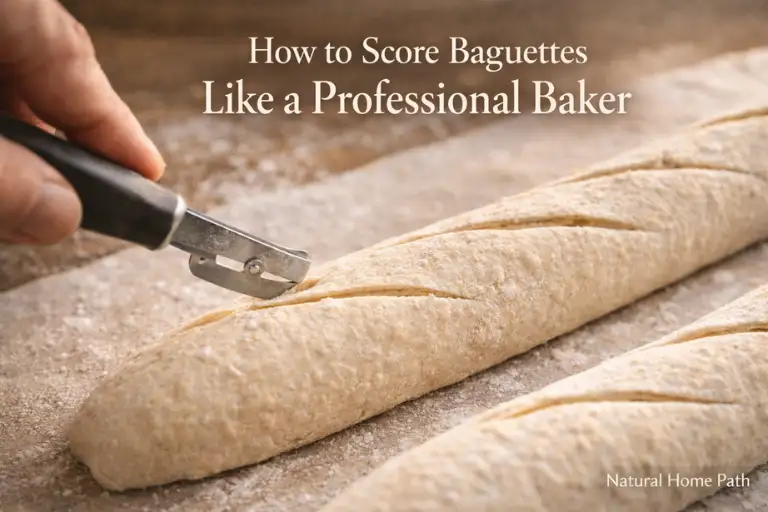
Scoring is one of the most important steps in making an authentic French baguette. Proper cuts allow the dough to expand correctly in the oven and help create that beautiful artisan bread look with a crispy crust.
Blade Angle: Hold your blade (lame or sharp razor) at about a 30–45° angle, not straight down. This shallow angle helps create the classic “ear” on a traditional French baguette.
Depth: Each cut should be about ¼ inch (0.5 cm) deep. Too shallow, and the bread may burst randomly. Too deep, and the loaf can collapse.
Pattern Styles: The classic style uses 4–5 overlapping cuts along the length of the baguette dough. Keep them slightly curved and evenly spaced.
Common Mistakes
- Cutting straight down instead of angled
- Using a dull blade
- Overproofed dough (won’t open well)
- Hesitating while cutting
Confident, quick scoring gives your homemade French baguette a professional finish.
Troubleshooting Common Baguette Problems
Even experienced bakers face problems when making a French baguette. Understanding what went wrong helps you fix it next time and achieve a true authentic French baguette with a crispy crust and open crumb structure.
Why Is My Baguette Flat?: Your baguette dough may be overproofed or too wet. Weak gluten can’t hold shape. Make sure you build a strong gluten network with proper stretch and fold.
Why Is the Crust Soft?: Lack of steam is the main reason. Steam baking creates that classic crackly crust in a traditional French baguette. Also, cool the bread on a wire rack so moisture can escape.
Why Is the Crumb Dense?: Under-fermentation or low hydration can cause this. Proper bread fermentation and correct hydration percentage are key.
Why Didn’t It Rise?: Old yeast or too much salt can slow activity. Always measure carefully in your baguette recipe.
Why Did It Burst Unevenly?: Improper scoring or shallow cuts cause random tearing instead of controlled expansion.
Baguette vs Other Breads
Many people confuse a French baguette with other types of bread. While they may look similar, each bread has unique texture, flavor, and baking methods.
Baguette vs Sourdough: A traditional French baguette usually uses commercial yeast, while sourdough uses natural levain. Sourdough has a tangy flavor and thicker crust. A baguette has a lighter taste, a thinner crispy crust, and a more delicate open crumb structure.
Baguette vs Ciabatta: Ciabatta is an Italian artisan bread with very high hydration. It has larger holes and a flatter shape. A baguette is longer, thinner, and slightly less airy.
Baguette vs Italian Bread: Italian bread is often softer and wider. It may contain oil or sugar, unlike an authentic French baguette, which keeps ingredients simple.
Baguette vs Regular French Bread: In many countries, “French bread” is a generic term. A real classic baguette recipe follows strict traditional methods and simple ingredients.
How to Store, Freeze & Reheat Baguettes Properly
A fresh French baguette tastes best the same day it’s baked. Because a traditional French baguette contains no preservatives, it dries out faster than commercial bread. Proper storage helps keep that crispy crust and soft interior as long as possible.
Room Temperature Storage: Keep your homemade French baguette at room temperature in a paper bag or loosely wrapped in a clean kitchen towel. Avoid plastic bags, as they trap moisture and soften the crust. It stays fresh for about 1 day.
Freezing Technique: Slice or keep whole, wrap tightly in plastic, then place in a freezer bag. Freeze for up to 3 months.
How to Revive Stale Baguette: Lightly sprinkle water on the crust and bake at 375°F (190°C) for 5–8 minutes. This restores crispness.
How Long Baguettes Last: At room temperature: 1–2 days. Frozen: up to 3 months.
Nutritional Value & Health Considerations
A French baguette is simple in ingredients, but many people wonder if it fits into a healthy diet. Since an authentic French baguette contains only flour, water, yeast, and salt, it has no added fats or preservatives.
Calories Per Slice: One medium slice (about 1 ounce / 30g) of a traditional French baguette contains roughly 80–90 calories, mostly from carbohydrates. It also provides small amounts of protein and very little fat.
Is Baguette Healthy?: A homemade French baguette can be part of a balanced diet when eaten in moderation. Pair it with protein, healthy fats, and vegetables for better nutrition.
Whole Wheat Variation: Using whole wheat flour increases fiber and nutrients while still keeping the classic baguette recipe style.
Gluten Considerations: Because it’s wheat-based, baguettes contain gluten and are not suitable for gluten-sensitive individuals.
Creative Ways to Use French Baguettes
A fresh French baguette is delicious on its own, but it’s also very versatile. Whether you bake a homemade French baguette or buy one fresh from a bakery, there are many simple ways to enjoy it.
Sandwich Ideas: Slice your traditional French baguette lengthwise and fill it with grilled chicken, roasted vegetables, cheese, or classic ham and butter. Its crispy crust holds fillings well without becoming soggy.
Garlic Bread: Spread butter, garlic, and herbs over sliced baguette, then bake until golden. The result is a crunchy, flavorful side dish.
Crostini: Cut thin slices, brush with olive oil, and toast. Top with tomatoes, avocado, or creamy cheese for easy appetizers.
French Toast: Stale baguette works perfectly for rich, custardy French toast.
Bread Pudding: Leftover pieces can be turned into a warm, comforting dessert.
Frequently Asked Questions
What makes an authentic French baguette different from regular French bread?
An authentic French baguette uses only four ingredients: flour, water, yeast, and salt. It follows traditional methods with proper fermentation and steam baking. Regular “French bread” may include oil, sugar, or additives, while a traditional French baguette keeps the recipe simple and natural.
Why is steam important when baking a French baguette?
Steam keeps the surface of the baguette dough moist during the first minutes of baking. This allows the loaf to expand fully before forming a crust. Once the steam evaporates, it creates the signature thin, crispy crust.
How do I get an open crumb structure in my baguette?
To achieve an open crumb structure, use proper hydration (around 70%), allow full bread fermentation, and handle the dough gently. Stretch and fold techniques strengthen the gluten without removing trapped air.
Can I make French baguettes without a stand mixer?
Yes, you can easily make a homemade French baguette by hand. Mix until combined, then use stretch and fold methods during bulk fermentation to build strength in the dough.
How long does a French baguette stay fresh?
A fresh French baguette is best eaten the same day. It stays good at room temperature for about 1 day. You can freeze it for up to 3 months and reheat to restore its crisp texture.
Conclusion
Baking a true authentic French baguette at home is both simple and rewarding. With just four basic ingredients and the right techniques, you can create a loaf with a crispy crust, a light chewy interior, and a beautiful open crumb structure. Understanding fermentation, proper shaping, and steam baking makes a big difference in your final results.
Whether you’re following a classic baguette recipe for the first time or improving your homemade French baguette skills, patience and practice are key. From learning how to score properly to mastering hydration, every step helps you get closer to bakery-quality bread.
Now that you know how to make French baguettes, you can enjoy fresh, traditional bread anytime straight from your own kitchen.
Recipe Card Summary
Authentic French Baguette Recipe
Yield: 3 baguettes
Prep Time: 20 minutes
Rest & Fermentation: 3–4 hours
Bake Time: 20–25 minutes
Total Time: About 4–5 hours
Ingredients
- 500g bread flour (100%)
- 350g water (70% hydration)
- 2g instant yeast (0.4%)
- 10g salt (2%)
Instructions
- Mix: Combine flour and water until no dry flour remains. Add yeast and salt. Mix into a rough baguette dough.
- Autolyse: Cover and rest 20–30 minutes.
- Stretch & Fold: Perform 3–4 sets every 30 minutes.
- Bulk Fermentation: Let rise 2–3 hours until puffy.
- Shape: Divide into 3 pieces. Shape into long traditional French baguettes.
- Score: Make 4–5 angled cuts.
Bake with Steam: Bake at 475°F (245°C) with steam for 10–12 minutes, then 10–12 minutes more until golden and crispy.