

If you’ve ever wanted to bake soft, fluffy homemade bread that fills your kitchen with a wonderful aroma, this homemade basic rosemary focaccia bread recipe is perfect for you. Focaccia bread is a classic Italian flatbread, loved for its airy texture, golden crust, and the fragrant touch of fresh rosemary. Making it at home may sound tricky, but with a few simple steps, you can create a perfect rosemary focaccia that’s just as good as your favorite bakery. This recipe is beginner-friendly, easy to follow, and gives you plenty of tips for step-by-step focaccia baking. Whether you want it for sandwiches, as a side for dinner, or just to enjoy with a drizzle of olive oil, you’ll love this easy rosemary focaccia bread recipe.
Rosemary Focaccia Bread Recipe
Prep Time: 15 minutes
Rise Time: 1–2 hours
Cook Time: 20–25 minutes
Total Time: 1 hour 35 minutes – 2 hours 40 minutes
Yield: 1 medium focaccia (8–10 servings)
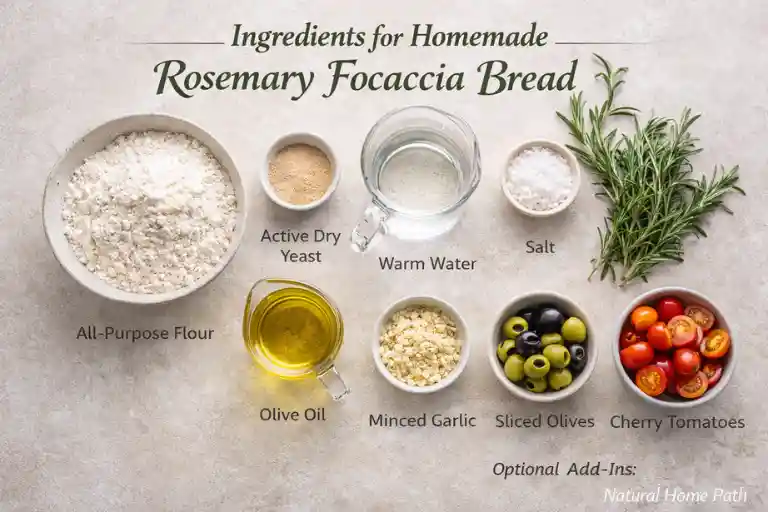
Ingredients
Primary:
- 3 cups all-purpose flour
- 1 packet (2 ¼ tsp) active dry yeast
- 1 cup warm water
- ¼ cup olive oil
- 1 tsp salt
- 2 tbsp fresh rosemary
Optional Add-ons:
- Minced garlic
- Sliced olives
- Halved cherry tomatoes
Quick Instructions
- Mix & Knead: Combine flour, yeast, water, olive oil, and salt. Knead until soft and elastic.
- First Rise: Place dough in an oiled bowl, cover, and let rise until doubled (~1–2 hours).
- Shape & Dimple: Press dough into a baking pan, then create dimples with your fingers.
- Add Toppings: Drizzle with olive oil, sprinkle rosemary, and add optional toppings.
- Bake: Preheat oven to 400°F (200°C). Bake 20–25 mins until golden.
- Cool & Serve: Let cool slightly, slice, and enjoy warm.
Tips:
- Use fresh rosemary and quality olive oil for best flavor.
- For a crispier crust, bake on a preheated baking stone.
- Store leftovers in an airtight container or freeze for later.
Tools & Equipment
Before you start baking your homemade basic rosemary focaccia bread, it’s important to have the right tools on hand. For a smooth baking experience, you’ll need baking pans, mixing bowls, and proofing cloths to help your dough rise perfectly.
While not required, optional gadgets can make your easy rosemary focaccia bread recipe even easier. A stand mixer can save time when kneading, a silicone mat helps prevent sticking, and a kitchen thermometer ensures your bread bakes at the ideal temperature.
Having these tools ready will make the step-by-step focaccia baking process simpler and more enjoyable. With the right equipment, your rosemary focaccia bread will come out soft, fluffy, and perfectly golden every time.
Step-by-Step Instructions
1. Preparing the Dough
Start by mixing all-purpose flour, yeast, water, olive oil, and salt in a large mixing bowl. Stir until the dough comes together, then knead by hand or with a stand mixer for about 8–10 minutes. Proper hydration is key—your dough should feel soft, slightly sticky, and elastic. This is the base for your soft and fluffy homemade rosemary focaccia bread.
2. First Rise
Place the dough in a lightly oiled bowl and cover with a proofing cloth. Let it rise in a warm spot for 1–2 hours until it doubles in size. If the rise is slow, check the yeast freshness or temperature of the water.
3. Shaping & Dimpling
Transfer the dough to a baking pan and gently press it into shape. Use your fingers to create the classic focaccia dimples, which hold the olive oil and herbs.
4. Adding Rosemary & Olive Oil
Drizzle olive oil evenly over the dough and sprinkle generously with fresh rosemary. Optional toppings like garlic, olives, or cherry tomatoes can be added now for extra flavor.
5. Baking to Perfection
Bake in a preheated oven at 400°F (200°C) for 20–25 minutes, or until the crust is golden brown and the bread sounds hollow when tapped.
6. Cooling & Serving
Let your rosemary focaccia bread cool slightly before cutting. Serve warm with a drizzle of olive oil, or use it for sandwiches and sides. The soft interior and flavorful crust will make it irresistible!

Baking Tips & Common Mistakes
Baking homemade basic rosemary focaccia bread is simple once you know a few helpful tips.
1. Avoiding Dense or Dry Focaccia
Make sure your dough has the right hydration and allow it to rise fully. Kneading the dough too little or skipping the first rise can lead to a dense bread.
2. Getting a Soft and Airy Texture
Use fresh yeast and warm water to encourage proper proofing. Don’t over-handle the dough after the first rise—this helps maintain a soft, fluffy interior.
3. Flour and Yeast Alternatives
If you want a twist, try bread flour for extra chewiness or whole wheat flour for a nutty flavor. Instant yeast can replace active dry yeast, but adjust rising time slightly.
Variations & Flavor Ideas
Once you’ve mastered the basic rosemary focaccia bread, it’s easy to get creative with flavor variations.
1. Garlic & Herb Focaccia
Add minced garlic and a mix of your favorite fresh herbs like thyme or oregano. This creates a fragrant, flavorful twist on the classic easy rosemary focaccia bread recipe.
2. Olive & Sun-Dried Tomato Focaccia
Incorporate sliced olives and sun-dried tomatoes for a Mediterranean-inspired version. The salty olives and sweet tomatoes pair perfectly with olive oil and fresh rosemary, giving your bread a bold, rich flavor.
3. Vegan or Gluten-Free Alternatives
For a vegan focaccia, use plant-based substitutes and ensure your yeast is vegan-friendly. For gluten-free focaccia, experiment with gluten-free flour blends while maintaining proper hydration to keep the bread soft and airy.
These focaccia variations let you enjoy different flavors while keeping the soft, fluffy texture you love.
Storage & Reheating
To enjoy your homemade basic rosemary focaccia bread for days, proper storage is key.
1. Storing for 2–3 Days
Keep your soft rosemary focaccia bread in an airtight container or tightly wrapped in plastic wrap at room temperature. This preserves its soft, fluffy texture while keeping the crust slightly crisp.
2. Freezing Tips
You can freeze focaccia for longer storage. Slice the bread first, then wrap it tightly in plastic wrap and foil. When ready to eat, thaw at room temperature or in the refrigerator overnight.
3. Reheating Without Losing Softness
To refresh the bread, place it in a preheated oven at 350°F (175°C) for 5–10 minutes. This restores the warm, airy interior and slightly crisp edges, making it taste freshly baked again.
Pairing & Serving Suggestions
Your homemade basic rosemary focaccia bread isn’t just delicious on its own—it’s perfect for serving with a variety of dishes.
1. Soups, Dips, and Sandwiches
Slice your soft rosemary focaccia and pair it with hearty soups like tomato basil or minestrone. It also works beautifully with dips such as hummus, olive tapenade, or flavored olive oil. Use it to make sandwiches or serve alongside a cheese board for a simple, elegant appetizer.
2. Wine or Tea Pairings
The subtle flavor of rosemary and olive oil pairs wonderfully with a light white wine or a delicate herbal tea. For casual gatherings, your focaccia can elevate any meal while impressing guests with its aroma and flavor.

Frequently Asked Questions
Can I make homemade rosemary focaccia bread ahead of time?
Yes! You can prepare the dough the day before and store it in the fridge. Let it come to room temperature and complete its rise before baking for soft, fluffy focaccia.
Can I use whole wheat flour instead of all-purpose flour?
Absolutely! You can substitute up to half of the flour with whole wheat flour. Keep in mind the bread may be slightly denser, but it will still be a delicious easy rosemary focaccia bread recipe.
Why isn’t my focaccia fluffy?
Fluffiness depends on proper hydration, kneading, and proofing. Make sure your yeast is active, the dough rises fully, and you avoid over-handling after the first rise.
Can I add other toppings besides rosemary?
Yes! Try garlic, olives, cherry tomatoes, or herbs like thyme and oregano. These toppings enhance flavor while keeping your rosemary focaccia bread aromatic and delicious.
How do I prevent a soggy bottom?
Use a well-oiled baking pan or a baking stone, and bake at the correct oven temperature (around 400°F/200°C). This ensures a crispy crust while keeping the inside soft and airy.
Conclusion
Baking homemade basic rosemary focaccia bread is easier than you might think, and once you’ve tried the recipe, the possibilities are endless. Don’t hesitate to experiment with flavor variations like garlic, olives, or sun-dried tomatoes to make it your own.
We’d love to see your creations! Share your soft, fluffy rosemary focaccia bread on social media, tag your photos, and inspire other home bakers to try this easy rosemary focaccia bread recipe.
Remember, the joy of baking comes from creating something delicious from scratch. With these tips, variations, and step-by-step instructions, you can make perfect homemade focaccia bread again and again, delighting your family and friends every time.