

Using baking soda is one of the simplest and safest ways to clean a fridge naturally. It works because baking soda neutralizes odors instead of just covering them up. That’s why it’s so effective for removing fridge smells caused by spoiled food, spills, or strong odors like fish and onions.
Another big advantage is safety. Baking soda is a food-safe, non-toxic fridge cleaner, making it ideal for homes with kids and pets. You don’t have to worry about harsh chemicals touching food shelves or drawers. When mixed with water, it becomes a gentle cleaner that can clean refrigerator shelves, walls, and bins without scratching surfaces.
If you want a natural fridge cleaning method that is affordable, easy, and effective, baking soda is a smart choice that works for both cleaning and deodorizing your refrigerator.
What You’ll Need to Clean Your Fridge With Baking Soda
Before you start, gather a few basic household items. You don’t need expensive tools or strong cleaners to clean a fridge with baking soda. This method is simple and beginner-friendly.
You’ll need baking soda, which acts as both a fridge cleaner and odor remover. Warm water helps dissolve grease and dried spills. A soft cloth or sponge works best for wiping surfaces without scratching shelves. For tight areas like corners or door seals, an old toothbrush is very helpful.
If your fridge has strong smells, you can also keep extra baking soda nearby to use as a fridge deodorizer later. Avoid rough scrubbers or chemical sprays, as they can damage surfaces. With just these simple items, you’re ready to clean your refrigerator naturally and safely.

Step-by-Step: How to Clean a Fridge With Baking Soda
Start by unplugging the fridge if possible, then empty all food items. Remove shelves and drawers so you can clean every area properly. Mix 2 tablespoons of baking soda with 1 quart of warm water. This is the ideal baking soda cleaning solution for fridge interiors.
Dip a soft cloth into the mixture and gently wipe the fridge walls, shelves, and drawers. Focus on sticky spots and dried spills. For tough stains, apply a small baking soda paste and let it sit for a few minutes before wiping.
Clean shelves and drawers separately in the sink using the same solution. Once everything is clean, dry all surfaces completely before putting food back. This step-by-step method helps clean the fridge naturally without chemicals.

How to Remove Fridge Odors With Baking Soda
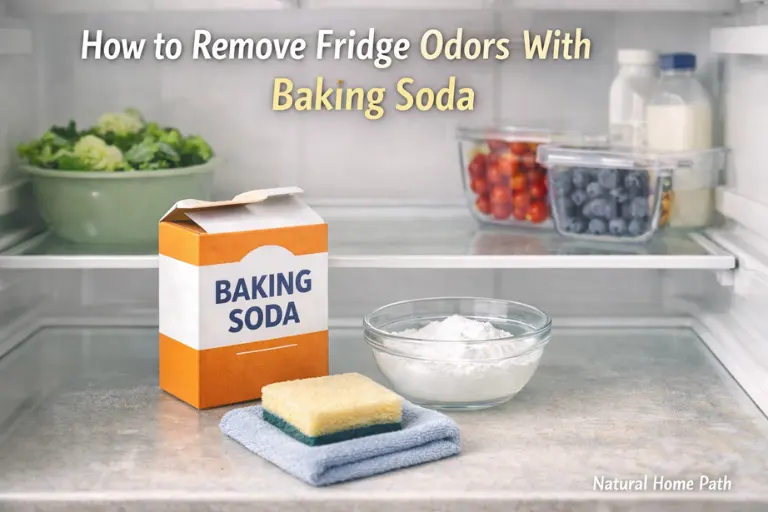
Baking soda is one of the best ways to remove fridge odor naturally. It works by absorbing and neutralizing smells instead of masking them. After cleaning, place an open box of baking soda on a middle shelf where air circulates well.
For better results, pour baking soda into a small open bowl to increase surface area. This helps it work faster as a baking soda fridge deodorizer. Leave it in the fridge for at least 24 hours, but replace it every 30 days for ongoing freshness.
If odors are strong, you may need to clean spills first before deodorizing. Baking soda works best on lingering smells, not active messes. Used regularly, this method keeps your fridge fresh-smelling, clean, and chemical-free.
What Fridge Surfaces Are Safe for Baking Soda
Baking soda is gentle, but knowing where to use it matters. It is safe for most fridge interior surfaces, including glass shelves, plastic drawers, and interior walls. When mixed with water, it won’t scratch or damage these areas.
You can also use baking soda to clean rubber door seals, where crumbs and spills often hide. Use a soft toothbrush and gentle pressure. For stainless steel interiors, baking soda is safe as long as you avoid rough scrubbing.
Do not use dry baking soda directly on delicate surfaces, as it can act mildly abrasive. Always mix it with water first. When used correctly, baking soda is a food-safe fridge cleaner that protects your refrigerator while keeping it clean.
Common Fridge Smells Baking Soda Can and Can’t Remove
Baking soda is great for many fridge odors, but it’s important to know its limits. It works well on smells caused by spoiled food, spilled milk, onions, garlic, and fish. These odors are acidic, and baking soda helps neutralize them naturally.
However, baking soda may struggle with odors caused by mold growth or long-term leaks. In those cases, cleaning the source first is necessary. Baking soda can reduce the smell, but it won’t fix the underlying problem.
If smells return quickly, check hidden areas like drawers, seals, and drain holes. Baking soda works best when paired with proper cleaning. Understanding what it can and can’t do helps you use it more effectively as a natural fridge odor solution.
Mistakes to Avoid When Cleaning a Fridge With Baking Soda
One common mistake is using dry baking soda directly on surfaces. This can cause light scratching, especially on plastic. Always mix it with water first. Another mistake is scrubbing too hard, which can damage shelves and seals.
Some people mix baking soda and vinegar together. While both are useful, mixing them cancels out their cleaning power. Use baking soda for cleaning and vinegar only for odor problems, but never at the same time.
Skipping door seals is another error. These areas trap spills and cause odors if ignored. Lastly, don’t rush restocking. Putting food back into a damp fridge can lead to smells again. Avoiding these mistakes ensures your baking soda fridge cleaning method works properly.
How Often You Should Clean Your Fridge Naturally
Knowing how often to clean helps keep your fridge fresh without extra work. A quick wipe-down once a week helps prevent spills from turning into odors. Use a light baking soda solution for small messes.
A deep clean once a month is ideal. This includes removing shelves, cleaning drawers, and deodorizing with baking soda. Monthly cleaning keeps bacteria and smells under control.
Seasonal cleaning every few months is also helpful, especially before holidays. Regular cleaning prevents buildup and makes each session easier. With a simple routine, baking soda becomes part of a low-effort fridge maintenance plan that keeps your refrigerator clean, safe, and odor-free all year.
Is Baking Soda Safe Around Food and Kids
Yes, baking soda is one of the safest options for cleaning a fridge. It is non-toxic, food-safe, and gentle enough for areas where food is stored. This makes it ideal for families with kids and pets.
Unlike chemical cleaners, baking soda doesn’t leave harmful fumes or residues behind. When wiped properly, it won’t affect food taste or safety. That’s why many people prefer it as a natural fridge cleaner.
Always rinse surfaces lightly with clean water after cleaning and dry them well. Store baking soda out of reach of small children, just like any household item. Used correctly, baking soda is a safe and reliable solution for keeping your fridge clean and healthy.
Frequently Asked Questions
Can baking soda really clean a refrigerator, or is it only for smells?
Baking soda does more than remove odors. When mixed with water, it works as a gentle cleaner that lifts dirt, sticky spills, and light grease from fridge surfaces while also neutralizing smells.
What is the correct baking soda and water ratio for cleaning a fridge?
The best mix is 2 tablespoons of baking soda in 1 quart of warm water. This solution cleans effectively without scratching shelves or drawers.
Is it okay to use baking soda inside the freezer?
Yes, baking soda is safe for freezer interiors. Just make sure the freezer is turned off and surfaces are dry before turning it back on.
How often should baking soda be replaced in the fridge?
For odor control, replace baking soda every 30 days. If smells are strong, change it sooner.
Will baking soda harm fridge surfaces or food?
No. Baking soda is food-safe and non-toxic when used correctly and wiped away properly.
Conclusion
Keeping your fridge fresh doesn’t require much effort. Store food in airtight containers to prevent spills and smells. Wipe small messes right away before they harden. Keep a box of baking soda inside the fridge at all times for odor control.
Check food weekly and throw out anything expired. Clean door seals and drawers regularly, as these areas trap hidden messes. Avoid overcrowding your fridge, since airflow helps reduce odors.
With these simple habits and regular use of baking soda, you can enjoy a clean, fresh-smelling fridge without chemicals. A little routine care goes a long way in maintaining a naturally clean refrigerator.