
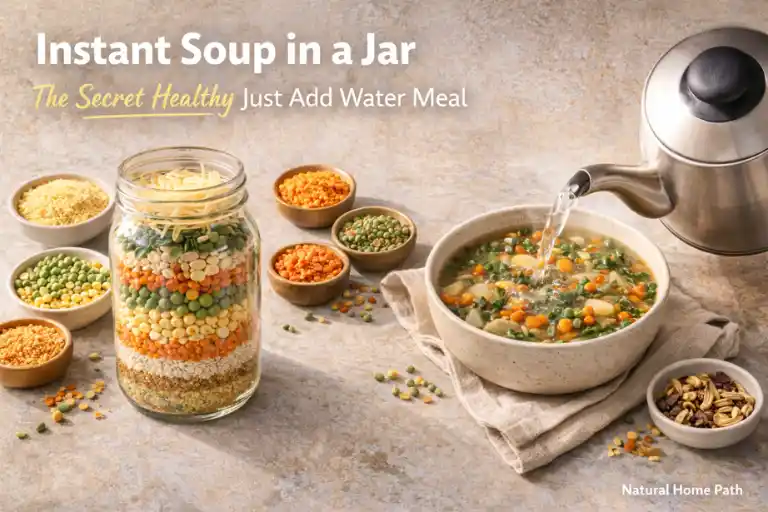
Instant soup in a jar is a homemade, dry soup mix layered neatly inside a mason jar. It’s designed to be a just-add-water meal, you simply pour boiling water over the ingredients, wait a few minutes, and enjoy a warm, comforting soup. Unlike store-bought instant soups, this DIY option uses real ingredients, no preservatives, and allows full control over salt, flavor, and nutrition.
Most soup in a jar recipes include dried vegetables, grains or noodles, seasonings, and sometimes plant-based proteins like lentils. Because everything is dry, the soup stays shelf-stable and perfect for meal prep, work lunches, camping, or emergency pantry meals. It’s also popular as a homemade food gift. Simple, healthy, and practical homemade instant soup fits perfectly into busy, modern life.
Why Make Homemade Instant Soup in a Jar
Making homemade instant soup in a jar gives you full control over what you eat. Store-bought instant soups are often high in sodium, preservatives, and artificial flavors, while DIY soup jars use real, simple ingredients. You can adjust salt levels, choose healthy grains, and skip anything you don’t want.
Another big benefit is cost savings. Dry soup mixes made at home are much cheaper than packaged cups. These soups are also perfect for meal prep, office lunches, and busy weekdays. Just add hot water and your meal is ready in minutes.
Many people also love soup jars for emergency pantry meals, camping, or travel. Plus, they make thoughtful homemade gifts that are both practical and personal.
How Instant Soup in a Jar Works
The magic of instant soup in a jar comes from using dry, shelf-stable ingredients that rehydrate when hot water is added. When boiling water hits dried vegetables, grains, and seasonings, they slowly absorb moisture and soften, turning into a warm, flavorful soup.
Ingredient size matters. Small, evenly chopped dried vegetables rehydrate faster than large pieces. Thin noodles and quick-cooking grains work best. That’s why raw fresh vegetables are avoided—they spoil and don’t cook properly.
Layering is also important. Seasonings and bouillon go at the bottom, so they dissolve evenly. Heavier ingredients sit on top, keeping moisture away. This simple science is what makes just-add-water soup jars reliable, safe, and delicious every time.
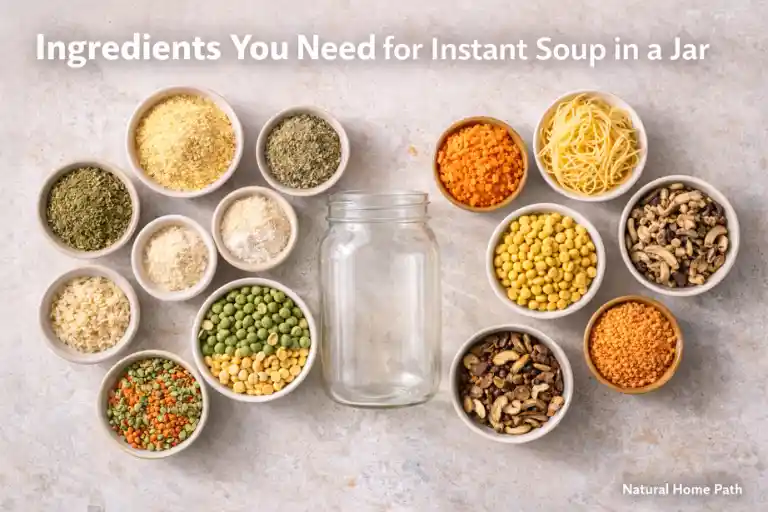
Ingredients You Need for Instant Soup in a Jar
Flavor Base
- Bouillon powder or cubes (vegetable or chicken-style)
- Dried herbs (parsley, thyme, oregano, basil)
- Garlic powder
- Onion powder
- Black pepper or mild spices
- Salt (optional, adjust to taste)
Dried Vegetables
- Dehydrated carrots
- Dried onions
- Freeze-dried peas
- Dried corn
- Dried spinach or kale
- Dried bell peppers
- Dried mushrooms
Tip: Dehydrated or freeze-dried vegetables rehydrate best.
Grains & Noodles
- Quick-cooking rice
- Couscous
- Quinoa flakes
- Thin pasta or egg noodles
- Rice noodles
Plant-Based Proteins (Optional but Filling)
- Red or green lentils
- Split peas
- Dried beans (small, quick-cooking types)
Optional Flavor Boosters
- Nutritional yeast
- Dried ginger
- Chili flakes
- Soy sauce powder or miso powder
- Dried lemon peel
Ingredients to Avoid
- Fresh vegetables
- Oils or fats
- Cheese or dairy powders
- Moist or sticky ingredients
Keeping everything completely dry helps your instant soup in a jar stay fresh, safe, and shelf-stable for weeks.
How to Layer Instant Soup in a Jar (Step-by-Step Guide)
Step 1: Start with Seasonings at the Bottom: Always begin with powdered ingredients at the bottom of the jar. This includes bouillon powder, spices, salt, garlic powder, and dried herbs. Placing these first allows them to dissolve quickly and spread flavor evenly once hot water is added. It also keeps seasonings from sticking to noodles or vegetables higher up in the jar.
Step 2: Add Small, Quick-Cooking Ingredients: Next, layer fast-cooking grains or legumes such as lentils, split peas, couscous, or quick-cooking rice. These ingredients sit just above the seasonings so they absorb water early and soften properly. This step ensures your soup becomes tender and filling without needing long cooking times.
Step 3: Layer Dried Vegetables Evenly: Now add dried or freeze-dried vegetables like carrots, peas, corn, or spinach. Spread them evenly across the jar. This helps balance texture and flavor throughout the soup. Dried vegetables rehydrate best when they are not tightly packed or mixed with powders.
Step 4: Finish with Noodles or Large Ingredients on Top: Place noodles or larger ingredients at the very top. Keeping them dry prevents clumping and sogginess. Thin pasta or rice noodles work best. This top layer stays protected from moisture until cooking time.
Step 5: Settle and Seal the Jar: Gently tap the jar on the counter to settle the layers, then seal tightly with a lid. Proper layering helps prevent moisture buildup, improves rehydration, and keeps your instant soup in a jar fresh, flavorful, and easy to prepare.
Basic Instant Soup in a Jar Recipe
This basic instant soup in a jar recipe is perfect for beginners. In a clean quart-size jar, add 2 tablespoons bouillon powder and your favorite dried seasonings at the bottom. Next, add ¼ cup quick-cooking lentils or rice, followed by ½ cup dried vegetables.
Top the jar with ½ cup thin noodles or couscous. Seal tightly and store in a cool, dry place. To prepare, empty the jar into a bowl, add 2 to 2½ cups boiling water, cover, and wait 8–10 minutes. Stir well and enjoy.
This starter recipe is easy to customize and works as a base for many homemade instant soup variations. Simple, flexible, and reliable.
Instant Soup in a Jar Variations
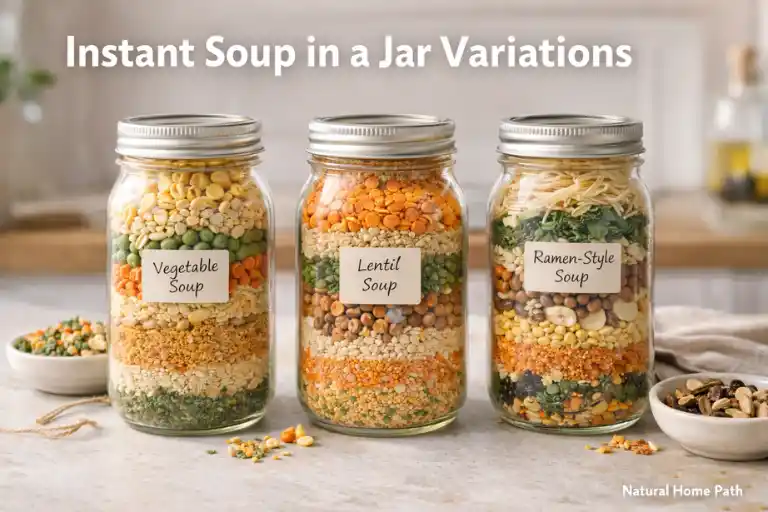
One of the best things about instant soup in a jar is how easy it is to customize. For a vegetable soup in a jar, use mixed dried vegetables and herbs like thyme and parsley. Add lentils for protein.
For a chicken-style soup, use chicken-flavored bouillon with carrots, celery, and egg noodles. A lentil soup jar works well with cumin, garlic powder, and split red lentils.
If you enjoy bold flavors, try a ramen-style soup in a jar with soy-based seasoning, dried mushrooms, and rice noodles. These variations keep meals exciting while still being quick, healthy, and shelf-stable.
Diet-Specific Instant Soup Options
Homemade instant soup in a jar is easy to adapt for different diets. For vegan soup jars, use vegetable bouillon and plant-based proteins like lentils or beans. Avoid animal-based flavorings.
For gluten-free instant soup, choose rice, quinoa flakes, or gluten-free noodles. Always check seasoning labels to prevent hidden gluten. If you need low-sodium soup, reduce bouillon and boost flavor with herbs and spices.
People managing blood sugar can make diabetic-friendly soup jars by focusing on fiber-rich vegetables and legumes. These options allow everyone to enjoy healthy soup in a jar without sacrificing taste or safety.
Shelf Life, Storage & Food Safety
When stored correctly, instant soup in a jar can last 4–6 months. Keep jars in a cool, dry place, away from heat and moisture. Always use completely dry ingredients and airtight jars.
If you notice clumping, moisture, or off smells, discard the soup. Never add fresh ingredients to dry soup jars, as this shortens shelf life and increases risk.
Label jars with the date and preparation instructions, especially if gifting. Proper storage ensures your homemade soup mix stays safe, flavorful, and ready whenever you need a quick meal.
Common Mistakes to Avoid When Making Soup in a Jar
One common mistake is using large or slow-cooking ingredients, which won’t soften properly with hot water. Another is adding too much salt, especially when using bouillon.
Poor layering can cause soggy ingredients or uneven flavor. Always keep seasonings at the bottom and noodles at the top. Moisture exposure is another issue, never fill jars with warm ingredients.
Finally, skipping labels leads to confusion later. Clear instructions make your soup in a jar recipe easy to use and gift. Avoiding these mistakes ensures consistent, safe, and tasty results.
Soup in a Jar for Gifting & Meal Prep
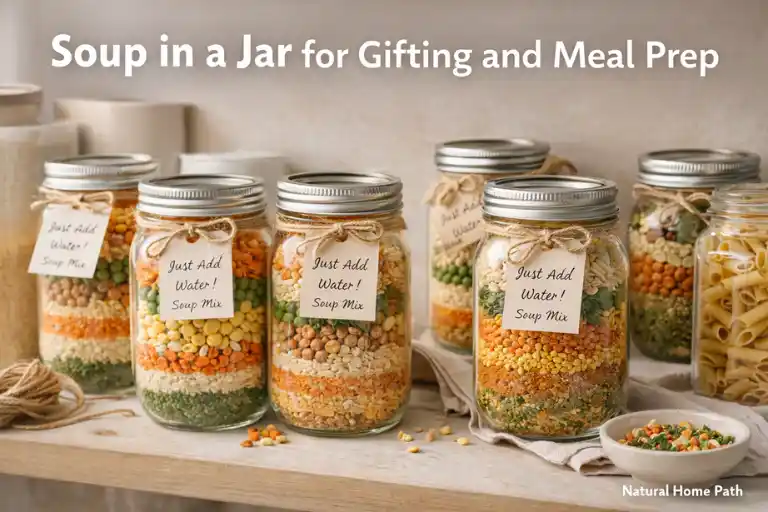
Soup in a jar is a thoughtful and practical gift. It’s perfect for holidays, teachers, coworkers, and new parents. Use clear mason jars, add a ribbon, and include a handwritten instruction tag.
For meal prep, prepare several jars at once and store them in your pantry. They’re ideal for work lunches, camping trips, or emergency meals. Compact, lightweight, and easy to prepare, soup jars save time without sacrificing nutrition.
This combination of convenience and care is what makes soup jars so popular for both gifting and everyday use.
Soup in a Jar Nutrition & Calories
Nutrition varies depending on ingredients, but homemade instant soup is usually lower in sodium and higher in fiber than packaged versions. Vegetables and legumes add vitamins, while grains provide energy.
Portion control is easy because each jar equals one serving. You can adjust calories by choosing lighter grains or adding protein-rich lentils for fullness.
Because you control every ingredient, soup in a jar nutrition is flexible and transparent. It’s a smart option for anyone looking for healthy, balanced, and quick meals.
Frequently Asked Questions
How much hot water does one soup jar need?
Most instant soup in a jar recipes need about 2 to 2½ cups of boiling water. The exact amount depends on how thick you like your soup and which grains or noodles you use.
Do I have to pour the soup into another bowl?
Yes. Always empty the jar into a heat-safe bowl or mug before adding hot water. Mason jars can crack if boiling water is poured directly inside.
Can instant soup jars be used for travel or outdoor trips?
Definitely. These soups are great for camping, road trips, and emergency food kits because they are lightweight and shelf-stable.
Can kids eat soup in a jar?
Yes, especially homemade versions. Just reduce salt and avoid spicy seasonings to make them kid-friendly.
What if my soup doesn’t soften fully?
Cover the bowl longer or add a little more hot water. Some ingredients simply need extra time to rehydrate.
Conclusion
Instant soup in a jar is more than just a trendy recipe, it’s a practical, healthy solution for busy days. By using simple dry ingredients, you create a meal that is quick, affordable, and free from unnecessary additives. Whether you need an easy work lunch, a pantry backup, or a thoughtful homemade gift, soup jars fit effortlessly into everyday life.
What makes them truly special is control. You choose the flavors, the nutrition, and the quality. Once you make a few jars, you’ll always have a warm, comforting meal ready with nothing more than hot water. Simple habits like this make healthy eating easier and far more enjoyable.