

When an insect bites, it injects saliva into your skin. Your body reacts by releasing histamine, which causes itching, redness, and swelling. This is why mosquito and insect bites can feel so uncomfortable and hard to ignore. Scratching may feel good at first, but it often makes the irritation worse.
A DIY bug bite balm works by creating a protective barrier on the skin while delivering natural bug bite relief directly to the affected area. Ingredients like oils and butters help soothe inflammation, lock in moisture, and calm irritated skin. When combined with gentle essential oils, a homemade bug bite balm can help stop itching fast and support healing. This makes a natural bug bite remedy one of the easiest and most effective ways to manage itchy bug bites at home.
What Is a DIY Bug Bite Balm
A DIY bug bite balm is a thick, oil-based remedy made to soothe itchy bug bites and protect irritated skin. Unlike sprays or lotions that evaporate quickly, a balm stays on the skin longer and delivers lasting bug bite relief. It is usually made with natural ingredients like carrier oils, butters, and gentle essential oils.
A homemade bug bite balm works well for mosquito bites, ant bites, and other insect stings because it creates a calming layer over the skin. This helps reduce itching, redness, and dryness. Many people prefer a natural bug bite remedy because it avoids harsh chemicals and can be customized for kids, sensitive skin, or frequent outdoor use. It’s simple, effective, and easy to make at home.
Benefits of Making Your Own Bug Bite Balm
Making your own DIY bug bite balm gives you full control over what touches your skin. One of the biggest benefits is fast itch relief using natural bug bite ingredients that are gentle and effective. You can avoid artificial fragrances, alcohol, and strong chemicals often found in store-bought products.
A homemade bug bite balm is also budget-friendly and lasts a long time. You can adjust the strength depending on who will use it, making it kid-safe or stronger for adults. Because it’s oil-based, it helps moisturize dry, irritated skin while calming itching at the same time. Another benefit is customization—you can make vegan versions, roll-ons, or sticks. Overall, a natural bug bite balm is a simple and reliable solution for everyday insect bite relief.
DIY Bug Bite Balm Ingredients
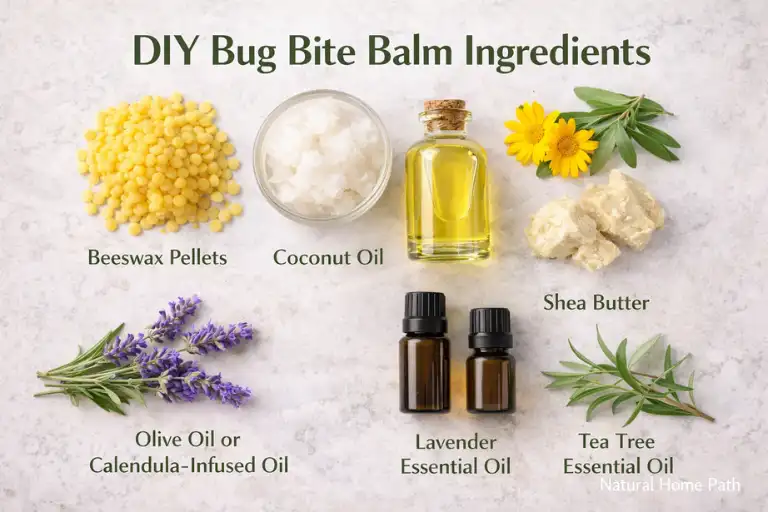
- Beeswax – helps thicken the balm and creates a protective barrier
- Coconut oil – soothes itching and moisturizes irritated skin
- Olive oil or calendula-infused oil – calms redness and supports skin healing
- Shea butter – deeply nourishes and softens dry, itchy skin
- Lavender essential oil – gently reduces itching and irritation
- Tea tree essential oil – supports skin cleansing and comfort
Optional Ingredient Swaps
- Candelilla wax (vegan alternative to beeswax)
- Vitamin E oil – helps extend shelf life and supports skin health
- Peppermint essential oil (for adults only) – provides a cooling sensation
DIY Bug Bite Balm Recipe (Step-by-Step)
Step 1: Melt the base ingredients: Add beeswax, your chosen carrier oil, and shea butter to a double boiler. Heat gently on low and stir until everything melts completely and blends smoothly. Slow, gentle heat prevents burning and helps the balm set properly later.
Step 2: Let the mixture cool slightly: Remove the melted mixture from heat and allow it to cool for a few minutes. Adding essential oils while the mixture is too hot can reduce their effectiveness.
Step 3: Add essential oils for bug bite relief: Stir in your essential oils for bug bites, mixing well so they spread evenly throughout the balm. Even mixing ensures consistent itch relief with every use.
Step 4: Pour into containers: Carefully pour the liquid balm into small tins or balm containers while it’s still warm. Pouring early helps prevent lumps and uneven texture.
Step 5: Cool until fully solid: Let the balm sit undisturbed until completely solid. This creates a smooth, firm, non-sticky homemade bug bite balm.
Step 6: Check texture and adjust if needed
Once set, test the balm. If it feels too hard, add more oil next time. If it’s too soft, increase the wax slightly.
Why it matters: Small adjustments help you create the perfect natural bug bite balm for easy, travel-friendly use.
How to Use Bug Bite Balm for Fastest Relief
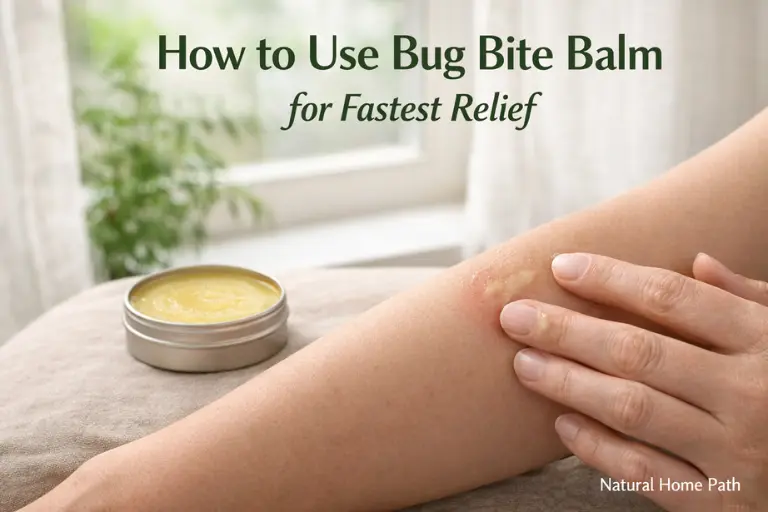
Using a DIY bug bite balm correctly helps you get the best results. Start by cleaning the affected area with mild soap and water. This removes dirt and reduces the risk of irritation. Take a small amount of balm and gently rub it onto the bug bite.
Apply the homemade bug bite balm as soon as you notice itching. Early use helps calm the skin faster and prevents excessive scratching. You can reapply two to three times a day as needed. Because the balm stays on the skin longer, it provides lasting itch relief compared to sprays or creams. Avoid applying on broken skin or open wounds. With regular use, this natural bug bite remedy can significantly reduce discomfort and help the skin recover more quickly.
Is This Bug Bite Balm Safe for Kids and Sensitive Skin
A DIY bug bite balm can be safe for kids and sensitive skin when made carefully. The key is using gentle ingredients and keeping essential oil amounts low. Lavender is often preferred because it is calming and mild. For very young children, you can even make a homemade bug bite balm without essential oils.
Always do a patch test before full use, especially on sensitive skin. Apply a small amount to the inner arm and wait 24 hours. Avoid strong oils like peppermint for toddlers. When used correctly, a natural bug bite balm for kids can provide safe and soothing relief without harsh chemicals. If irritation occurs, stop use immediately. Simple, gentle formulas work best for everyday insect bite care.
Storage, Shelf Life, and Travel Tips
Proper storage helps your DIY bug bite balm last longer and stay effective. Keep it in a cool, dry place away from direct sunlight. Heat can cause the balm to soften or melt, especially during summer. If that happens, simply place it in the fridge to firm up again.
A homemade bug bite balm usually lasts 6 to 12 months, depending on the oils used. Clean hands or a small spatula help prevent contamination. For travel, use small tins or twist-up sticks to avoid spills. Avoid leaving it in hot cars. When stored properly, your natural bug bite balm will stay fresh, smooth, and ready to relieve itchy bug bites whenever you need it.
Easy DIY Bug Bite Balm Variations
One of the best things about a DIY bug bite balm is how easy it is to customize. For a vegan bug bite balm, replace beeswax with candelilla or soy wax. If you prefer quick application, make a roll-on bug bite balm using carrier oils instead of wax.
You can also create a bug bite balm stick for mess-free use. For adults, add slightly stronger essential oils for extra itch relief. For sensitive skin, skip essential oils entirely. These variations allow you to tailor your homemade bug bite balm to different needs and lifestyles. Customizing your natural bug bite remedy ensures comfort, safety, and effective relief for everyone in your household.
Common Mistakes to Avoid When Making Bug Bite Balm
When making a DIY bug bite balm, small mistakes can affect the final result. One common error is using too much essential oil, which can irritate the skin instead of soothing it. Always follow safe dilution guidelines.
Another mistake is overheating ingredients. High heat can reduce the effectiveness of oils and butters. Stir gently and melt slowly. Skipping proper storage is also an issue—exposure to heat and moisture shortens shelf life. Finally, not testing the balm before use can cause unwanted reactions. A well-made homemade bug bite balm should feel smooth, gentle, and calming. Avoiding these mistakes helps ensure your natural bug bite balm works safely and effectively.
When to See a Doctor for Bug Bites
While a DIY bug bite balm helps with most mild insect bites, some situations need medical care. If a bite becomes extremely swollen, painful, or shows signs of infection, seek professional help. Symptoms like fever, spreading redness, or pus should not be ignored.
Severe allergic reactions, including trouble breathing or facial swelling, require immediate medical attention. A homemade bug bite balm is meant for everyday relief, not serious conditions. Knowing when to stop home treatment builds trust and safety. Using a natural bug bite remedy responsibly ensures you protect your health while enjoying effective itch relief for common bug bites.
Frequently Asked Questions
Does DIY bug bite balm work right away?
In most cases, yes. A DIY bug bite balm starts calming the skin soon after application by reducing dryness and irritation. Relief may improve with repeated use.
Can this balm be used on different insect bites?
Yes, a homemade bug bite balm works well for mosquito bites, ant bites, and mild insect stings.
How much balm should I apply?
Only a small amount is needed. Gently massage it into the bite until absorbed.
Is it safe to use daily?
A natural bug bite remedy can be used daily as long as the skin shows no irritation.
Can I keep it in my bag or pocket?
Yes, just avoid extreme heat to prevent melting.
Conclusion
Making your own DIY bug bite balm is a simple and effective way to handle itchy bug bites using natural ingredients you can trust. This homemade bug bite balm offers gentle relief while avoiding harsh chemicals found in many store-bought products. With the right ingredients and proper use, it can help stop itching fast, soothe irritated skin, and support healing.
The best part is how easy it is to customize—whether you need a kid-safe option, a vegan version, or a travel-friendly balm. By following the steps and tips shared in this guide, you can confidently create a natural bug bite remedy that fits your lifestyle and keeps your skin comfortable all season long.