
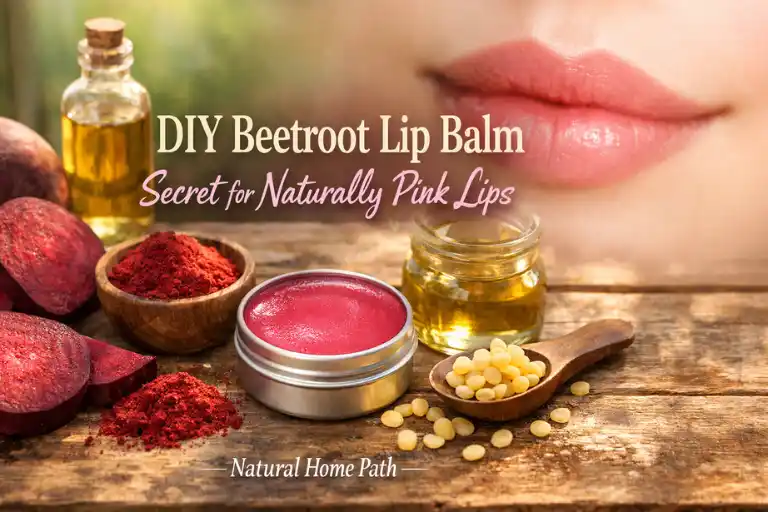
DIY beetroot lip balm is a natural, homemade lip care product made using beetroot as a plant-based tint. Instead of artificial colors and chemicals found in store-bought products, this natural lip balm recipe uses simple ingredients like oils, wax, and beetroot powder or fresh beetroot to create a soft tinted lip balm.
The main purpose of beetroot lip balm is to moisturize dry lips while giving them a soft pink color. Because it’s made at home, you control what goes into it, making it ideal for people who prefer non-toxic, chemical-free, and DIY beauty products.
This homemade lip balm is beginner-friendly, affordable, and customizable. You can easily adjust the color, shine, and texture, making it a perfect option for anyone exploring natural beauty DIY for the first time.
Why Use Beetroot for Lips
Beetroot is widely used in natural beauty DIY because it contains natural pigments, antioxidants, and vitamins that are gentle on the skin. When used in a DIY beetroot lip balm, beetroot provides a soft pink to reddish tint without synthetic colors. This makes it ideal for people with sensitive lips.
From experience, beetroot helps lips look healthier and fresher, especially when combined with nourishing oils. The antioxidants in beetroot support lip care by protecting lips from dryness and dullness. While beetroot alone does not deeply moisturize, it works perfectly with oils like coconut oil or jojoba oil to lock in hydration.
That’s why beetroot lip balm is popular for dry, pigmented, or dull lips, offering both color and care naturally.
Benefits of DIY Beetroot Lip Balm
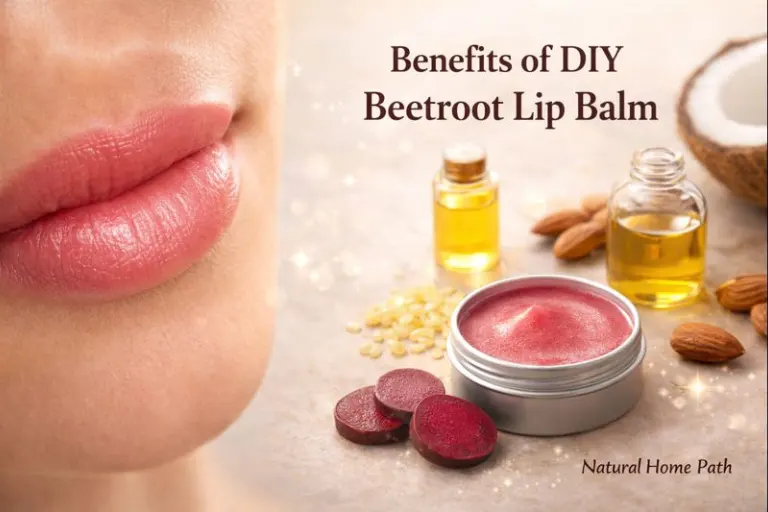
Making your own DIY beetroot lip balm comes with many benefits. First, it gives a natural pink tint without harsh chemicals or artificial dyes. This makes it safer than many store-bought products.
Another major benefit is deep moisturization. When combined with oils like coconut oil, almond oil, or jojoba oil, this homemade lip balm helps repair dry and cracked lips. It also allows full control over ingredients, making it a non-toxic lip balm suitable for daily use.
DIY lip balm is also budget-friendly and eco-conscious. You can reuse containers and reduce waste. Plus, the recipe is customizable, you can adjust the color, shine, or texture based on your preference, making it a perfect DIY tinted lip balm.
Ingredients Needed for DIY Beetroot Lip Balm
Before making your DIY beetroot lip balm, it’s important to understand the basic ingredients and their role. Each ingredient serves a specific purpose, whether it’s adding natural color, moisture, or structure. The good news is that this natural lip balm recipe uses only a few simple, easy-to-find items. You can also adjust or replace ingredients based on skin type, availability, or personal preference, including vegan options. The table below shows easy ingredient substitutions and helpful alternatives:-
| Original Ingredient | Substitute Option | Why Use This Substitute | Things to Note |
| Beeswax | Candelilla wax | Creates a vegan beetroot lip balm | Use slightly less; it’s firmer |
| Beeswax | Carnauba wax | Plant-based and cruelty-free | Can make balm harder |
| Coconut oil | Jojoba oil | Lightweight and good for sensitive lips | Non-greasy feel |
| Coconut oil | Sweet almond oil | Deeply moisturizing | Avoid if nut-allergic |
| Beetroot powder | Fresh beetroot juice | Natural color alternative | Shorter shelf life |
| Vitamin E oil | Rosehip oil | Adds nourishment and softness | Shelf life may reduce |
| Essential oils | Skip entirely | Creates a fragrance-free lip balm | Best for kids & sensitive skin |
Step-by-Step Guide for DIY Beetroot Lip Balm
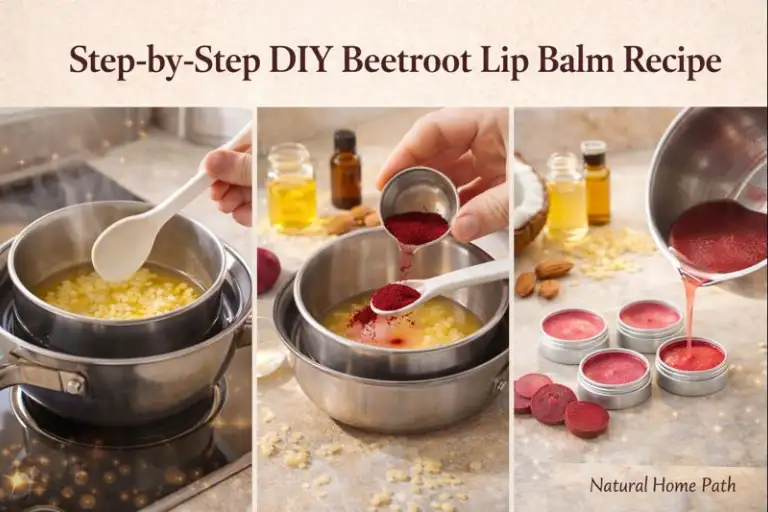
Step 1: Prepare the Beetroot Color: Start with the color base. You can use beetroot powder for the best results. If using fresh beetroot, slice it thin, dry it completely, and grind it into a fine powder. Proper drying is important because moisture can reduce the shelf life of your DIY beetroot lip balm.
Step 2: Melt the Base Ingredients: Add beeswax and your chosen carrier oil (coconut, almond, or jojoba oil) to a heat-safe bowl. Place it over a double boiler and melt on low heat. Stir gently until everything is fully melted and smooth. Avoid high heat, as it can affect texture.
Step 3: Add Beetroot Powder Slowly: Once melted, sprinkle in the beetroot powder little by little. Stir continuously to prevent clumps. Keep mixing until the color looks even and smooth. Adjust the amount based on how deep you want the tint.
Step 4: Add Vitamin E Oil (Optional): Remove the mixture from heat and add vitamin E oil if using. This step helps nourish lips and improves the shelf life of your homemade lip balm.
Step 5: Pour and Let It Set: Carefully pour the mixture into clean lip balm containers. Let it cool and set completely for 30–40 minutes. Once firm, your natural tinted lip balm is ready to use.
How to Adjust Color, Shine & Texture
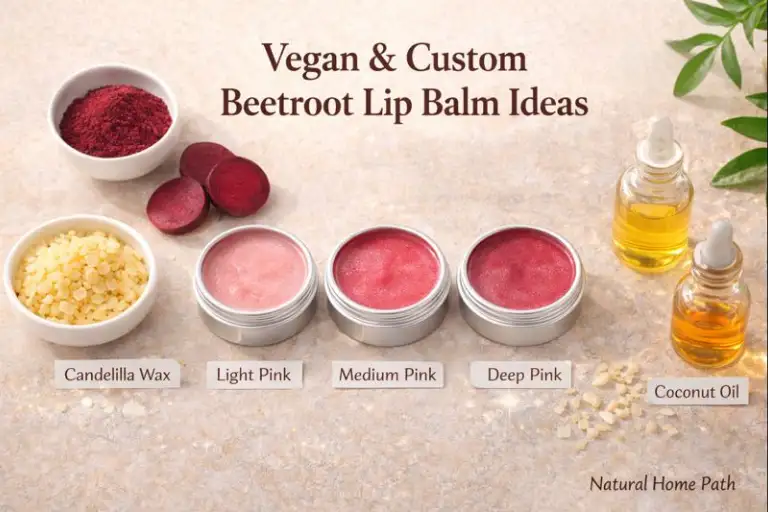
One advantage of DIY beetroot lip balm is full customization. If you want a deeper pink or red tint, simply add more beetroot powder. For a lighter shade, reduce the amount.
To increase shine, add a little more oil, such as coconut or almond oil. For a firmer balm, increase the beeswax ratio slightly. If your balm feels too hard, remelt it and add oil.
For a matte finish, reduce oils and avoid glossy additives. These small adjustments help you create the perfect tinted lip balm based on your preference, something store-bought products rarely offer.
Vegan & Beeswax-Free Beetroot Lip Balm
If you prefer a vegan beetroot lip balm, replace beeswax with candelilla wax or carnauba wax. These plant-based waxes provide structure while keeping the recipe cruelty-free.
The method remains the same—melt wax and oils, mix in beetroot powder, and pour into containers. Vegan waxes are firmer than beeswax, so use a smaller quantity.
This version works well for people avoiding animal products and still delivers a natural pink tint and moisturizing benefits. It’s an excellent option for anyone looking for a beeswax-free DIY lip balm that remains effective and long-lasting.
How Long Does Homemade Beetroot Lip Balm Last
The shelf life of homemade beetroot lip balm depends on ingredients. When made with dry beetroot powder and oils, it typically lasts 6–12 months. Using vitamin E oil helps extend freshness.
If fresh beetroot juice is used, shelf life reduces to 2–3 weeks, and refrigeration is recommended. Always check for changes in smell, texture, or mold.
Because this is a natural lip balm recipe, it contains no preservatives. Proper storage plays a key role in keeping it safe. Making small batches is the best way to enjoy fresh, effective DIY beetroot lip balm.
Storage Tips (Prevent Mold & Color Loss)
Store your DIY beetroot lip balm in clean, airtight containers. Keep it away from heat and direct sunlight, as heat can melt the balm and fade the color.
A cool, dry place is ideal. If traveling, ensure the container is tightly sealed to avoid leaks. Avoid touching the balm with dirty fingers, as this can introduce bacteria.
For balms made with fresh beetroot, refrigeration is important. Proper storage helps maintain color, texture, and freshness, ensuring your homemade tinted lip balm stays safe and effective for longer use.
Safety Tips & Patch Testing
Although beetroot lip balm is natural, safety is still important. Always perform a patch test before regular use, especially if you have sensitive skin.
Beetroot can temporarily stain lips if used in excess. Use small amounts to avoid uneven color. Essential oils should be used sparingly and only lip-safe types.
Avoid using this balm on broken or bleeding lips. Children can use it, but fragrance-free versions are safer. These simple precautions help ensure your DIY beetroot lip balm remains a safe and enjoyable part of your lip care routine.
Common Mistakes & How to Fix Them
One common mistake is a balm that is too hard. This usually means too much wax—simply remelt and add oil. If the balm is too soft, add a little more beeswax.
Uneven color happens when beetroot powder is not mixed properly. Stir continuously while adding the powder. Grainy texture occurs if ingredients overheat.
Understanding these fixes helps beginners improve results quickly. Making homemade lip balm is a learning process, and small adjustments make a big difference.
Frequently Asked Questions
Does beetroot lip balm darken lips?
No, beetroot lip balm does not darken lips. It gives a temporary natural pink tint that fades on its own. With regular use, lips often look healthier and brighter.
Is beetroot lip balm good for pigmented or dull lips?
Yes. When used consistently, DIY beetroot lip balm can help improve the appearance of pigmented lips by keeping them moisturized and naturally tinted.
Can I use fresh beetroot instead of beetroot powder?
You can, but beetroot powder is a better option. It gives a stronger color and helps the lip balm last longer. Fresh beetroot reduces shelf life.
Is beetroot lip balm safe for daily use?
Yes, this natural lip balm recipe is gentle and safe for daily use for most skin types, especially when made without essential oils.
Conclusion
Creating your own beetroot lip balm is a fun and rewarding way to embrace natural beauty. It’s budget-friendly, fully customizable, and completely free from harsh chemicals. With just a few simple ingredients, you can craft a nourishing, tinted lip balm that not only hydrates but also adds a subtle pop of color. Whether you opt for a vegan-friendly version or a classic blend, this DIY lip balm seamlessly complements a wholesome skincare routine. Making it yourself is not just practical, it’s a small, satisfying act of self-care that’s gentle on both your lips and the environment.