
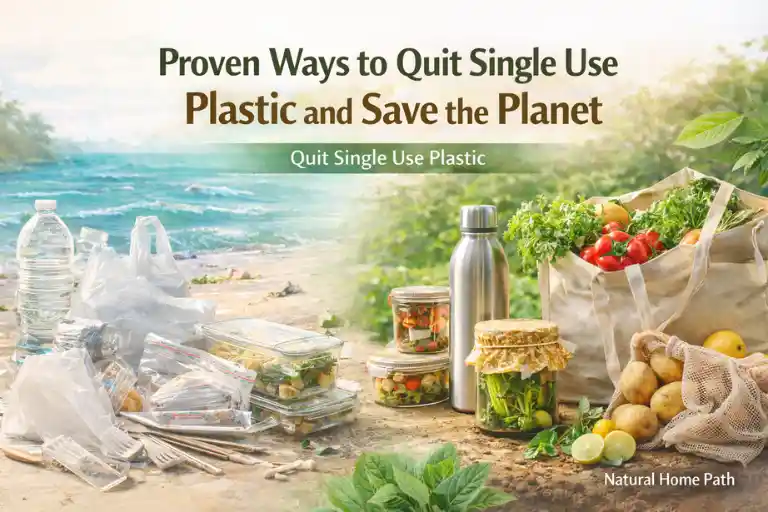
Plastic is everywhere in our daily lives, but Quit single-use plastic like bottles, bags, straws, and zip-locks has a huge environmental impact. Every year, millions of tons of plastic waste end up in oceans, landfills, and soil, harming wildlife and even humans through microplastics. Quitting single-use plastic is not just about personal choice, it’s about protecting our planet and creating a sustainable lifestyle.
In this guide, you’ll learn practical ways to reduce plastic waste, replace disposable items with reusable products, and embrace a plastic-free lifestyle. We’ll also explore the science behind plastic pollution, advanced recycling technologies, and eco-friendly alternatives you can use every day. By the end, you’ll have a clear roadmap on how to quit single-use plastic effectively and responsibly.
What Counts as Single-Use Plastic
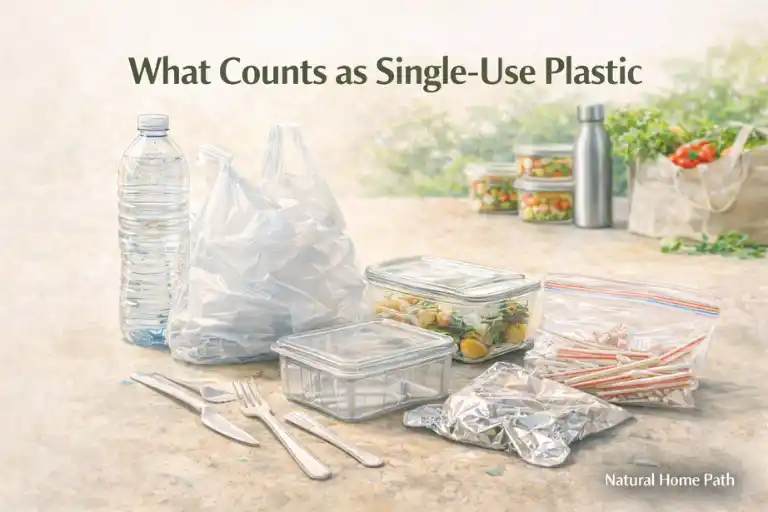
Single-use plastics are items designed to be used once and thrown away. Common examples include plastic bottles, straws, bags, cutlery, takeout containers, zip-lock bags, and food wrap. Even products like coffee stirrers, packaging films, and snack wrappers fall into this category. These plastics are often non-biodegradable, meaning they can stay in the environment for hundreds of years, contributing to plastic pollution.
It’s important to distinguish between reusable, recyclable, and single-use items. Some products labeled biodegradable or compostable may still harm the environment if not disposed of correctly. Understanding what counts as single-use plastic is the first step toward reducing plastic waste, adopting eco-friendly alternatives, and moving toward a plastic-free lifestyle that benefits both humans and wildlife.
Why You Should Quit Single-Use Plastic
Quitting single-use plastic is critical for the environment, wildlife, and human health. Millions of tons of plastic waste end up in oceans, harming fish, birds, and other animals. Over time, plastics break down into microplastics, which can enter our food and water, potentially affecting health.
Reducing plastic also helps conserve resources and supports the circular economy, where materials are reused rather than wasted. Simple changes, like switching to reusable bottles, bags, and containers, can make a big difference. Quitting single-use plastic encourages eco-friendly habits, reduces landfill waste, and inspires others to follow suit. By taking action, you contribute to a plastic-free lifestyle and help protect the planet for future generations.
Step-by-Step Guide to Reducing Plastic
Reducing single-use plastic doesn’t happen overnight. By taking small, deliberate steps, you can create a plastic-free lifestyle that’s sustainable and effective. Here’s a practical, step-by-step approach:
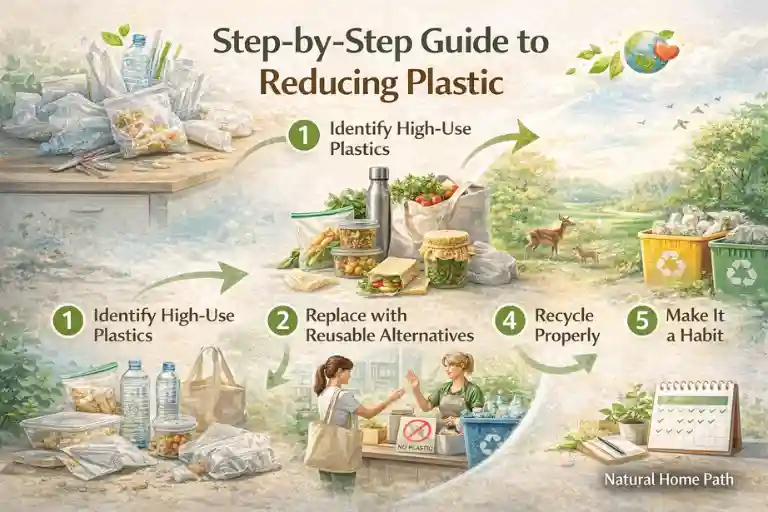
Step 1: Identify High-Use Plastics: Look around your home and daily routine. Common items include plastic bottles, straws, zip-lock bags, takeout containers, and cling film. Knowing which items you use most often is the first step toward reducing plastic waste.
Step 2: Replace with Reusable Alternatives: Swap disposable items for reusable products. Use water bottles, cloth shopping bags, beeswax wraps instead of cling film, and silicone containers for storage. These small changes greatly reduce plastic pollution.
Step 3: Refuse Single-Use Plastics: When shopping or dining out, say no to unnecessary plastic items. Bring your own reusable bags, cups, and utensils whenever possible.
Step 4: Recycle Properly: Recycling alone isn’t enough, but it helps. Make sure plastics are cleaned and sorted according to local guidelines to prevent contamination and maximize effectiveness.
Step 5: Make It a Habit: Track your progress and adjust gradually. Start with easy swaps, then tackle harder changes. Over time, these steps form a lasting plastic-free lifestyle, reduce plastic waste, and encourage eco-friendly habits. Your actions can inspire family, friends, and your community to follow suit.
Advanced Solutions & Innovations
Beyond personal efforts, advanced recycling and technological solutions play a key role in handling plastic waste. Mechanical recycling and chemical recycling can process hard-to-recycle plastics, converting them into raw materials for new products. Companies are now creating certified-circular plastics, helping reduce landfill waste and supporting the circular economy.
Innovations like refill stations, reusable packaging systems, and biodegradable alternatives make it easier to adopt a plastic-free lifestyle. By combining personal steps with these innovative solutions, communities can significantly reduce plastic pollution, microplastics, and environmental damage. Understanding these advancements empowers individuals and businesses to make informed decisions about sustainable plastic alternatives.
Overcoming Challenges & Misconceptions
Many people struggle with quitting single-use plastic due to cost, convenience, or habit. Some believe alternatives are expensive or less practical, while others confuse biodegradable, compostable, and recyclable plastics.
The key is gradual change: start with easy swaps, like reusable bottles, bags, and containers, and slowly replace harder items. Educate yourself on eco-friendly products and local recycling programs. By building new habits, you can reduce plastic waste effectively. Overcoming these challenges makes a plastic-free lifestyle achievable for everyone, protecting the environment and wildlife, while inspiring family, friends, and your community to follow your example.
Community, Advocacy & Lifestyle Tips
- Join Local Initiatives: Participate in community programs, plastic reduction campaigns, and zero-waste events to strengthen the impact of your actions.
- Support Refill Programs: Use refill stations for water, household products, or food packaging to reduce reliance on single-use plastics.
- Share & Inspire: Post tips, DIY solutions, or success stories on social media to motivate others toward a plastic-free lifestyle.
- Practice DIY Alternatives at Home: Repurpose or upcycle materials, make your own reusable wraps, and minimize packaging waste in daily life.
- Choose Eco-Friendly Products: Select reusable bottles, cloth bags, beeswax wraps, and silicone containers whenever possible.
- Travel Sustainably: Bring reusable travel items, avoid disposable plastics, and support environmentally responsible businesses.
- Create Lasting Impact: Collective action reduces plastic waste, prevents environmental harm, and builds awareness for long-term sustainability, benefiting communities and future generations.

Frequently Asked Questions
What is single-use plastic?
Single-use plastics are items designed to be used once and thrown away, such as bottles, straws, bags, cutlery, zip-locks, and food wrap. These plastics contribute significantly to plastic pollution and can harm wildlife and humans through microplastics.
Why should I quit single-use plastic?
Quitting single-use plastic reduces plastic waste, protects oceans and land, and supports a plastic-free lifestyle. It also promotes eco-friendly habits and encourages communities to adopt sustainable practices, contributing to a healthier planet.
What are easy alternatives to single-use plastics?
Use reusable bottles, bags, straws, and containers, beeswax wraps instead of cling film, and silicone or glass storage options. For travel, opt for reusable cutlery and cups. These small swaps make a big difference in reducing plastic waste.
Can recycling alone solve the plastic problem?
Recycling helps, but it’s not enough. Many plastics are hard-to-recycle or end up in landfills. Combining recycling with reducing, reusing, and refusing single-use plastics is more effective for creating a sustainable lifestyle.
How can I make quitting plastic a habit?
Start gradually replace the most-used single-use items first. Track your progress, join community initiatives, and explore innovative eco-friendly alternatives. Over time, these small changes will become lasting habits, reducing plastic pollution in your daily life.
Conclusion
Quitting single-use plastic is a journey, not a single step. By understanding what counts as plastic, why it matters, and adopting practical alternatives, you can significantly reduce plastic waste and environmental harm. Combining personal action with community engagement, advocacy, and innovation creates a lasting impact.
Start with simple swaps like reusable bottles, bags, and containers, refuse unnecessary plastics, and embrace a plastic-free lifestyle. Share your progress and inspire others to join the movement. Every small step contributes to cleaner oceans, safer wildlife, and healthier communities. Together, we can quit single-use plastic, protect the planet, and build a sustainable future.