

A raised bed is a garden bed that sits above ground level and is filled with a healthy, controlled soil mix. Instead of planting directly in the ground, gardeners grow plants inside a framed structure made from wood, metal, stone, or composite materials. This method is known as raised bed gardening and is popular with beginners and experienced gardeners alike.
Unlike traditional gardens, a raised garden bed gives you better control over soil quality, drainage, and spacing. It also warms up faster in spring, helping plants grow sooner. Many people choose DIY raised garden beds because they are easy to build, flexible in size, and work well in small yards or poor soil conditions. Simply put, raised beds make gardening cleaner, easier, and more productive.
Why Raised Beds Are Worth It?
Raised bed gardening offers many benefits, especially for beginners. One major advantage is better soil control. You choose the soil mix, which means healthier plants and better yields. Raised beds also provide improved drainage, helping prevent root rot and soggy soil. Since the bed is elevated, it reduces weed growth and makes gardening easier on your back and knees.
However, raised beds do have a few downsides. The initial cost of building a raised garden bed can be higher than planting in the ground. Raised beds also dry out faster, so regular watering is important. Despite these minor issues, most gardeners find that the benefits of raised bed gardening far outweigh the drawbacks, especially in areas with poor or compacted soil.
Types of Raised Garden Beds
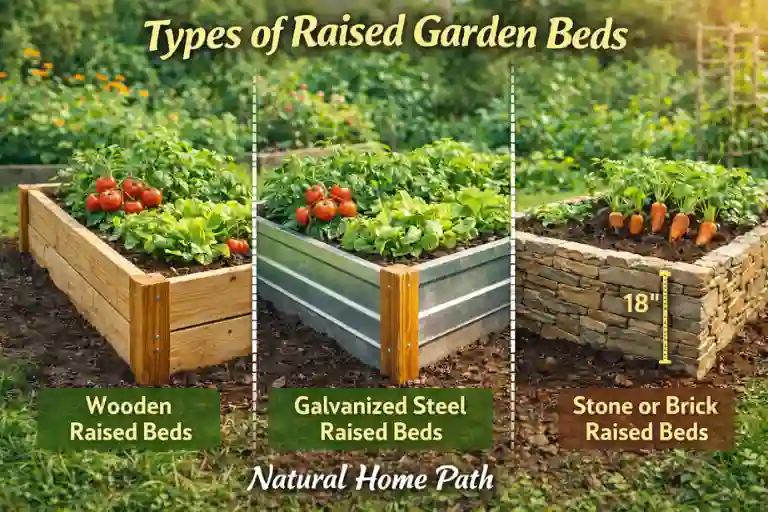
There are different types of raised garden beds, and each type works best for specific needs and growing conditions. Understanding these options helps you choose the right bed for your garden.
- Wooden raised beds are the most common choice. They are affordable, easy to build, and ideal for beginners. Woods like cedar and redwood naturally resist rot and insects, making them a long-lasting option.
- Galvanized steel raised beds are strong, weather-resistant, and give a clean, modern look. They last longer than wood and require very little maintenance, which makes them perfect for long-term use.
- Stone or brick raised beds are extremely sturdy and attractive. They hold heat well but require more labor, planning, and cost.
You can also choose DIY raised garden beds for flexibility or pre-built kits to save time. The best choice depends on your budget, space, comfort, and gardening goals.
Raised Bed Sizes, Depth & Layout
Choosing the right size, depth, and layout for your raised garden bed is critical to ensure healthy plant growth and easy maintenance. Here’s a detailed guide:
- Bed Size: The most common raised bed size is 4×8 feet, which allows you to reach plants from both sides without stepping inside the bed. For smaller areas, 4×4 feet beds are ideal. Adjust the size based on your available space and gardening needs. Longer or wider beds may require additional supports to prevent sagging.
- Bed Depth: Depth depends on the type of plants you want to grow. Most vegetables thrive in a depth of 10–12 inches. Root vegetables like carrots, beets, or potatoes need 18 inches or more to develop fully. Shallow beds work for herbs or leafy greens.
- Spacing Between Beds: Leave 2–3 feet between beds for easy walking, watering, and access with a wheelbarrow. Proper spacing prevents overcrowding, improves airflow, and reduces the risk of diseases.
- Bed Orientation: Position your raised beds where they receive 6–8 hours of direct sunlight daily. Orient longer beds north-to-south to maximize sunlight exposure. A well-planned layout ensures plants grow evenly and your garden stays organized.
How to Build a Raised Garden Bed (Step-by-Step)
Building a raised garden bed is an easy project that most beginners can complete in a few hours. Follow these simple steps for best results.
Step 1: Choose the right location: Pick a spot that receives 6–8 hours of sunlight each day. Clear grass, rocks, and debris so the ground is level.
Step 2: Gather materials and tools: Use untreated wood, screws, a drill, and a measuring tape. Choose your preferred raised bed dimensions before cutting.
Step 3: Build the frame: Arrange the boards into a rectangle or square and secure the corners tightly. Make sure the frame is sturdy and even.
Step 4: Prepare the base: Place the frame on the ground and add cardboard or landscape fabric to stop weeds.
Step 5: Fill with soil: Add a rich raised bed soil mix and level it evenly. Your DIY raised bed is now ready for planting and long-term growth.

How Much Does It Cost to Build a Raised Bed?
The cost of building a raised bed depends on materials and size. A simple DIY raised garden bed can cost as little as $50–$100, using basic lumber. Cedar or metal beds cost more but last longer. Pre-made kits may range from $150 to $300.
Soil is another cost to consider. Filling a raised bed with quality soil and compost can add to the budget. While raised beds require an upfront investment, they save money over time by improving yields and reducing plant loss. Budget-conscious gardeners can reuse materials or start small and expand later. Raised beds offer long-term value for home gardeners.
Best Soil Mix for Raised Beds
The success of raised bed gardening depends heavily on soil. The best soil for raised beds is loose, rich, and well-draining. A popular mix includes 40% topsoil, 40% compost, and 20% aeration material like perlite or coarse sand.
This blend provides nutrients, moisture retention, and proper airflow for roots. Avoid using pure garden soil, as it can compact over time. Refresh your soil each season by adding compost. A healthy soil mix improves plant growth, reduces disease, and boosts harvests. Investing in the right soil is one of the most important steps in building a productive raised garden bed.

What to Plant in Raised Beds
One of the biggest advantages of raised beds is planting flexibility. Vegetables like tomatoes, lettuce, peppers, carrots, and cucumbers grow exceptionally well in raised beds. Herbs such as basil, rosemary, and mint also thrive due to good drainage.
You can even grow flowers to attract pollinators. Companion planting helps maximize space and improve plant health. Because the soil warms faster, raised bed gardening for vegetables often leads to earlier harvests. Whether you are a beginner or experienced gardener, raised beds allow you to grow a wide variety of plants with fewer problems and higher success rates.
Watering, Drainage & Irrigation for Raised Beds
Proper watering is essential for raised bed gardening. Because raised beds drain faster, they may need more frequent watering than in-ground gardens. Water deeply to encourage strong root growth. Early morning is the best time to water.
Good raised bed drainage prevents waterlogging and root diseases. Adding organic matter improves moisture balance. Many gardeners install drip irrigation systems to save time and water. Mulching also helps retain moisture and reduce evaporation. With consistent watering and proper drainage, raised beds support healthy, productive plants throughout the growing season.
Raised Bed Maintenance (Seasonal Care)
Maintaining a raised garden bed is simple but important. In spring, loosen soil and add fresh compost. During summer, monitor watering and remove weeds regularly. Mulch helps keep soil cool and moist.
In fall, remove old plants and refresh soil nutrients. Cover beds in winter to protect soil structure. Over time, wooden beds may need repairs or sealing. Regular care keeps your raised beds productive year after year. Seasonal maintenance improves soil health and ensures strong plant growth with minimal effort.
Common Raised Bed Gardening Mistakes
Many beginners make avoidable mistakes with raised beds. Using the wrong soil mix can limit plant growth. Overcrowding plants reduces airflow and increases disease. Shallow beds may restrict root development.
Ignoring drainage can lead to waterlogged soil. Some gardeners also place beds in shaded areas, limiting sunlight. Avoid treated wood that may harm plants. By understanding these raised bed mistakes, you can save time, money, and effort. Learning from common errors helps you get the most from your raised bed garden.
Raised Beds for Special Situations
Raised beds work well in many unique situations. They are perfect for areas with poor or rocky soil, allowing full soil control. In small yards, raised beds maximize growing space. Tall raised beds are ideal for seniors or people with mobility issues.
They also work well in urban gardens and patios. With proper planning, raised beds adapt to almost any environment. Their flexibility makes them a smart solution for gardeners facing space, soil, or physical limitations.
Frequently Asked Questions
Are raised beds suitable for beginners?
Yes! Raised bed gardening is beginner-friendly because it gives you full control over soil quality, drainage, and spacing. It’s easier to manage than traditional in-ground gardens.
Can I place a raised bed on grass or concrete?
Absolutely. Simply level the area and add a weed barrier like cardboard or landscape fabric. This prevents unwanted growth and helps maintain healthy soil.
How long do raised beds last?
The lifespan depends on materials. Wooden beds usually last 5–15 years, while metal or stone beds can last decades with minimal maintenance.
Do raised beds dry out faster than ground gardens?
Yes, because they are elevated. Regular watering, mulching, and a quality raised bed soil mix keep plants healthy.
What can I grow in raised beds?
Almost anything! Vegetables, herbs, and flowers thrive in raised beds. Root crops, leafy greens, and companion plants grow especially well.
Conclusion
Raised bed gardening is a simple, effective, and flexible way to grow healthy plants. Whether you have limited space, poor soil, or want easier maintenance, a raised garden bed gives you control over size, soil, and layout. By choosing the right type of bed, planting the right crops, and following proper care and watering techniques, you can enjoy higher yields, healthier plants, and a more organized garden.
With a little planning, your raised beds can be productive for years, offering a rewarding gardening experience for beginners and experts alike. Start small, build wisely, and watch your garden flourish!