

Baking bacon in the oven is one of the easiest and most reliable ways to enjoy perfectly cooked bacon without the mess of stovetop frying. When you learn how to bake bacon, you get evenly cooked strips, less splatter, and more time to focus on the rest of your meal. This method is ideal whether you’re cooking breakfast for your family or preparing oven baked bacon for a crowd.
Unlike pan-frying, cooking bacon in the oven allows heat to surround each strip evenly, helping the fat render slowly and creating that satisfying balance between crispy and tender bacon. With the right oven temperature and cook time, you can achieve consistent results every time. In this guide, you’ll discover the best way to bake bacon, along with practical tips that make the process simple, stress-free, and delicious from start to finish.
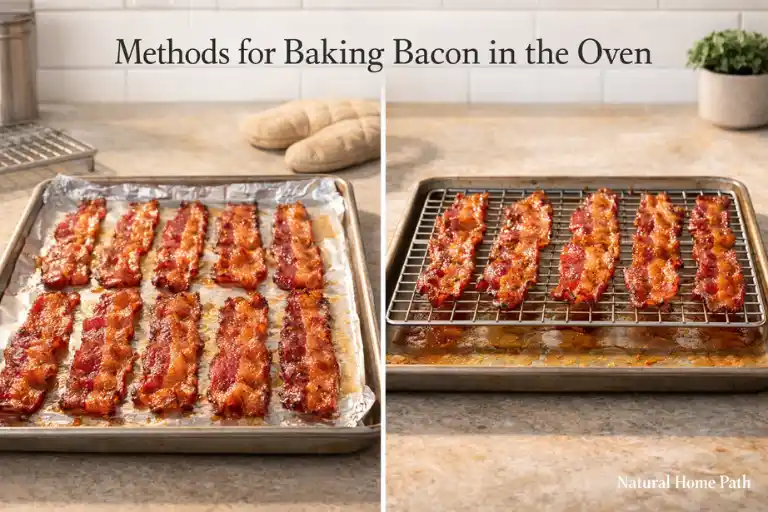
Methods for Baking Bacon in the Oven
- Standard Baking Sheet Method
- Preheat the oven to 400°F (204°C) for consistent cooking.
- Line a rimmed baking sheet with foil or parchment paper to collect grease and simplify cleanup.
- Place the bacon strips directly on the lined pan in a single layer, making sure they don’t overlap.
- This method produces evenly cooked bacon with a balance of crisp edges and tender centers.
- Preheat the oven to 400°F (204°C) for consistent cooking.
- Wire Rack Method (Extra Crispy Option)
- Set a wire rack inside a rimmed baking sheet before adding the bacon.
- Arrange the strips on the rack so hot air can circulate all around them.
- As the bacon cooks, fat drips down into the pan below, reducing greasiness.
- This technique results in crisper bacon and a slightly lighter texture.
- Set a wire rack inside a rimmed baking sheet before adding the bacon.
- Thickness-Based Baking Adjustment
- Thin-cut bacon cooks faster and usually finishes in 12–15 minutes.
- Thick-cut bacon requires more time, often 18–22 minutes, for full crispness.
- Always monitor the bacon toward the end to prevent overcooking.
- Thin-cut bacon cooks faster and usually finishes in 12–15 minutes.
- Midway Check Method
- Check the bacon halfway through baking to ensure even browning.
- Flipping is optional, but can help if the bacon appears to cook unevenly.
- This step helps fine-tune texture without constant monitoring.
- Check the bacon halfway through baking to ensure even browning.
- Grease-Draining Finish
- Once the bacon reaches your desired crispness, carefully remove the pan from the oven.
- Transfer the bacon to paper towels to absorb excess grease.
- This final step keeps the bacon crisp and prevents sogginess.
- Once the bacon reaches your desired crispness, carefully remove the pan from the oven.
Choosing the Right Bacon for Oven Baking
Selecting the right bacon makes a big difference when learning how to bake bacon properly. Thin-cut bacon cooks faster and becomes crisp quickly, but it can burn if left unattended. Regular-cut bacon offers a balanced texture, while thick-cut bacon needs a longer oven bacon cook time for full fat rendering.
Sugar-cured bacon browns faster due to caramelization, so it requires closer monitoring at higher heat. Smoked bacon adds deeper flavor and works well for oven baked bacon recipes. Turkey bacon can also be baked, but it needs slightly lower heat and careful timing. Understanding bacon types helps you adjust bacon oven temperature and time, ensuring evenly cooked strips and preventing common mistakes before baking even begins.
Essential Equipment for Oven Baked Bacon
Having the right tools makes baking bacon in the oven simple and mess-free. A rimmed baking sheet is essential to catch grease and prevent spills. Lining the pan with foil or parchment paper helps with easy cleanup. Foil works best for collecting bacon grease, while parchment prevents sticking.
Using a wire rack allows hot air to circulate around the bacon, helping it cook evenly and become extra crispy. However, bacon can still cook well directly on the sheet pan if spaced properly. Paper towels are helpful for draining excess grease after baking. With the right setup, oven baked bacon cooks evenly, looks better, and requires far less cleanup than stovetop frying.
Ideal Oven Temperature for Baking Bacon
The best oven temperature for bacon is 400°F (200°C). This heat level allows the fat to render slowly while crisping the bacon evenly. Lower temperatures often leave bacon soft and greasy, while higher temperatures can burn sugar-cured bacon quickly.
At 400°F, baking bacon in the oven becomes predictable and reliable. Thick-cut bacon may require slightly longer time, but the temperature usually stays the same. If your oven runs hot, checking the bacon early helps avoid overcooking. Understanding bacon oven temperature is key to achieving perfect texture. With the right heat, you can consistently produce crispy oven baked bacon without constant monitoring or flipping.
Exact Baking Times by Bacon Type
Knowing how long to bake bacon in the oven depends on the type and thickness. Thin-cut bacon usually cooks in 12–15 minutes, while regular bacon takes about 15–20 minutes. Thick-cut bacon needs 20–25 minutes for full crispness. Turkey bacon may require 18–22 minutes, depending on brand and thickness.
Always place bacon in a single layer for even cooking. Visual cues matter more than time alone. Look for deep golden color and gently curled edges. Since ovens vary, checking early prevents burning. Matching the right bacon cook time with the proper oven temperature ensures evenly cooked, crispy bacon every time.
Step-by-Step Guide to Baking Bacon
Step 1: Preheat the Oven: Begin by heating your oven to 400°F (204°C). Preheating ensures the bacon starts cooking immediately and helps it crisp evenly.
Step 2: Prepare the Baking Pan: Line a rimmed baking sheet with foil or parchment paper to catch the grease and make cleanup easier. If you want extra-crispy bacon, place a wire rack on top of the pan so the fat can drip away while cooking.
Step 3: Arrange the Bacon: Lay the bacon strips flat in a single layer. Make sure the slices do not overlap, as overlapping can cause uneven cooking and soggy spots.
Step 4: Bake the Bacon: Place the baking sheet on the center rack of the oven. Bake time will vary depending on the thickness of the bacon, usually between 15–20 minutes.
Step 5: Check for Doneness: Halfway through baking, take a quick look to monitor progress. Flipping the bacon is usually unnecessary, but you can turn the strips if they’re cooking unevenly.
Step 6: Remove and Drain: Once the bacon turns golden brown and crispy, carefully remove the pan from the oven. Transfer the cooked strips to a plate lined with paper towels to absorb excess grease.
Step 7: Serve and Enjoy: This oven-baked method delivers evenly cooked, perfectly crisp bacon with minimal mess ideal for consistent results every time.
Crispy vs Chewy Bacon
Texture is easy to control when baking bacon in the oven. For crispy bacon, use a wire rack and bake slightly longer until edges are fully browned. Allowing bacon to rest for a minute after baking also increases crispness.
For chewier bacon, bake directly on the sheet pan and remove it earlier while it still looks slightly soft. Fat continues to firm as it cools. Thicker cuts naturally stay chewier unless baked longer. Adjusting oven bacon cook time and setup gives you full control. Whether you prefer crispy or chewy, oven baked bacon delivers consistent texture when cooked with intention.

Common Problems and Easy Fixes
Even with simple steps, baking bacon in the oven can sometimes go wrong. If bacon curls, placing it on a wire rack helps keep strips flat. Uneven cooking often happens when bacon overlaps, so spacing is important. Greasy bacon usually means it needs more time for fat to render fully.
Burnt edges can result from baking too close to the heating element or using too high a temperature. Always bake bacon on the center rack and monitor near the end. Fixing these issues ensures perfect oven baked bacon every time and helps you avoid frustration in the kitchen.
Flavor Enhancements and Creative Variations
Once you master how to bake bacon, adding flavor is easy. For sweet bacon, brush strips lightly with maple syrup or sprinkle brown sugar before baking. For savory options, add cracked black pepper or smoked paprika.
Spicy bacon lovers can dust strips with chili flakes or cayenne pepper. Herbs like rosemary or thyme also add aroma when used sparingly. Always add seasonings near the end to prevent burning. These simple variations transform basic oven baked bacon into a flavorful addition for salads, sandwiches, and breakfast plates without extra effort.
Bacon Grease – Uses, Storage, and Safety
After cooking bacon in the oven, you’ll be left with rendered bacon grease. Let it cool slightly, then strain it through a fine sieve into a heat-safe container. Stored in the refrigerator, bacon grease can last up to three months.
This flavorful fat works well for frying eggs, roasting vegetables, or seasoning cast iron pans. Always discard grease that smells sour or looks cloudy. Never pour hot grease down the drain. Learning how to safely reuse bacon grease adds value to oven baked bacon and reduces kitchen waste.
Health, Calories, and Moderation
Many people ask if baking bacon in the oven is healthier. While bacon is still high in fat and sodium, oven baking allows excess grease to drip away, especially when using a wire rack. This results in slightly less greasy bacon.
Portion control matters most. Enjoying bacon occasionally and pairing it with balanced meals is key. Turkey bacon offers a lower-fat alternative, though it still contains sodium. Understanding nutrition helps you enjoy oven baked bacon mindfully while maintaining a healthy diet.
Meal Prep and Batch Cooking Bacon
One major benefit of baking bacon in the oven is meal prep. You can cook large batches at once, making it perfect for busy weeks or family gatherings. Once baked, let bacon cool completely before storing.
Place cooked bacon in airtight containers or freezer bags. Refrigerated bacon lasts up to five days, while frozen bacon keeps for one month. Reheat in the oven for best texture. Oven baked bacon for meal prep saves time and keeps breakfasts and meals simple throughout the week.
Storage and Reheating Best Practices
Proper storage keeps oven baked bacon tasting fresh. Store cooked bacon in airtight containers in the refrigerator. For longer storage, freeze bacon in small portions to avoid waste.
To reheat, place bacon on a baking sheet and warm in a 350°F oven for a few minutes. This helps restore crispness better than microwaving. Avoid overheating, as bacon can dry out quickly. With correct storage and reheating, your baked bacon stays flavorful and enjoyable even days later.
Frequently Asked Questions
Do you need to flip bacon when baking it in the oven?
No, flipping is not necessary. When baking bacon in the oven, the heat circulates evenly, allowing both sides to cook at the same time. This makes the process easier and more consistent.
Is it better to use foil or parchment paper?
Both options work well. Foil is ideal for collecting bacon grease and easy disposal, while parchment paper prevents sticking and simplifies cleanup when making oven baked bacon.
Can you bake frozen bacon in the oven?
Yes, frozen bacon can be baked. It will take a few extra minutes, and the strips should be separated once they begin to soften for even cooking.
Can bacon be baked without lining the pan?
Yes, but cleanup will be harder. Lining the pan helps prevent sticking and makes cooking bacon in the oven more convenient.
Conclusion
Learning how to bake bacon in the oven transforms a messy task into a simple, reliable process. With the right temperature, timing, and setup, you can enjoy evenly cooked, flavorful bacon every time. This method works for busy mornings, meal prep, and large gatherings.
By following these steps and tips, oven baked bacon becomes effortless and consistent. Whether you like crispy or chewy strips, baking bacon offers flexibility, control, and great results. Once you try it, this method will likely become your go-to way of cooking bacon.